Quick View
A 7 day Kenya safari itinerary for first time visitors from USA typically covers Nairobi, the Maasai Mara, Lake Nakuru, Lake Naivasha, and Amboseli National Park. The trip costs between $2,500 and $6,500 per person depending on accommodation and season. US citizens need a Kenya Electronic Travel Authorization (eTA), which costs $30 and takes 2–5 business days to process online. The best time to go is July through October for the Great Migration, though the green season (November to May) offers lower prices and fewer crowds. Most visitors fly into Nairobi’s Jomo Kenyatta International Airport (JKIA) with one connecting flight from major US cities.
Why Kenya Is the Perfect First Safari Destination for Americans
You have probably seen Kenya on a wildlife documentary at some point. The wide-open plains, the lions watching from a distance, a herd of elephants moving slowly through the dust. That is not just TV magic. That is what a real Kenya safari feels like.
For first time visitors from the USA, Kenya makes a lot of sense as a starting point. English is one of the country’s official languages, so communication is easy. The main safari parks are well-managed and safe. Flights from cities like New York, Atlanta, Los Angeles, and Chicago connect to Nairobi with just one stop. And with a clear 7 day itinerary, you can see the Big Five, experience different landscapes, and still feel like you had time to breathe.
This guide walks you through the best 7 day Kenya safari route for 2026, what it costs in USD, how to get your eTA, what to pack, and what mistakes to avoid. Everything here is based on real experience working with travelers coming from the United States.
What Is a 7 Day Kenya Safari Itinerary?
A 7 day Kenya safari itinerary is a structured travel plan that takes you through Kenya’s top national parks and reserves within one week. For first-time visitors from the USA, a well-planned 7‑day route balances game drive time, travel distances, rest, and variety without feeling rushed.
Seven days is widely considered the sweet spot for first timers. It is long enough to visit three to four parks and see the Big Five, but short enough to keep your energy up throughout the trip.
| Feature | Details |
|---|---|
| Recommended duration | 7 days (6 nights) |
| Parks typically covered | Maasai Mara, Lake Nakuru, Lake Naivasha, Amboseli |
| Wildlife highlights | Big Five, Great Migration (seasonal), flamingos, Kilimanjaro views |
| Best travel style | Private guided safari or small group tour |
| Average cost (USA traveler) | $2,500 – $6,500 per person |
| Entry requirement | Kenya eTA ($30, online) |
| Recommended booking lead time | 3–6 months in advance |
According to Magical Kenya, Kenya welcomed over 2 million international visitors in recent years, with Americans making up one of the largest visitor groups. The country’s combination of wildlife, culture, and scenery makes it consistently one of Africa’s top safari destinations.
View Our Top Safaris in Kenya Ready to start planning? Browse our handpicked Kenya safari packages designed specifically for international visitors. Explore Kenya Safaris with Charming Safariz
Why 7 Days Is Ideal for First Time American Visitors
You Get Enough Time Without Feeling Overwhelmed
A 3‑day trip to Kenya can feel rushed. A 10-day trip is perfect, but not everyone has two weeks of annual leave. Seven days hits a comfortable middle ground. You get two full days in the Maasai Mara, a scenic stop at Lake Nakuru, a relaxing afternoon on Lake Naivasha, and time in Amboseli with Kilimanjaro in the background.
You Can See the Big Five
The Big Five — lion, leopard, elephant, buffalo, and rhino — are spread across Kenya’s parks. A 7‑day circuit gives you the best chance of spotting all five. Lions and cheetahs are abundant in the Maasai Mara. Rhinos and flamingos thrive in Lake Nakuru. Amboseli is famous for its large elephant herds.
You Get Value for Your Budget
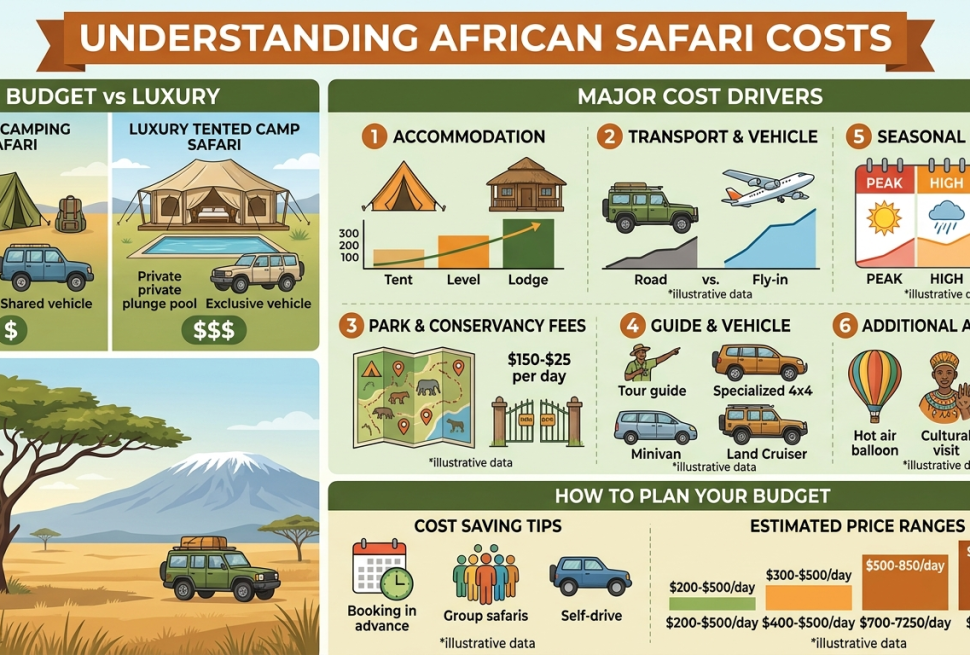
Mid-range private safaris for American visitors average $280 to $480 per person per day, which includes accommodation, meals, game drives, and park fees. Over 7 days, this comes to roughly $1,960 to $3,360 for the safari portion, with international flights typically adding $900 to $1,500 from the US.
The Kenya Wildlife Service manages all national parks and sets the official park entry fees, which are updated regularly. Always confirm current fees before you book.
The Best 7 Day Kenya Safari Itinerary for First Timers from USA (2026)
Here is the most recommended route for American first-time visitors. It balances wildlife, scenery, culture, and travel time efficiently.
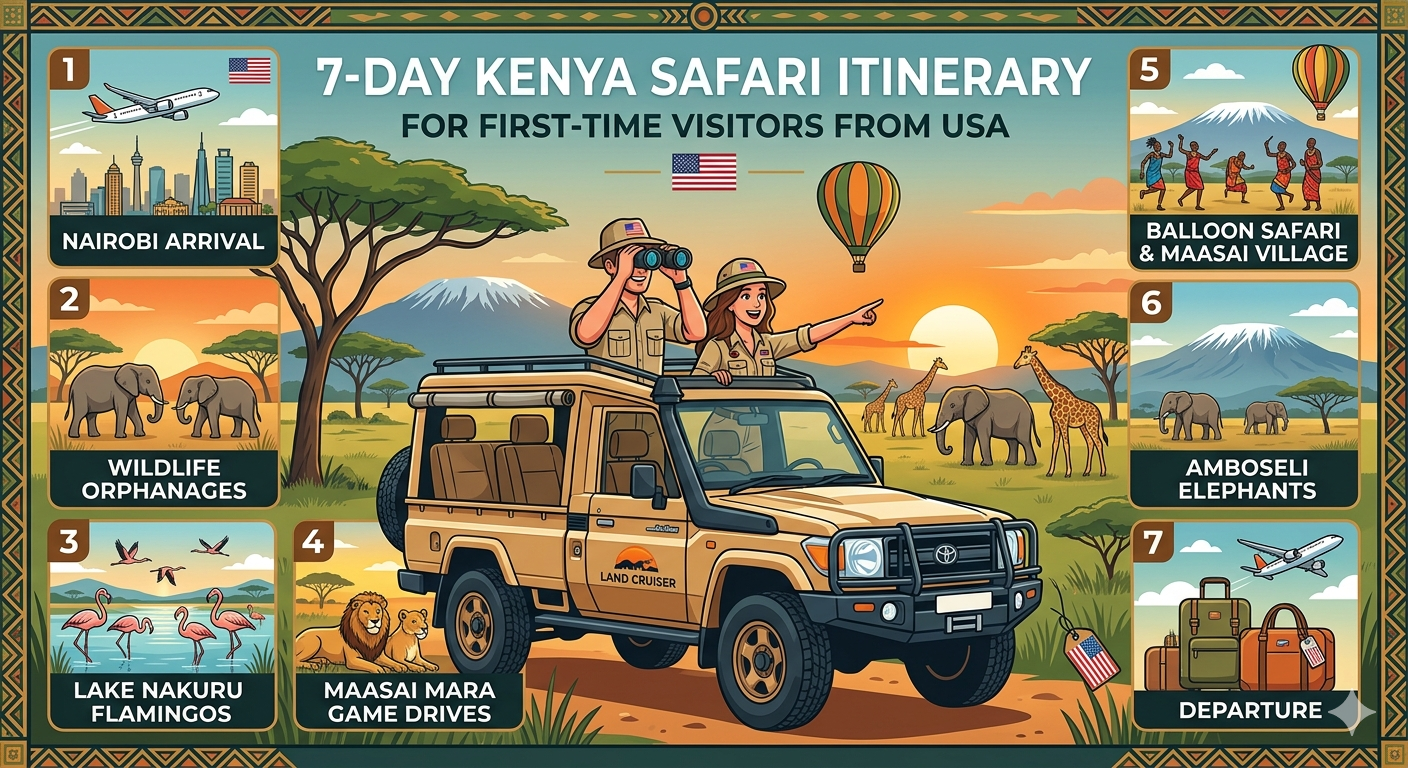
Day 1: Arrival in Nairobi
Your safari begins the moment you land at Jomo Kenyatta International Airport. A representative from your tour operator will meet you at arrivals and transfer you to your Nairobi hotel. After a long international flight, this day is about rest and light orientation.
If you arrive early enough, you can visit the Nairobi National Park (just 15 minutes from the city center), the David Sheldrick Wildlife Trust elephant orphanage, or the Giraffe Centre. Nairobi is a vibrant city, and even a short afternoon walk around the Westlands or Karen neighborhoods gives you a feel for local life.
Overnight: Nairobi hotel (mid-range options include Trademark Hotel, Ole-Sereni, or Hemingways Nairobi for luxury).
Day 2: Nairobi to Maasai Mara (Approx. 5–6 Hours Drive)
After an early breakfast, your driver-guide picks you up and heads southwest toward the Maasai Mara National Reserve. The drive takes you along the Great Rift Valley escarpment, one of Kenya’s most dramatic landscapes. You will stop at a viewpoint for photos and a stretch.
Arrive at your camp or lodge by early afternoon. After lunch and a short rest, your first game drive begins around 3:30 PM. The Mara is legendary. Within the first hour, many visitors spot lions, elephants, and massive herds of zebra and wildebeest.
Overnight: Tented camp or lodge in Maasai Mara.
Day 3: Full Day in Maasai Mara
This is the day most visitors remember most. You start with a morning game drive at 6:30 AM when predators are most active. Big cats, massive elephant families, and if you visit between July and October, dramatic wildebeest river crossings during the Great Migration.
An optional hot air balloon safari (approximately $450 per person extra) at sunrise gives you a bird’s-eye view of the plains. It is one of the most breathtaking experiences in East Africa.
In the afternoon, visit a local Maasai village to learn about traditional culture, dance, and architecture. This interaction is respectful, educational, and one of the highlights guests mention most in reviews on TripAdvisor.
Overnight: Maasai Mara lodge or tented camp (second night).
View Our Top Safaris in Kenya and Zanzibar Charming Safariz offers tailored packages for American visitors, including private guides, lodge upgrades, and Zanzibar beach extensions. Browse Kenya Safari Packages
Day 4: Maasai Mara to Lake Nakuru (Approx. 3.5 Hours Drive)
After an early morning game drive and breakfast, you drive north to Lake Nakuru National Park. Lake Nakuru sits inside the Great Rift Valley and is famous for its white rhinos, black rhinos, flamingos, pelicans, and leopards.
The park is compact but incredibly diverse. An afternoon game drive here often produces sightings that larger parks cannot match — you can see rhinos at close range in open grassland, which is rare in Africa.
Overnight: Lodge near Lake Nakuru (options include Lake Nakuru Lodge and Sarova Lion Hill Lodge).
Day 5: Lake Nakuru to Lake Naivasha (Approx. 1 Hour Drive)
A short morning drive to Lake Naivasha, a beautiful freshwater lake surrounded by acacia woodland and yellow fever trees. Here the pace slows down pleasantly.
A boat safari on the lake lets you get close to hippo pods and hundreds of bird species including African fish eagles. You can also walk on Crescent Island — a privately owned island in the lake where you can stroll among zebras, giraffes, and wildebeest on foot with no fences.
Overnight: Lakeside lodge (Naivasha Sopa Lodge or Great Rift Valley Lodge are popular with American guests).
Day 6: Lake Naivasha to Amboseli National Park (Approx. 4 Hours Drive)
Drive south to Amboseli National Park, located on the Kenyan side of the Tanzania border. Amboseli is one of Kenya’s most photogenic parks. On a clear day, you have an unobstructed view of Mount Kilimanjaro rising behind herds of elephants. It is the kind of scene that looks like a screensaver but is completely real.
Amboseli is Kenya’s best park for elephant watching. The park is home to some of Africa’s largest and most studied elephant families. An afternoon game drive here is exceptional.
Overnight: Lodge in Amboseli (Tortilis Camp, Amboseli Serena, or Ol Tukai Lodge).
Day 7: Amboseli Morning Game Drive, then Return to Nairobi and Departure
Your final morning game drive starts at sunrise in Amboseli. One last chance for that perfect Kilimanjaro elephant photograph. After breakfast and check-out, your driver takes you back to Nairobi (approximately 4 hours), in time for your international flight home.
If your flight is late evening, there is time for a final Nairobi lunch, some souvenir shopping at the Maasai Market, or a visit to the Karen Blixen Museum.
Costs and Requirements: What Americans Need to Budget in 2026
| Expense | Estimated Cost (USD) |
|---|---|
| Kenya eTA (single entry, 90 days) | $30 |
| International flight (round trip, USA to Nairobi) | $900 – $1,500 |
| Budget safari package (7 days, all-inclusive) | $1,800 – $2,500 per person |
| Mid-range safari package (7 days, private, all-inclusive) | $2,800 – $4,500 per person |
| Luxury safari package (7 days, private, all-inclusive) | $5,000 – $8,000+ per person |
| Optional hot air balloon (Maasai Mara) | $450 per person |
| Travel insurance (recommended) | $100 – $200 |
| Tipping (guides, lodge staff, 7 days) | $150 – $250 estimated |
| Yellow fever vaccination (if required) | $50 – $150 (US clinic) |
Park fees are set by the Kenya Wildlife Service and are included in most packaged safari costs. Always confirm what is and is not included in your quote before paying a deposit.
How to Apply for Your Kenya eTA as a US Citizen
Kenya replaced the old e‑visa system with the Electronic Travel Authorization (eTA) system starting January 2024. Here is how to apply:
- Go to the official Kenya eTA portal at etakenya.go.ke
- Create an account using your email address
- Select “Standard eTA” for a single entry (valid for 90 days)
- Fill in your personal details and travel information
- Upload a scan of your passport bio page and a recent passport photo
- Provide your hotel booking confirmation and return flight details
- Pay the $30 fee online using a credit or debit card
- Wait for approval — usually 2–3 business days, up to 5 days in some cases
- Download your approved eTA and carry a printed copy to the airport
Apply at least one week before travel. Do not use third-party websites that charge extra fees — the official government portal is the only safe option. Your passport must be valid for at least six months beyond your planned arrival date and have at least one blank page.
View Our Top Safaris in Kenya Let Charming Safariz handle the logistics while you focus on packing your camera. Request a Free Quote Now
Safari Types Available for American First-Timers
Private Safari
You have a dedicated driver-guide, a private vehicle, and a completely flexible schedule. You stop when you want, stay at sightings as long as you like, and customize meals and timings. Best for couples, families, and those who want full control.
Small Group Safari (Join-In)
You join a group of typically 6 to 10 travelers in a shared safari vehicle. This is the most budget-friendly option and still delivers excellent game drives. Great for solo travelers and those wanting a social experience.
Fly-In Safari
Instead of long road transfers, you fly between parks in light aircraft. This cuts travel time significantly and adds a scenic aerial experience. More expensive but very popular with American visitors who want comfort and efficiency.
Self-Drive Safari
You rent a 4x4 vehicle and navigate the parks independently. Not recommended for first-time visitors to Kenya. The road networks inside parks like the Maasai Mara are complex and poorly marked, and getting lost is genuinely common.
Safari Checklist: What to Pack for a Kenya Safari from the USA
| Item | Details |
|---|---|
| Clothing | Neutral colors (khaki, olive, beige) — avoid white and bright colors |
| Layers | Early morning game drives are cold even in summer |
| Camera and binoculars | Essential for wildlife |
| Sunscreen and lip balm | UV levels are high near the equator |
| Insect repellent with DEET | Malaria precaution |
| Malaria medication | Consult your doctor 4–6 weeks before travel |
| Type G power adapter | Kenya uses UK-style three-pin plugs |
| Printed eTA copy | Required at immigration |
| Travel insurance documents | Strongly recommended |
| Reusable water bottle | Eco-friendly and practical |
Most safari bags have a weight limit of 15 kg (33 lbs) for bush flights, so pack light.
Common Mistakes First-Time Visitors from the USA Make
Booking too late. Kenya’s best camps and lodges sell out months in advance, especially for peak season (July to October). Aim to book 3 to 6 months ahead. The solution: start planning as soon as your travel dates are confirmed.
Ignoring travel insurance. Medical evacuation from remote safari areas can cost tens of thousands of dollars. The solution: purchase comprehensive travel insurance that covers emergency evacuation before you leave home.
Choosing the cheapest safari without checking inclusions. A low price often means park fees, meals, or game drives are extra. The solution: ask for a full itemized quote before paying any deposit.
Packing the wrong clothing. Bright colors and white clothes are not suitable on safari. They can disturb wildlife and stand out uncomfortably. The solution: stick to neutral earth tones in lightweight, breathable fabric.
Not tipping your guide. Safari guides in Kenya depend heavily on tips as part of their income. A standard tip of $10 to $20 per day per guide is appropriate and greatly appreciated. The solution: budget for tips before you travel, not after.
Skipping vaccinations and malaria medication. Kenya has malaria risk in most safari areas. Yellow fever vaccination is required if you are arriving from certain countries. The solution: visit a travel medicine clinic in the US at least 4 to 6 weeks before departure.
2026 Trends and Updates for Kenya Safari Travelers
Kenya’s tourism sector continues to grow strongly. According to the World Travel and Tourism Council, travel and tourism contributes significantly to Kenya’s GDP, and the government is investing in improving park infrastructure, digital entry systems, and eco-lodge sustainability standards.
In 2026, several trends are shaping Kenya safari experiences for American visitors:
Night safaris are being offered in private conservancies bordering the Maasai Mara, allowing guests to see nocturnal animals like civets, genets, and bush babies. Fly-in packages between Nairobi, the Mara, and the coast have become more competitive in price. Eco-certified lodges are increasingly popular, with many camps running on solar energy and contributing to local Maasai community projects. The Kenya Wildlife Service has also been updating park fee structures, so always check the latest rates before booking.
Kenya’s eTA system, introduced in 2024 through the eCitizen Kenya platform, continues to be the standard entry requirement. There are no signs of this changing for 2026.
Poll Question: What would you prioritize most on a 7‑day Kenya safari? A) Seeing the Big Five B) Witnessing the Great Migration C) Meeting Maasai communities D) Photography and landscapes
(Share your answer in the comments below!)
Poll Answer Guide: All four options are achievable on a well-planned 7‑day Kenya itinerary. If seeing the Great Migration is your top priority, plan your trip between July and October. For the Big Five at any time of year, the Maasai Mara and Amboseli are your best bets.
FAQ: 7 Day Kenya Safari for First Time Visitors from USA
How much does a 7‑day Kenya safari cost from the USA in 2026? A complete 7‑day Kenya safari from the USA costs between $3,400 and $8,000 per person when you include return flights, the eTA, safari package, vaccinations, and travel insurance. Mid-range private safaris on the ground average $280 to $480 per person per day, all-inclusive.
Do US citizens need a visa for Kenya in 2026? US citizens do not need a traditional visa. You need an Electronic Travel Authorization (eTA), which costs $30 and is applied for online at etakenya.go.ke. Processing takes 2–5 business days. There is no visa on arrival.
What is the best time for a 7‑day Kenya safari for first timers? July to October is the best time for wildlife viewing and coincides with the Great Migration. June to September offers the driest conditions. November to May is the green season with lower prices, fewer tourists, and lush landscapes.
Which parks are best for a 7‑day Kenya safari itinerary? The most recommended combination for first timers is Maasai Mara (for lions and the Great Migration), Lake Nakuru (for rhinos and flamingos), Lake Naivasha (for hippos and birds), and Amboseli (for elephants with Kilimanjaro views).
Is Kenya safe for American tourists in 2026? Kenya’s main safari parks and tourist areas are safe and well-managed. Use a licensed tour operator, avoid walking alone at night in Nairobi’s city center, and follow your guide’s advice at all times. Register with the US Embassy in Nairobi before travel as a precaution.
How far in advance should I book a 7‑day Kenya safari from the USA? Book 3 to 6 months in advance for peak season (July to October). For low season travel, 2 to 3 months is usually sufficient. Popular lodges in the Maasai Mara sell out early, especially for July and August.
My Experience Planning Kenya Safaris for American Visitors
Over the years working in Kenya’s safari industry, I have helped hundreds of American first-timers plan and execute their trips to Kenya. The most common thing I hear after people return is that Kenya was more beautiful and more accessible than they expected.
Americans often arrive a little anxious — worried about logistics, safety, or whether they will actually see wildlife. Within 24 hours of their first game drive in the Maasai Mara, those concerns are completely gone. The wildlife is that good.
The most important advice I give to every American client is this: do not rush. Seven days sounds like a lot, but when you factor in travel days and adjustment time, you are really looking at five full safari days. Choose your parks wisely, work with a reliable tour operator, and trust the process. Kenya delivers.
At Charming Safariz, we are proud to be one of Kenya’s most trusted tour and travel companies for international visitors. We handle everything — from airport pickups and lodging to park fees, guided game drives, and ticketing. Our team is based in Nakuru, Kenya, and we specialize in creating personalized itineraries for American, European, and Asian travelers who want a real, authentic Kenya experience without the stress of planning it alone.
Key Takeaways
- A 7‑day Kenya safari itinerary covers Maasai Mara, Lake Nakuru, Lake Naivasha, and Amboseli — the ideal circuit for first-time US visitors.
- The total trip budget ranges from $3,400 to $8,000+ per person, including international flights.
- US citizens need a Kenya eTA ($30) applied online at etakenya.go.ke — not a traditional visa.
- The best season for wildlife viewing is July to October, aligned with the Great Migration.
- Book lodges and safari packages 3 to 6 months in advance for peak season.
- Pack neutral-colored clothing, insect repellent, a camera, binoculars, and a Type G adapter.
- Private guided safaris offer the most flexibility; small-group safaris offer the best value.
- Always use a licensed, reputable Kenyan tour operator — not online-only aggregators without local staff.
- Budget for tipping: $10 to $20 per guide per day is the standard in Kenya.
- Travel insurance that covers medical evacuation is essential, not optional.
Conclusion
A 7‑day Kenya safari is one of the best travel experiences available to Americans in 2026. The parks are extraordinary, the guides are professional, the logistics are manageable, and the wildlife encounters are genuinely life-changing. Kenya is not just a destination — it is one of those trips you talk about for the rest of your life.
The key is planning early, choosing the right route, and working with people who know the country well. Whether you want to watch a lion pride at sunrise in the Maasai Mara or photograph elephants with Kilimanjaro behind them in Amboseli, Kenya delivers consistently.
If you are ready to start planning, we would love to help. Leave a comment below with your questions, tell us your travel dates, or share what part of Kenya excites you most. And if you have already been to Kenya, share your experience — your tips could inspire someone else’s trip.
Book Your 7 Day Kenya Safari with Charming Safariz
Charming Safariz is one of Kenya’s most trusted tour and travel companies for tours, safaris, and ticketing. We work with first-time visitors from the USA and around the world to create personalized Kenya safari itineraries that fit your budget, schedule, and dream experience.
Our team handles everything — airport transfers, lodge bookings, park fees, professional driver-guides, and more. We are based in Nakuru, Kenya, with deep local knowledge of every park on this itinerary.
Request a Free Quote and Custom Itinerary
Contact us today:
WhatsApp: +254 714 236 664
Email: enquiry@charmingsafariz.com
Office: Nakuru, Kenya
We are ready when you are.
Sources and References
- Kenya Wildlife Service — Official National Park Information and Fees
- Magical Kenya — Official Tourism Website
- Kenya eTA — Official Electronic Travel Authorization Portal
- eCitizen Kenya — Government Digital Services
- World Travel and Tourism Council — Kenya Tourism Data
- UNESCO World Heritage Centre — Kenya Sites
- IATA — International Air Travel Information
- TripAdvisor — Kenya Safari Reviews
- Kenya National Bureau of Statistics