QUICK ANSWER
An African safari wildlife park in Kenya is a protected natural area where wild animals live freely in their natural habitat, and visitors can watch them up close from specially designed vehicles or on guided walks. Kenya has over 50 national parks, reserves, and conservancies managed primarily by the Kenya Wildlife Service (KWS). The most popular include Maasai Mara, Amboseli, Tsavo East and West, Lake Nakuru, and Nairobi National Park.
Entry fees for Kenyan citizens range from KSh 1,000 to KSh 1,500 per day depending on the park, while non-resident adult fees range from USD 60 to USD 90 per day. Wildlife tourism in Kenya contributes approximately 10% of the country’s GDP, generating roughly KSh 680 billion annually. The best time to visit for the Great Wildebeest Migration is July to October.
KEY TAKEAWAYS
- Kenya has over 50 protected wildlife areas covering approximately 20% of the country’s landmass
- The Big Five (lion, leopard, elephant, buffalo, rhino) can be seen across multiple parks
- Wildlife tourism contributes about 10% of Kenya’s GDP and employs thousands of Kenyans
- Park fees for citizens range from KSh 1,000 to KSh 1,500; for non-residents, USD 60 to USD 90
- The Maasai Mara accounts for over 22% of all game reserve visitors in Kenya
- Kenya’s elephant population grew from 32,214 in 2014 to 36,280 in 2021, a sign of conservation success
- Safaris can be booked as budget, mid-range, or luxury experiences depending on your budget
- Charming Safariz is one of Kenya’s most trusted tour companies for safaris and ticketing
Introduction
If you have ever watched a documentary about wild animals roaming freely across open grasslands, chances are it was filmed right here in Kenya. There is something about seeing a pride of lions crossing the road in front of your vehicle, or watching a herd of elephants march silently across a dusty plain, that stays with you for the rest of your life.
Kenya is home to some of the most remarkable African safari wildlife parks on the planet. Whether you are a Kenyan exploring your own country for the first time or a visitor coming from abroad, these parks offer experiences that are hard to match anywhere else in the world.
In 2026, Kenya’s wildlife tourism is stronger than ever. According to data from the Kenya Wildlife Service, over 3.38 million visitors entered Kenya’s protected areas in the last financial year, and the country is firmly on track to meet its target of 5.5 million international tourist arrivals by 2028.
This guide covers everything you need to know — from what African safari wildlife parks are and which ones to visit, to how much they cost, how to book, and what mistakes to avoid.
What Is an African Safari Wildlife Park?
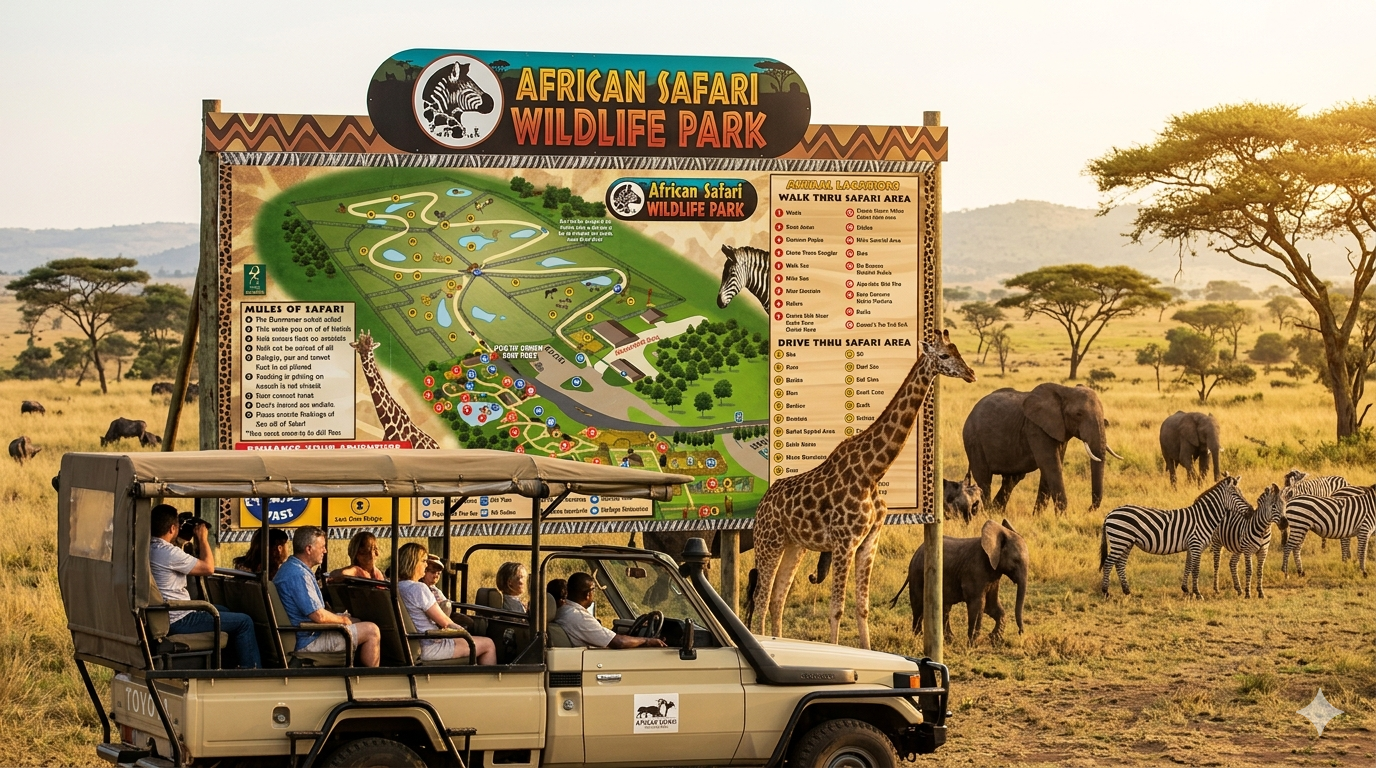
An African safari wildlife park is a large, protected area of land where wild animals live freely in their natural habitat. Unlike zoos, animals are not caged. You observe them from inside a safari vehicle or, in some parks, on guided walks and boat rides.
In Kenya, these parks are mostly managed by the Kenya Wildlife Service, which oversees national parks, national reserves, and marine parks. Some areas are run by county governments or private conservancies.
The word “safari” comes from the Swahili and Arabic word meaning “journey.” In today’s context, it refers to any wildlife-watching trip in a natural setting.
Quick Reference: Types of Protected Wildlife Areas in Kenya
| Type | Managed By | Key Feature | Example |
|---|---|---|---|
| National Park | Kenya Wildlife Service (KWS) | No human settlement inside | Nairobi National Park |
| National Reserve | County Government | Communities can live nearby | Maasai Mara National Reserve |
| Conservancy | Private or Community | Often premium, exclusive | Ol Pejeta Conservancy |
| Marine Park | KWS | Protects ocean ecosystems | Mombasa Marine Park |
| Sanctuary | KWS or County | Smaller, focused wildlife area | Kisumu Impala Sanctuary |
The difference matters when you are choosing where to go. National parks tend to have stricter rules and higher fees, while conservancies often offer more flexibility, like night game drives, which are not allowed in standard national parks.
Why Kenyans Should Visit African Safari Wildlife Parks
Many Kenyans have never visited a national park despite living near one. That is a missed opportunity — and it is changing fast. Here is why these parks matter to every Kenyan:
- Economic value: Wildlife tourism contributes approximately 10% of Kenya’s GDP, roughly KSh 680 billion per year. Every park visit supports this economy and creates jobs for rangers, guides, lodge staff, and local communities.
- Education: Schools and universities can use park visits as living classrooms. Seeing the Big Five in person teaches conservation in a way no textbook can.
- Conservation awareness: When Kenyans visit parks, they become advocates for wildlife protection. The Kenya Wildlife Service reports that 75% of all park visitors are Kenyan citizens — a statistic that shows domestic tourism matters enormously.
- Mental wellness: Studies globally show that time spent in nature reduces stress. A weekend trip to a nearby park can do wonders for your mental health.
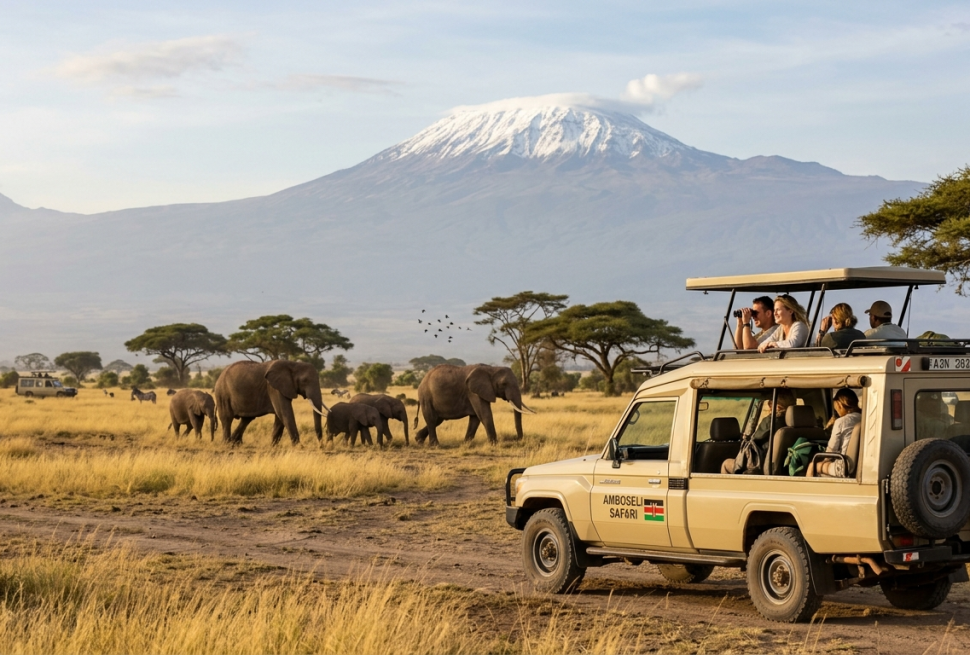
- National pride: Kenya’s wildlife is a global brand. From the Great Wildebeest Migration to the sight of elephants at Amboseli against the backdrop of Mount Kilimanjaro, these are treasures that belong to every Kenyan.
- Affordable options: With citizen entry fees starting at KSh 1,000 per day for some parks, a safari is more accessible than most Kenyans think.
Types of African Safari Wildlife Parks in Kenya
National Parks
National parks are fully protected areas where no farming, grazing, or settlement is allowed inside. The Kenya Wildlife Service manages all national parks and enforces strict wildlife protection laws.
Nairobi National Park is the world’s only national park located inside a capital city. It is home to lions, rhinos, buffaloes, cheetahs, and over 400 bird species — all within sight of Nairobi’s skyline. It receives roughly 345,000 visitors annually, making it Kenya’s most visited premier park.
Amboseli National Park sits at the foot of Mount Kilimanjaro and is famous for its massive elephant herds. The park hosts four of the Big Five and offers some of the best photography opportunities anywhere in Africa.
Tsavo East and Tsavo West together form one of the largest national park complexes in the world, covering over 20,000 square kilometres. Tsavo East is known for its red-dust elephants, while Tsavo West has Mzima Springs, where you can watch hippos through an underwater viewing chamber.
Mount Kenya National Park protects the slopes and glaciers of Africa’s second-highest mountain and is a UNESCO World Heritage Site. It is a destination for hikers, climbers, and bird watchers.
National Reserves
Unlike national parks, national reserves allow local communities to live and graze livestock within them. They are managed by county governments in partnership with KWS.
Maasai Mara National Reserve is Kenya’s most famous game reserve and accounts for over 22% of all game reserve visitors in the country. It is the stage for the Great Wildebeest Migration, where over 1.5 million wildebeest, zebras, and gazelles cross between Tanzania’s Serengeti and Kenya’s Mara every year. This spectacle attracts approximately 100,000 specific tourists annually.
Samburu National Reserve lies in Kenya’s arid north and is home to species you will not find in southern parks — the reticulated giraffe, Grevy’s zebra, Somali ostrich, beisa oryx, and gerenuk. It is a destination for serious wildlife enthusiasts.
Lake Nakuru National Reserve is a birdwatcher’s paradise, famous for its flamingo population and as one of Kenya’s best rhino sanctuaries. It received over 180,000 visitors in 2022 alone.
Private Conservancies
Private conservancies are increasingly popular because they offer experiences not available in standard parks. These include night game drives, walking safaris, and off-road driving.
Ol Pejeta Conservancy in Laikipia is the largest black rhino sanctuary in East Africa and is the home of the last two northern white rhinos on Earth. It also has chimpanzees, making it unique among Kenyan wildlife destinations.
Lewa Wildlife Conservancy in northern Kenya is a UNESCO World Heritage Site and a model for community-led conservation. It runs the annual Lewa Safari Marathon, where participants run alongside the Big Five.
View our top safaris in Kenya and Zanzibar — handpicked itineraries, expert guides, and real value for your money. Browse Kenya Safari Packages
Marine Parks and Reserves
Kenya’s coastline stretches for about 600 kilometres, and marine parks protect much of this ecosystem. Coral reefs, dolphins, whale sharks, sea turtles, and a stunning variety of fish make these areas a world-class scuba diving and snorkelling destination.
Mombasa Marine National Park and Malindi Marine National Park are the most visited and have recovered to 85% of their pre-COVID visitor levels as of 2023.
How to Access an African Safari Wildlife Park in Kenya Correctly
Here is a practical checklist to make sure your park visit goes smoothly:
Before You Go
- [ ] Choose your park based on what animals and experiences you want
- [ ] Book accommodation (lodge, tented camp, or KWS banda) well in advance, especially for peak season (July–October)
- [ ] Check current park entry fees on the official Kenya Wildlife Service website
- [ ] Apply for park entry through the eCitizen portal if booking online
- [ ] Arrange transport — either hire a 4x4 safari vehicle with a guide or book through a tour operator
- [ ] Pack light, layered clothing in neutral colours (khaki, olive, brown)
- [ ] Bring sunscreen, insect repellent, a hat, and binoculars
- [ ] Carry enough cash for incidentals and tips for your guide
At the Park
- [ ] Arrive at the gate early — most parks recommend arriving before 9 AM for the best wildlife sightings
- [ ] Stay inside the vehicle unless a guide tells you it is safe to exit
- [ ] Follow your guide’s instructions at all times
- [ ] Do not feed or disturb the animals
- [ ] Keep noise levels low
- [ ] Respect photography guidelines — some areas restrict flash photography
Costs, Park Fees, and Requirements in Kenya (2025/2026)
The Kenya Wildlife Service updated park fees through the Wildlife Conservation and Management (Access, Entry and Conservation) Fees Regulations 2025, gazetted on 22 September 2025.
Current Park Entry Fees (2025/2026)
| Park | Kenyan Citizen (Adult) | Non-Resident (Adult) | Kenyan Child | Non-Resident Child |
|---|---|---|---|---|
| Nairobi National Park | KSh 1,000 | USD 80 | KSh 215 | USD 40 |
| Maasai Mara (Narok County) | KSh 2,650 | USD 200 | KSh 1,750 | USD 100 |
| Amboseli National Park | KSh 1,500 | USD 90 | KSh 750 | USD 45 |
| Lake Nakuru National Park | KSh 1,500 | USD 90 | KSh 750 | USD 45 |
| Tsavo East / Tsavo West | KSh 1,000 | USD 60 | KSh 400 | USD 30 |
| Ol Pejeta Conservancy | KSh 2,000 | USD 120 | KSh 1,000 | USD 60 |
| Samburu National Reserve | KSh 1,500 | USD 90 | KSh 750 | USD 45 |
Note: Maasai Mara is managed by Narok County and has separate pricing. Always confirm current fees at Kenya Wildlife Service before travelling, as these are subject to revision.
Over 60% of Kenya’s wildlife tourism revenue comes from park entry income, which funds anti-poaching operations, ranger salaries, infrastructure, and community development projects. Every entry fee you pay goes directly into protecting these ecosystems.
Planning a safari but not sure where to start? Get a free, no-obligation custom itinerary from Kenya’s best safari team. View Kenya Safari Packages
Step-by-Step Guide: How to Book Your First Safari in Kenya
Booking your first African safari wildlife park experience does not have to be complicated. Here is how to do it in a logical order:
- Set your budget. Budget safaris start from around KSh 15,000 per person per day (inclusive of transport, entry, and accommodation). Mid-range safaris run from KSh 30,000 to KSh 80,000 per person per day. Luxury options go higher.
- Choose your destination. If it is your first time, the Maasai Mara, Amboseli, or Lake Nakuru are excellent starting points. Nairobi National Park works well for a one-day trip without travelling far.
- Pick your travel dates. July to October is peak season and offers the best overall wildlife viewing, including the Great Migration. January to February is also great with fewer crowds and lower costs.
- Book accommodation. Options range from KWS bandas (budget self-catering units) to luxury tented camps. Book at least two to three months in advance for peak season.
- Arrange transport. Most tourists use a 4x4 vehicle with a pop-up roof for game drives. You can self-drive in some parks, but hiring a professional guide significantly improves your experience.
- Contact a reputable tour operator. Companies like Charming Safariz can arrange everything — transport, accommodation, park entry, and guides — saving you the stress of doing it yourself.
- Get your park entry sorted. Pay through the eCitizen portal at ecitizen.go.ke or let your tour operator handle it.
- Pack and travel. Light bags, neutral colours, a good camera, and an early wake-up time. Most game drives start at 6 AM.
Common Mistakes to Avoid on an African Safari
1. Visiting during the wrong season without research Many first-timers arrive in the rainy long rains (April–May) expecting dry plains and are surprised by muddy roads and low visibility. Solution: Check the specific park’s seasonal guide before booking. Some parks like Samburu are actually great during wetter months.
2. Booking the cheapest operator without checking reviews Very cheap safaris sometimes cut costs by using poor vehicles, unqualified guides, or unlicensed accommodation. Solution: Check reviews on TripAdvisor and work with operators registered with the Tourism Regulatory Authority.
3. Only spending one day on safari One day is never enough. You will miss morning and evening game drives, which are the best times for wildlife activity. Solution: Plan a minimum of three days for any major park.
4. Not tipping your guide Your safari guide works long hours and shares deep knowledge of animal behaviour. They are often underpaid by the operator. Solution: Budget KSh 2,000 to KSh 5,000 per day as a guide tip — it makes a real difference.
5. Wearing bright-coloured clothing Bright reds, blues, and whites can spook animals and attract insects. Solution: Pack neutral colours — khaki, olive, tan, grey, and brown.
6. Ignoring the smaller things Most people focus only on the Big Five and miss stunning birds, insects, reptiles, and plants. Solution: Ask your guide to point out everything, not just lions and elephants.
7. Not booking in advance Lodges and campsites in popular parks fill up fast, especially in peak season. Solution: Book accommodation at least two to three months ahead for July–October travel.
Future Trends in Kenya’s African Safari Wildlife Parks (2026 and Beyond)
Kenya’s wildlife tourism sector is evolving quickly, and 2026 brings several important developments worth knowing:
Digital booking and eCitizen integration: KWS is rolling out full digital park entry payment through the eCitizen platform. Expect paperless gate entry to become standard at most major parks by 2026.
New conservation fee regulations: The Wildlife Conservation and Management (Access, Entry and Conservation) Fees Regulations 2025 introduced updated pricing structures across all parks. This follows a nationwide public participation exercise covering 19 counties, aimed at closing KWS’s annual funding deficit, which currently stands at over KSh 11 billion despite revenues nearly doubling from KSh 4 billion in 2022 to nearly KSh 8 billion in the 2024/2025 financial year.
Community conservancy growth: Kenya currently has 23 private conservancies protecting over 1,400 square kilometres. This number is expected to grow as communities see the economic benefits of wildlife tourism versus other land uses.
Eco-tourism and responsible travel: Global visitors are increasingly choosing destinations with clear conservation commitments. Kenya is responding by promoting low-impact lodges, solar-powered camps, and wildlife corridors that connect parks across county boundaries.
Kenya’s 2028 tourism target: Kenya is targeting 5.5 million international tourist arrivals by 2028. This will require expansion of infrastructure, improved road access to parks, and continued international marketing through Magical Kenya.
Domestic tourism push: Following COVID-19, KWS and the government have actively promoted park visits among Kenyans. Free entry days for citizens on national tourism days have helped, and 75% of all park visitors are now Kenyan citizens.
Quick Poll: Have you ever visited a Kenya national park?
A) Yes, and I would go again B) Yes, but once was enough C) No, but I plan to visit soon D) No, and I am not interested
(Poll answer: Most Kenyan travellers who visit national parks report they want to go again — wildlife tourism satisfaction rates are consistently high, with the Maasai Mara and Amboseli receiving the most repeat visitors among domestic tourists.)
FAQ: African Safari Wildlife Parks in Kenya
What is the best African safari wildlife park in Kenya for first-time visitors? The Maasai Mara National Reserve is the top choice for first-timers. It has the highest concentration of predators in Kenya, the famous Great Migration between July and October, and a wide range of accommodation from budget camps to luxury lodges. Amboseli National Park is a close second, particularly if you want to see large elephant herds against the backdrop of Mount Kilimanjaro.
How much does it cost to visit a wildlife park in Kenya in 2026? Kenyan citizens pay between KSh 1,000 and KSh 1,500 per adult per day at most KWS-managed parks. Maasai Mara, managed by Narok County, charges KSh 2,650 for adult citizens. Non-resident adults pay between USD 60 and USD 200 depending on the park. These fees cover entry only; accommodation, transport, and guide fees are separate.
What animals will I see on a Kenya safari? Kenya is home to the Big Five — lion, leopard, elephant, buffalo, and rhino. Beyond the Big Five, you can see cheetahs, wild dogs, giraffes, zebras, hippos, crocodiles, hyenas, jackals, and over 1,100 species of birds. Kenya holds approximately 11% of the world’s lion population, and its elephant population reached 36,280 as of the 2021 National Wildlife Census.
When is the best time to visit an African safari wildlife park in Kenya? July to October is peak season, coinciding with the Great Wildebeest Migration river crossings at the Maasai Mara. January and February offer excellent game viewing with fewer crowds and lower prices. Each month has something to offer — the key is matching your visit to what you want to see.
Can Kenyan citizens self-drive into national parks? Yes. Several parks, including Nairobi National Park, allow self-drive visits. You will need a valid driving licence, a suitable 4x4 vehicle, and a park entry permit obtained through eCitizen. However, a professional guide significantly improves your chances of finding and identifying wildlife.
Is it safe to visit wildlife parks in Kenya? Yes, when you follow the rules. Stay inside your vehicle during game drives unless instructed by your guide. Avoid approaching or feeding animals. Follow the park’s code of conduct at all times. All KWS parks have rangers on patrol, and incidents involving tourists are extremely rare when standard safety guidelines are followed.
My Experience Visiting Kenya’s Wildlife Parks
I have visited several of Kenya’s parks over the years, and each one has left a distinct impression.
My first trip was to Nairobi National Park on a Sunday morning with a group of friends. I was honestly not expecting much — it is just a park next to the city, I thought. Then we rounded a corner and there were three lions lying in the sun about 20 metres from our vehicle, completely unbothered by us. The Nairobi skyline was visible in the background. I sat there in silence for almost ten minutes. That experience completely changed how I thought about Kenya’s wildlife.
A later trip to Amboseli was different. We arrived at sunset and woke up the next morning to a massive herd of elephants moving slowly across the plain with Kilimanjaro, perfectly clear, in the background. Our guide knew each elephant by name — he had been watching these families for years. That kind of knowledge is what separates a great guide from a good one.
What I will tell anyone planning their first safari: spend more time in fewer parks. Two to three nights in the Mara or Amboseli gives you a completely different experience than rushing through four parks in three days. Let the wildlife come to you. It always does, eventually.
Booking with a reliable tour operator makes a difference too. Companies like Charming Safariz take care of everything from permits to accommodation to guide selection, which means you spend your time watching animals instead of troubleshooting logistics.
Ready to see Kenya’s wildlife for yourself? Charming Safariz is Kenya’s most trusted tour and travel company for safaris, beach holidays, and ticketing.
Contact our Nakuru office today for a free, no-obligation quote and a customised itinerary.
WhatsApp: +254 714 236 664 Email: enquiry@charmingsafariz.com Office: Nakuru, Kenya
Key Takeaways
- Kenya has over 50 protected wildlife areas, covering approximately 20% of the national landmass, managed by the Kenya Wildlife Service
- The Big Five — lion, leopard, elephant, buffalo, and rhino — can be seen across multiple parks
- Wildlife tourism contributes approximately 10% of Kenya’s GDP, amounting to roughly KSh 680 billion annually
- Kenyan citizen entry fees range from KSh 1,000 to KSh 2,650 depending on the park; non-resident fees range from USD 60 to USD 200
- Over 3.38 million visitors entered Kenya’s protected areas in the last financial year; 75% were Kenyan citizens
- The Maasai Mara accounts for over 22% of all game reserve visitors in Kenya
- Kenya’s elephant population grew from 32,214 in 2014 to 36,280 in 2021 — a conservation success story
- The best months for the Great Migration are July to October
- Booking through a trusted operator like Charming Safariz saves time, reduces cost mistakes, and improves the quality of the entire experience
- Always book accommodation at least two to three months in advance for peak season travel
Conclusion
Kenya’s African safari wildlife parks are not just tourist attractions. They are living ecosystems, economic engines, and national heritage sites that belong to every Kenyan and the wider world. Whether you are a student, a family, a couple, or a solo traveller, there is a safari experience in Kenya that fits your budget and your schedule.
The parks are more accessible than ever in 2026. Booking is easier, digital payment is available through eCitizen, and domestic tourism is booming. There has never been a better time to explore your own country’s extraordinary wildlife.
If you have visited a Kenya wildlife park before, share your experience in the comments below. If you are planning your first trip and have questions, ask away — we are happy to help. And if you are ready to book, Charming Safariz is ready for you.
Request a Free Safari Quote Today
Sources and References
- Kenya Wildlife Service — Official Parks and Conservation Information
- Magical Kenya — Official Tourism Destination Guide
- UNESCO World Heritage Centre — Lewa Wildlife Conservancy and Mount Kenya
- World Travel and Tourism Council — Africa Tourism Reports
- TripAdvisor — Kenya Safari Reviews and Rankings
- Kenya National Bureau of Statistics — Tourism Economic Data
- Nation Africa — Kenya Tourism Reporting
- eCitizen Kenya — Park Entry and Government Services
- Statista — Kenya Tourism Statistics 2026
- Business Daily Africa — Kenya Wildlife Economy Coverage