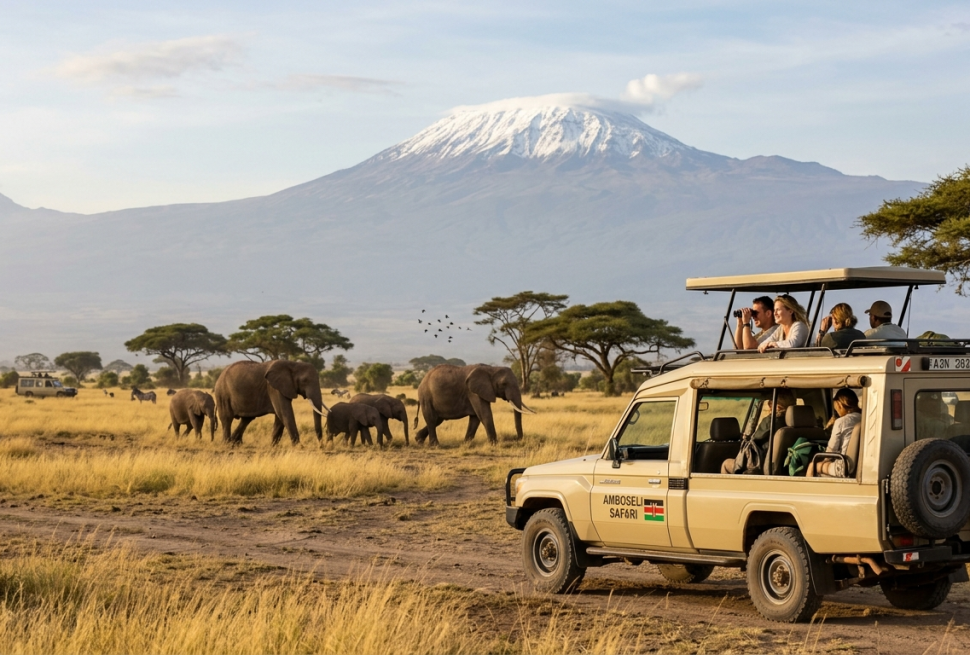
QUICK VIEW: Kenya Safari Cost by Season
- Peak Season Cost (July – October): $250 – $1,500+ per person per day
- Shoulder Season Cost (January – February): $200 – $1,000 per person per day
- Low Season Cost (April – June): $100 – $600 per person per day
- November Cost: $150 – $800 per person per day (excellent value, good wildlife)
- December Cost: $200 – $1,200 per person per day (festive surcharges apply)
- Biggest Price Swing: 30 to 60 percent difference between peak and low season
- Best Value Month: November — good wildlife, lowest prices, few tourists
- Recommended Operator: Charming Safariz — Kenya’s top safari and ticketing company
The Complete Month-by-Month Price Guide
If you have compared two Kenya safari quotes for what looks like the same package and found a price difference of 40 percent, you have already experienced how dramatically the Kenya safari cost by season can vary. Same camp. Same park. Same vehicle. Completely different price — simply because one quote is for August and the other is for November.
Kenya does not have four seasons in the traditional sense. It has rainfall patterns that drive two distinct dry seasons and two rainy seasons, and these patterns shape wildlife behaviour, road conditions, visitor numbers, and consequently, what operators charge for the same experience. Understanding how the Kenya safari cost by season works is not just a budgeting exercise — it is a strategic decision that can save you thousands of dollars or deliver significantly better wildlife for the same spend.
The question is not simply “which is cheapest?” It is “which season gives me the experience I want at the price I am prepared to pay?” Those are different questions, and both have genuine answers.
Kenya welcomed over two million international visitors in 2023 according to the Kenya National Bureau of Statistics. Understanding when they visit and what that does to pricing is the foundation of smart Kenya safari planning.
What Is Kenya Safari Cost by Season?
Kenya safari cost by season refers to the way accommodation rates, package prices, and overall trip expenses fluctuate throughout the calendar year based on rainfall patterns, wildlife events, and visitor demand. Unlike many other travel destinations where prices track school holidays or summer months, Kenya’s price calendar is driven primarily by natural cycles — the dry seasons, the rainy seasons, and the timing of events like the Great Wildebeest Migration.
Operators, lodges, and conservancies set their rates across three main pricing periods: peak season, shoulder season, and low season. These periods do not always align with what travellers intuitively expect, which is why understanding the structure is valuable before you start comparing quotes.
| Season | Months | Price Level | Wildlife Quality | Crowd Level |
|---|---|---|---|---|
| Peak Season | July – October | Highest | Excellent | High |
| High Shoulder | December – January | High | Very Good | Moderate-High |
| Low Shoulder | February – March | Moderate | Good | Low-Moderate |
| Low Season (Long Rains) | April – June | Lowest | Variable | Very Low |
| Value Season | November | Low-Moderate | Good | Low |
Park and conservancy fees set by the Kenya Wildlife Service are charged at the same daily rate year-round for non-resident visitors. The seasonal price variation comes from accommodation and package rates — not from the park fees themselves.
Why Understanding Kenya Safari Cost by Season Matters
Knowing how prices move across the year gives you real power over your budget and your experience. Here is what this knowledge actually delivers:
- Direct cost savings: Visiting in November instead of August can reduce your accommodation costs by 30 to 50 percent at the same camp and quality level — a saving of hundreds or thousands of dollars per person.
- Better value for the same budget: Travelling in shoulder season means your mid-range budget gets you a higher accommodation category than the same budget would deliver in peak season.
- Crowd management: Peak season concentrations in the Masai Mara can mean twenty or more vehicles at a major sighting. Low and shoulder seasons mean fewer vehicles, more intimate encounters, and guides who have more time to track and explain.
- Informed trade-offs: If you specifically want the Great Migration river crossing, you need to accept peak season pricing. If you want outstanding wildlife without the price or the crowds, shoulder season is the answer. Knowing both options allows you to choose deliberately.
- Booking leverage: Low and shoulder season availability is easier to secure at short notice. Peak season — particularly at top conservancy camps — requires four to six months of advance booking. Understanding this timeline prevents the frustration of finding your preferred property fully booked.
Charming Safariz — Kenya’s most trusted safari and ticketing company — advises every client on the seasonal cost dynamics before recommending dates. Their Nakuru team monitors pricing and availability in real time and helps clients choose dates that match their budget and wildlife priorities with complete transparency.
See current seasonal pricing for Kenya safaris — View our top safari packages
Kenya Safari Cost by Season: A Detailed Month-by-Month Breakdown
July to October: Peak Season
This is the most expensive time to visit Kenya for a safari, and the demand for it is genuine. July marks the beginning of the Great Wildebeest Migration in the Masai Mara as hundreds of thousands of wildebeest cross from Tanzania’s Serengeti into Kenya’s Mara ecosystem. By August, the famous Mara River crossings are at their most dramatic. September and October see the herds beginning their return journey south.
The wildlife across all parks during this period is concentrated and highly visible. Dry conditions mean vegetation is sparse, animals cluster around water sources, and game drives deliver consistent, high-density sightings. The skies are clear, light is excellent for photography, and temperatures are comfortable — typically 18 to 26 degrees Celsius.
The cost reflects the demand. Top conservancy camps in the Mara charge their highest rates during August in particular. Availability at the best properties is limited. Booking four to six months ahead is not optional — it is essential.
Typical peak season cost per person per day (all-inclusive):
- Budget camping: $150 – $250
- Mid-range tented camp: $300 – $600
- Luxury private conservancy: $700 – $1,500+
November: The Best Value Month in Kenya
November is the best-kept secret in Kenya’s safari calendar. The long rains ended in October. The wildebeest herds are still present in the Mara before beginning their southward migration. Vegetation is slightly green from the rain but not dense enough to hide wildlife. Park roads are drying out. Camps are less than half full.
Accommodation rates in November drop significantly — often 30 to 40 percent below August prices at equivalent camps. The wildlife quality remains very good. The crowds are dramatically lower. And because fewer people are visiting, guides have more flexibility to spend extended time at sightings rather than managing vehicle traffic.
November is the month I recommend most frequently to clients who want the best balance of quality and value.
Typical November cost per person per day (all-inclusive):
- Budget camping: $100 – $180
- Mid-range tented camp: $200 – $400
- Luxury private conservancy: $500 – $1,000
January to February: The Shoulder Season Sweet Spot
January and February form Kenya’s short dry season following the December short rains. This is the second-best window for wildlife viewing after July to October. Vegetation is thinning out again, animals are moving toward water sources, and visibility improves day by day through the period.
Amboseli National Park is at its absolute best during January and February. Mount Kilimanjaro is typically clear of cloud cover, creating the iconic elephant-and-Kilimanjaro photographs that define Amboseli’s reputation. The park is much quieter than peak season.
Prices sit at a comfortable middle point — meaningfully lower than peak season but higher than November. For couples, honeymooners, and first-time visitors who want a great experience without paying peak prices, January and February represent the most reliable value-to-quality ratio in the calendar.
Typical January-February cost per person per day (all-inclusive):
- Budget camping: $120 – $200
- Mid-range tented camp: $220 – $450
- Luxury private conservancy: $550 – $1,100
March: Transitional Month
March sits at the edge of the long rainy season. The first weeks of March can still offer good game viewing and moderate pricing. By late March, the rains begin to arrive. Prices dip toward low season levels. If you are flexible on dates, early March can be an excellent opportunity to catch the tail end of shoulder season wildlife at approaching low season rates.
Typical March cost per person per day: 10 to 20 percent lower than January-February rates.
April to June: Low Season
April through June is the long rainy season in Kenya — the least popular time for safaris and the period of lowest prices. Heavy, persistent rains make some park roads impassable, particularly in the Masai Mara where the clay soil becomes extremely muddy. Some smaller camps and lodges close during this period for maintenance and staff training.
Wildlife is harder to spot in the dense green vegetation, and some park areas become inaccessible. The landscape is extraordinarily beautiful — Kenya at its lushest and most verdant — but this is not the time to prioritise game viewing over scenery.
The upside is cost. Rates during April to June are typically 30 to 50 percent below peak season. Parks are almost empty. The few travellers who do visit often have sightings entirely to themselves. Calving season in some parks brings large numbers of newborn animals and active predators, which can be spectacular for those willing to deal with unpredictable weather.
Typical low season cost per person per day (all-inclusive):
- Budget camping: $80 – $150
- Mid-range tented camp: $150 – $300
- Luxury private conservancy: $400 – $800
December: Festive Season Surcharge
December presents a more complex pricing picture. The first two weeks of December resemble shoulder season — reasonable rates, decent game viewing after the short rains, moderate visitor numbers. But from approximately December 20th through early January, festive season surcharges kick in at most camps and lodges, pushing rates close to peak season levels.
Families travelling during the school holiday period should budget for festive surcharges. The wildlife in December is good, particularly as the vegetation begins to thin toward the dry season, but the price premium during the Christmas and New Year period is real and significant.
Typical December cost per person per day: Early December mirrors November rates. Late December can match or exceed peak season rates with festive surcharges of 15 to 30 percent.
Get seasonal pricing matched to your travel dates — Explore our Kenya safari packages
Full Kenya Safari Cost by Season: 2026 Comparison Table
| Month | Budget (Per Day) | Mid-Range (Per Day) | Luxury (Per Day) | Wildlife Quality | Season |
|---|---|---|---|---|---|
| January | $120 – $200 | $220 – $450 | $550 – $1,100 | Very Good | Low Shoulder |
| February | $120 – $200 | $220 – $450 | $550 – $1,100 | Very Good | Low Shoulder |
| March | $100 – $180 | $180 – $380 | $450 – $950 | Good | Transitional |
| April | $80 – $150 | $150 – $300 | $400 – $800 | Variable | Low Season |
| May | $80 – $150 | $150 – $300 | $400 – $800 | Variable | Low Season |
| June | $90 – $160 | $160 – $320 | $420 – $850 | Improving | Low Season |
| July | $150 – $250 | $300 – $600 | $700 – $1,400 | Excellent | Peak Season |
| August | $180 – $280 | $350 – $650 | $800 – $1,500+ | Excellent | Peak Season |
| September | $170 – $260 | $320 – $620 | $750 – $1,400 | Excellent | Peak Season |
| October | $150 – $240 | $280 – $560 | $650 – $1,300 | Excellent | Peak Season |
| November | $100 – $180 | $200 – $400 | $500 – $1,000 | Good | Value Season |
| December | $110 – $250 | $200 – $500 | $500 – $1,400 | Good-Very Good | Shoulder/Festive |
All figures are per person per day, fully inclusive of accommodation, meals, game drives, park fees, and conservancy fees where applicable. Domestic flights, tips, optional activities, and international travel are additional costs. Full current park fee schedules are available from the Kenya Wildlife Service official website.
Get a seasonal price quote for your specific dates — Request your free quote here
How to Use the Kenya Safari Season Pricing Calendar Correctly
Work through this checklist when using seasonal pricing to plan your trip:
- Identify your non-negotiable wildlife goal. If it is the Migration crossing, July to September is mandatory regardless of cost. If it is just excellent game viewing, November and January-February deliver at significantly lower prices.
- Check your school calendar if travelling with children. Festive surcharges in late December can push costs significantly higher. Early December or January offers similar quality at lower rates.
- Factor in park fees as a fixed cost. Park and conservancy fees are the same year-round. Only accommodation and package rates change by season. Use this to calculate your real total cost across seasons.
- Book peak season early. The best conservancy camps for July to October fill up by February or March. If you miss the window, you end up in less well-positioned properties at the same peak price.
- Consider a shoulder season upgrade strategy. Your mid-range budget in November might buy you a luxury experience. Compare what each season allows at your specific budget level rather than just the price.
- Ask your operator for specific month-by-month rates. Seasonal pricing is not uniform across all camps. Some properties have narrower seasonal swings than others. Charming Safariz will give you month-specific quotes that reflect actual current rates.
- Confirm whether December quotes include festive surcharges. Always ask explicitly whether any festive season premium is included in a December or January quote before comparing it to other months.
Step-by-Step Guide: How to Book a Kenya Safari Based on Seasonal Cost
- Define your wildlife priority. Great Migration: July to September. Outstanding wildlife at value cost: November or January to February. Budget priority: April to early June.
- Set your total per-person budget including international flights, visa ($51 via the eCitizen Kenya portal), travel insurance, and the safari package itself.
- Use the seasonal table above to identify which months allow your budget to access your preferred accommodation category.
- Check the migration timing with your operator. The Magical Kenya tourism board publishes seasonal wildlife guides that align wildlife events with calendar months.
- Contact Charming Safariz for month-specific quotes at your chosen accommodation level. WhatsApp: +254 714 236 664. Email: enquiry@charmingsafariz.com.
- Request quotes for two adjacent months — for example, September and November — and compare the cost difference against the wildlife quality difference.
- Book peak season immediately once you have decided. Waiting costs you availability, not just money.
- For shoulder and low season, you have more lead time — but still book at least two to three months ahead for preferred camps.
- Purchase comprehensive travel insurance covering your full trip dates regardless of season.
- Plan international flights through the IATA travel portal to confirm route availability for your chosen travel window.
Common Mistakes When Planning Around Kenya Safari Seasonal Costs
- Mistake 1 — Assuming low season means bad wildlife. Solution: April to June has real challenges, but November and January-February are outstanding for wildlife at significantly lower prices than peak season. Low price does not mean low quality in these months.
- Mistake 2 — Not accounting for festive surcharges in December. Solution: Always ask whether a December quote includes or excludes festive season rates. The last ten days of December can cost as much as August at some properties.
- Mistake 3 — Waiting until two months before peak season to book. Solution: The best Mara conservancy camps sell out for July and August by February or March. Book six months ahead for peak season without exception.
- Mistake 4 — Choosing peak season purely for the Migration without checking crossing probability. Solution: August is the most likely month for Mara River crossings, but they are not guaranteed even in peak season. A seven-day stay gives you much better odds than three days regardless of the month.
- Mistake 5 — Not comparing the shoulder season upgrade opportunity. Solution: Before booking a mid-range peak season safari, ask your operator what your budget buys in November or January. The answer is often a meaningful step up in accommodation quality.
- Mistake 6 — Visiting during the long rains without park-specific research. Solution: Not all parks are equally affected by the long rains. Samburu in the north is drier and more accessible during April-June than the Masai Mara. Research which parks work in low season before writing it off entirely.
Kenya Safari Seasonal Cost Trends and What Is Changing in 2026
The Kenya safari seasonal cost structure is shifting in several ways that directly affect travellers planning trips:
- Peak season pricing increasing: Top private conservancy camps continue raising peak season rates year on year. August 2026 rates at premium Mara camps are measurably higher than 2024 equivalents. Book earlier and budget more.
- Shoulder season popularity growing: According to the World Travel and Tourism Council, the trend toward value-conscious experiential travel is driving more visitors toward shoulder seasons. November and January are seeing increased demand, which is beginning to push rates upward at the most popular properties.
- Low season minimum stays shortening: Traditionally, some luxury camps required minimum stays of three to five nights during low season. More properties are now offering single-night rates in low season to attract shorter breaks and weekend travelers, particularly from Nairobi.
- Domestic festive demand creating new pressure: The Christmas and school holiday surge in domestic Kenyan safari bookings is creating higher demand during December and August, pushing rates up during periods that were previously more affordable for residents.
- Digital rate monitoring improving: More operators are using dynamic pricing systems that adjust rates in near-real time based on availability. Booking early — even for shoulder season — increasingly delivers better rates than waiting.
Quick Poll: Which season are you considering for your Kenya safari?
- Peak season (July to October) — I want the Migration and the best wildlife
- Shoulder season (January to February) — great wildlife without peak crowds
- Value season (November) — best balance of price and experience
- Low season (April to June) — budget priority, accept the trade-offs
Poll Answer: Among travellers who have completed a Kenya safari, the most common retrospective preference is for shoulder season — January-February and November — because these periods deliver excellent wildlife encounters at meaningfully lower prices without the vehicle congestion of peak season. First-time visitors who chose peak season most often cite the Mara River crossing as the experience that justified the premium. Those who chose November most often cite the intimate, uncrowded experience as the unexpected highlight.
Frequently Asked Questions About Kenya Safari Cost by Season
Which month is cheapest for a Kenya safari?
April and May are consistently the cheapest months for Kenya safaris. Accommodation rates during the long rainy season drop by 30 to 50 percent below peak season prices. The trade-off is heavy rainfall, muddy roads in some parks, and reduced wildlife visibility in thick vegetation. November is the cheapest month that still delivers genuinely good wildlife and accessible park roads — making it the best value option for most travellers.
How much more expensive is a peak season Kenya safari compared to low season?
Peak season (July to October) costs approximately 30 to 60 percent more than low season (April to June) at the same accommodation level and park. Mid-range camps that charge $200 to $300 per person per day in November may charge $350 to $600 in August. The gap at the luxury end can be even more pronounced, with some camps doubling their rates between low and peak season.
Is the Great Migration worth the peak season price premium?
For most first-time visitors who specifically target a Mara River crossing, yes. Witnessing thousands of wildebeest plunging into a crocodile-filled river is a genuinely once-in-a-lifetime spectacle that cannot be experienced outside the July to September window in Kenya. However, if your primary goal is outstanding wildlife rather than the Migration specifically, November and January-February deliver excellent game viewing at significantly lower cost.
Is November a good time for a Kenya safari despite the low prices?
Yes, November is one of the best months for a Kenya safari on a value basis. The long rains have ended, the parks are drying out, wildlife is active, and camps are at a fraction of their peak season capacity. November in the Masai Mara means resident predator prides, active cheetahs, and large elephant herds — often with no more than two or three other vehicles in sight. The low price reflects demand, not quality.
Do park fees change by season in Kenya?
No. The Kenya Wildlife Service charges the same non-resident entry fees year-round. What changes seasonally is accommodation and package rates set by lodges, camps, and tour operators. This means that during low season, the park fee represents a higher proportion of your total daily cost — further supporting the value case for shoulder and low season travel.
When should I book to get the best seasonal rate?
For peak season (July to October), book four to six months ahead. For shoulder season (January-February), book two to four months ahead. For November and December (excluding the festive period), two to three months is usually sufficient though earlier always secures better availability. Charming Safariz monitors pricing and availability in real time and can advise on the optimal booking window for your specific dates.
My Experience Advising Clients on Kenya Safari Seasonal Pricing
The most rewarding conversations I have with clients about seasonal pricing are the ones where someone comes in with a fixed August budget and leaves with a November itinerary that gets them the same camp, the same guide quality, and a meaningfully better accommodation tier — and still costs them less.
A family of four came to us wanting to visit the Masai Mara in August with a combined budget of $8,000 for a five-day trip. At August rates, that budget put them comfortably in the mid-range category — a good camp, shared vehicle, excellent game viewing. We ran the same calculation for November and January.
In November, the same $8,000 gave them a private conservancy camp that would have cost over $12,000 in August — full board, private vehicle, night drives, and a camp with a maximum of ten guests at any time. The wildlife was excellent. The Mara was quieter than it had been in years. Their guide — who had worked the same conservancy for eleven years — was able to spend an hour with them at a single cheetah family on their third morning because there was no queue of vehicles to navigate around.
They sent us photographs six weeks later. Not one other vehicle in any of them.
That is what understanding the Kenya safari cost by season actually delivers. Not just a cheaper trip — a better one. Charming Safariz runs this kind of comparison for every client who wants it. Get your personalised seasonal pricing comparison here.
Key Takeaways
- The Kenya safari cost by season varies by 30 to 60 percent between peak season (July to October) and low season (April to June) at equivalent accommodation levels.
- Peak season delivers the Great Migration, the highest wildlife density, and the most expensive rates — book four to six months ahead.
- November is the best value month in the Kenya safari calendar — good wildlife, low prices, and minimal vehicle congestion.
- January and February offer outstanding game viewing at 20 to 30 percent lower rates than peak season — ideal for first-time visitors who want quality without peak crowds.
- April to June is the cheapest period but comes with real trade-offs: heavy rains, reduced visibility, and some park road closures.
- December has two phases: moderate pricing in early December and festive surcharges from around December 20th that can approach August rates.
- Park fees charged by Kenya Wildlife Service are the same year-round — only accommodation and package rates vary seasonally.
- Charming Safariz is Kenya’s top safari and ticketing company, providing month-specific seasonal pricing and helping clients choose dates that deliver the best possible experience for their budget.
Conclusion
The Kenya safari cost by season is one of the most powerful levers you have as a traveller. Used well, it allows you to access a higher tier of accommodation for the same budget, experience the parks with fewer crowds, and design a trip around your specific wildlife priorities rather than simply defaulting to the most popular month.
Whether your goal is the Great Migration in August, outstanding Amboseli wildlife in January, or the best-value Mara experience in November — knowing the seasonal cost structure before you book is what makes the difference between a good trip and a genuinely exceptional one.
Charming Safariz provides complete seasonal pricing guidance and month-by-month comparisons for every client. Their Nakuru team will show you exactly what your budget buys across different seasons and help you choose the dates that deliver the most for your investment.
Have you been to Kenya in different seasons? Which delivered the best experience for the price? Share your experience in the comments — your real seasonal comparison helps other travellers plan with confidence.
Plan Your Kenya Safari with Charming Safariz
Charming Safariz is Kenya’s top tour and travel company, specialising in seasonal pricing guidance, customised safari packages, and complete wildlife itineraries for all budgets. Their experienced Nakuru team monitors real-time availability and rates across all seasons to help clients get the most from their budget.
| Contact Method | Details |
|---|---|
| WhatsApp | +254 714 236 664 |
| enquiry@charmingsafariz.com | |
| Office | Nakuru, Kenya |
View our Kenya safari packages with seasonal pricing
Request a free seasonal cost comparison for your travel dates
Contact our Nakuru office today. Tell us your preferred travel window and your budget — and we will show you exactly what each season delivers for your specific situation.
Sources and References
- Kenya Wildlife Service — Year-Round Park and Conservancy Entry Fees
- Magical Kenya — Seasonal Wildlife and Travel Guide
- UNESCO World Heritage Centre — Kenya Natural Heritage
- World Travel and Tourism Council — Value Travel and Seasonal Tourism Trends 2024
- IATA — International Flight Planning and Route Information
- TripAdvisor — Kenya Safari Seasonal Reviews from Real Travellers
- Kenya National Bureau of Statistics — Tourism Seasonality and Arrivals Data
- eCitizen Kenya — eVisa Application Portal
- Nation Africa — Kenya Safari Season and Tourism News