Kenya Safari Cost 2026: The Honest, Complete Breakdown You Actually Need
Quick View
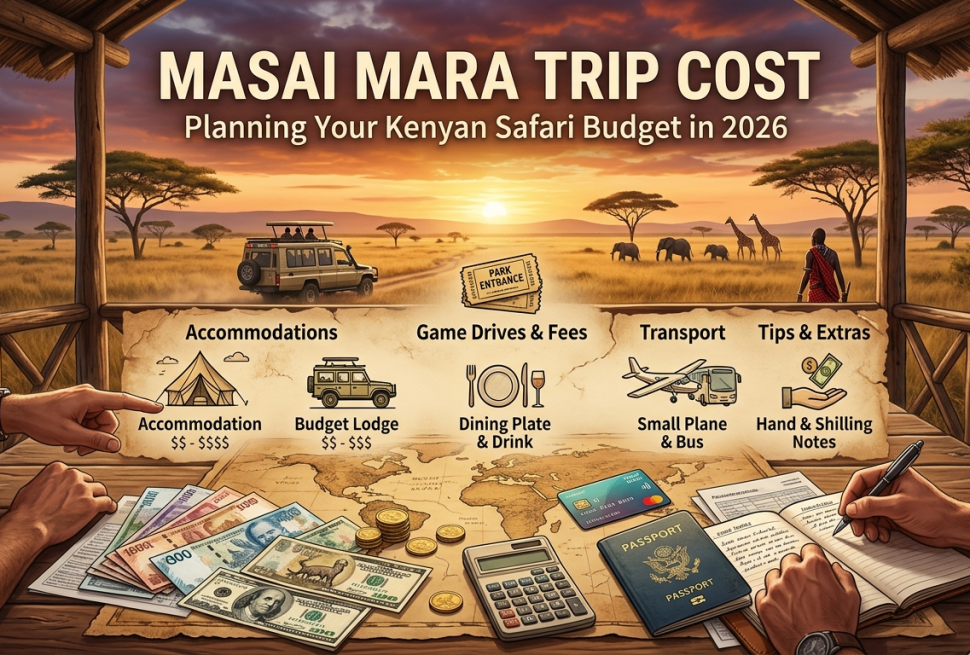
A Kenya safari cost ranges from $150 to $1,500+ per person per day in 2026, depending on your accommodation type, travel season, parks visited, and whether you book with a local or international operator. Here is what to expect at each level:
- Budget safari: $150 – $300 per person per day | 7‑day trip total: $1,200 – $1,700
- Mid-range safari: $350 – $600 per person per day | 7‑day trip total: $2,500 – $4,200
- Luxury safari: $700 – $1,500+ per person per day | 7‑day trip total: $5,000 – $10,000+
- Park fees: $80 – $200 per adult per day (Maasai Mara fees are $100 low season / $200 high season)
- Cheapest way to go: Group camping tour, booked direct with a licensed Kenyan operator, during low season (April – June) — can cost as little as $180 per person per day
- Booking tip: Booking directly through a Kenya-based operator like Charming Safariz saves you 30–100% over international safari companies
Introduction
You have been dreaming about it for years. The Maasai Mara at sunrise. Elephants crossing the plains below Kilimanjaro. A leopard draped across an acacia branch. The problem is you keep hearing wildly different numbers — $3,000. $8,000. $25,000. And you cannot figure out what is real.
The truth is that Kenya safari cost depends on several factors that most travel websites gloss over. Your accommodation level. The parks you visit. The season you travel. Who you book through. Each of these variables can shift your total budget by thousands of dollars — in either direction.
This guide gives you the real numbers. Not rack rates. Not marketing copy. The actual figures that experienced Kenya safari travelers use to plan and budget their trips in 2026. Whether you want a memorable budget camping experience, a comfortable mid-range escape, or a full luxury lodge stay in a private conservancy, you will find everything you need to plan smart and spend well.
Charming Safariz — Kenya’s best tour and travel company for safaris and ticketing — helped shape the context behind these numbers. They know what things actually cost on the ground.
What Is Kenya Safari Cost and Why Does It Vary So Much?
Kenya safari cost refers to the total amount you spend to experience a wildlife safari in Kenya — covering accommodation, game drives, park fees, meals, internal transport, and any additional activities. It is priced almost entirely in US dollars.
The reason it varies so much is simple: you are essentially choosing your own experience. A budget traveler sharing a vehicle with six others and sleeping in a basic tent will pay a fraction of what a couple in a private tented lodge on a conservancy pay — even if they see the exact same lion pride on the same morning.
The three biggest cost drivers are:
- Accommodation level — This single factor accounts for 50–70% of your total Kenya safari cost
- Season — Peak season (July to October) can double park fees in some reserves
- Who you book through — International operators add 30–300% markup over local prices
Kenya Safari Cost Overview Table (2026):
| Safari Level | Cost Per Person Per Day | 7‑Night Total Estimate |
|---|---|---|
| Budget (group, camping) | $150 – $300 | $1,200 – $1,700 |
| Mid-Range (private, tented camp) | $350 – $600 | $2,500 – $4,200 |
| Luxury (private lodge/camp) | $700 – $1,500 | $5,000 – $10,000+ |
| Ultra-Luxury (exclusive conservancy) | $1,500 – $2,500+ | $10,000 – $20,000+ |
These figures cover accommodation, meals, game drives, and park fees in most standard packages. International flights, travel insurance, gratuities, and add-on activities like hot air balloon rides are separate.
The World Travel and Tourism Council consistently ranks Kenya as one of Africa’s strongest value-for-money safari destinations, particularly at the mid-range and luxury tiers.
Why Understanding Kenya Safari Cost Matters
Getting the numbers wrong before you book can cause real problems — not just overspending, but also ending up with the wrong experience entirely.
- Underpaying sometimes means a vehicle with no roof hatch, a driver who is not a trained naturalist guide, accommodation far outside the park boundary, or skipped meals charged as extras
- Overpaying through the wrong operator can mean spending 40–100% more for the same lodge, the same guide, and the same wildlife that a Kenya-based operator would have charged you less for
- Ignoring park fees in your budget is one of the most common planning errors — Maasai Mara park fees alone run $100 – $200 per person per day in 2026, which on a 7‑day trip for two people adds up to $1,400 – $2,800
- Choosing the wrong season can affect both cost and experience — traveling during the Great Migration (July to October) is the most expensive time, but also the most spectacular
- Not comparing all-inclusive versus room-only rates leads to false comparisons — a lodge quoting $280 per night excluding park fees can end up costing far more than one quoting $420 all-inclusive
Knowing the true structure of Kenya safari cost helps you match your budget to the experience you actually want.
Looking for the right Kenya safari package for your budget? Browse Charming Safariz’s Kenya and Zanzibar safari packages — Kenya’s top tour and travel company offering custom itineraries at genuine local rates for every budget level.
Types of Kenya Safari by Cost Level
Budget Safari Kenya
Budget safaris use shared group vehicles (typically 6–7 passenger safari vans), basic lodges or tented camps — often just outside park boundaries — and standard set-menu meals. The guiding experience is more basic and the game drives are on fixed schedules rather than at your discretion.
The wildlife, however, is identical. That lion has no idea what you paid. A well-planned budget Kenya safari covering the Maasai Mara, Lake Nakuru, and Amboseli can cost as little as $1,200 – $1,700 per person for 7 days, including accommodation, meals, transport, and park fees.
Budget safaris work best for solo travelers, backpackers, students, and anyone comfortable with shared experiences. Parks like Amboseli, Lake Nakuru, and Lake Naivasha offer excellent wildlife at lower park fees than the Maasai Mara.
Mid-Range Safari Kenya
This is the most popular choice for international travelers in 2026. At the mid-range level, you travel in a private 4x4 Land Cruiser with a dedicated professional guide. Accommodation is inside or immediately adjacent to the park in comfortable tented camps with en-suite bathrooms, hot water, and quality meals. Game drives happen on your schedule, not a group timetable.
A 7‑day mid-range private safari for two people covering Amboseli, Lake Naivasha, and the Maasai Mara — including a domestic bush flight from the Mara back to Nairobi — costs approximately $3,000 – $4,200 per person. This level gives you flexibility, professional guiding, and genuine comfort without the premium of a luxury lodge.
Mid-range Kenya safari packages represent the best overall value in Kenya’s market and are the tier where local operators like Charming Safariz deliver the most significant savings compared to international booking platforms.
Luxury Safari Kenya
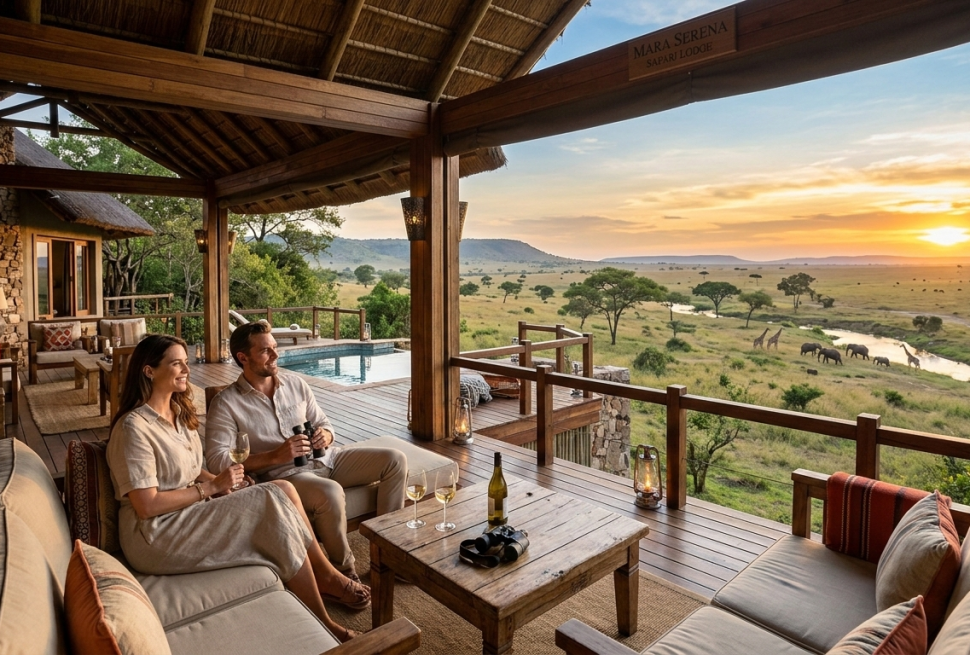
At the luxury tier, the experience changes completely. You stay in world-class tented camps or lodges — many inside private conservancies surrounding the Maasai Mara — where vehicle numbers are strictly controlled and off-road game driving is permitted. Night game drives, guided bush walks, and private game drive vehicles with just your party are standard here.
Luxury Kenya safari cost starts at around $700 – $1,000 per person per day and climbs well above $1,500 for the very top properties. A 7‑day all-inclusive luxury safari for two typically costs $10,000 – $18,000 total, including domestic flights between parks.
Properties in the Olare Motorogi Conservancy, Mara North Conservancy, and Naboisho Conservancy are among the most sought-after luxury safari locations, offering high wildlife density with near-total vehicle exclusivity.
Ultra-Luxury Private Safaris
The ultra-luxury tier covers fully private lodge experiences, fly-in-only properties, butler service, and custom itineraries where you essentially have the camp to yourself. These safaris cost $1,500 – $2,500+ per person per day. For a 10-day trip for two, the total cost can reach $30,000 – $50,000 when international flights and special experiences are included.
This tier includes properties like the Ritz-Carlton Masai Mara Safari Camp (from $2,250 per person per night) and a number of exclusive private conservancy camps that host fewer than 12 guests at a time.
How to Control Your Kenya Safari Cost: A Practical Checklist
Use this checklist to reduce your Kenya safari cost without reducing the quality of your experience:
- [ ] Book with a licensed Kenya-based tour operator (avoid international middlemen)
- [ ] Travel during shoulder season — January to March offers excellent wildlife with better prices than peak season
- [ ] Choose two or three parks rather than rushing through six — you save on transfers and park re-entry fees
- [ ] Confirm what your lodge rate includes before comparing prices (meals, game drives, park fees, conservancy fees)
- [ ] Consider adding a green season safari (April to May) for 30–50% lower lodge rates — some camps close but many stay open
- [ ] Share a vehicle with your travel companions rather than booking solo seats
- [ ] Book a fly-in circuit rather than multiple road legs if your budget allows — it saves days of driving
- [ ] Book your safari 4–6 months in advance for peak season to lock in better rates before lodges fill up
- [ ] Pre-pay park fees at eCitizen Kenya — all KWS parks are now fully cashless in 2026
Kenya Safari Cost Breakdown: Every Line Item Explained
Full Cost Comparison Table (2026, Per Person, 7 Nights):
| Cost Component | Budget | Mid-Range | Luxury |
|---|---|---|---|
| Accommodation (per night) | $50 – $150 | $200 – $400 | $500 – $1,500+ |
| Meals (if not bundled) | $25 – $50/day | Usually included | Usually included |
| Game drives (if not bundled) | $30 – $60/drive | Usually included | Usually included |
| Maasai Mara park fees (low season) | $100/person/day | $100/person/day | $100/person/day |
| Maasai Mara park fees (high season) | $200/person/day | $200/person/day | $200/person/day |
| Amboseli park fees | $90/person/day | $90/person/day | $90/person/day |
| Conservancy fees (if applicable) | N/A | $80 – $150/day | $100 – $200/day |
| Domestic flights (Nairobi–Mara) | Not usual | $150 – $350 one way | Included or $200+ |
| Hot air balloon (add-on) | $450 – $500 | $450 – $500 | $450 – $500 |
| Tips (guides + camp staff) | $15 – $25/day | $15 – $25/day | $20 – $30/day |
| Kenya eTA (required for most) | $32 – $34 once | $32 – $34 once | $32 – $34 once |
| International flights (return) | $1,200 – $2,500 | $1,200 – $2,500 | $1,200 – $2,500+ |
| Travel insurance | $150 – $250 | $200 – $400 | $300 – $600 |
Park fees and conservancy fees are often included in mid-range and luxury all-inclusive packages. Always confirm with your operator.
According to the Kenya Wildlife Service, Maasai Mara National Reserve charges $100 per adult per day from January to June and $200 per adult per day from July to December — a doubling of fees that directly affects your total Kenya safari cost in peak season.
Step-by-Step Guide: How to Plan Your Kenya Safari Budget
- Set your total budget per person — Decide on a realistic number before you start looking at lodges. Include flights, accommodation, park fees, activities, and a buffer of at least 15% for unexpected costs.
- Choose your tier — Budget, mid-range, luxury, or ultra-luxury. Be honest about what matters most to you: wildlife frequency, privacy, comfort, or cost.
- Pick your parks — The Maasai Mara has the highest park fees ($100 – $200 per day) but the best overall wildlife. Amboseli is cheaper ($90 per day) and offers unbeatable elephant viewing with Kilimanjaro. Lake Nakuru is great value. Laikipia suits travelers who want rhinos and exclusivity.
- Choose your season — Peak (July – October) for the Great Migration. Shoulder (January – March) for good wildlife and better value. Green season (April – May) for the lowest prices and lush scenery.
- Decide on road versus fly-in — Driving safaris cost less. Fly-in safaris save time and energy and are usually worth it for trips of 7+ days across multiple parks.
- Contact a Kenya-based tour operator — Reach out to a local company like Charming Safariz with your budget, group size, and travel dates. Ask for a fully itemized quote showing every included and excluded line item.
- Compare all-inclusive quotes properly — A quote that seems cheap may exclude park fees, meals, or transfers. Ask each operator: what is NOT included in this price?
- Confirm lodge availability and pay deposit — For peak season travel (especially July – September), confirm and deposit at least 5–6 months before departure. Mid-range camps sell out quickly.
- Book international flights — Nairobi’s Jomo Kenyatta International Airport is served by Kenya Airways (direct from JFK), British Airways, KLM, Ethiopian Airlines, and Emirates. Book early for best fares.
- Apply for your Kenya eTA — US, UK, EU, and most non-African travelers need a Kenya eTA (USD 32–34) from the official government portal etakenya.go.ke. Apply at least one week before departure.
- Get travel insurance — Not optional at this price point. Cover should include medical evacuation, which is essential in remote safari areas.
- Pre-pay park fees where possible — All Kenya Wildlife Service parks are now cashless. Pre-pay at eCitizen Kenya to avoid gate delays.
Ready to get an accurate quote for your Kenya safari? Request a free, no-obligation Kenya safari quote from Charming Safariz — Kenya’s most trusted tour and travel company for safaris and ticketing. Get a custom itinerary built around your budget, travel dates, and preferred parks.
Common Mistakes That Inflate Kenya Safari Cost
Mistake 1: Booking through an international travel agent without comparing local rates International safari companies and US or UK-based travel agents mark up packages by 30–300% over what a Kenya-based operator charges for the exact same lodges. Solution: Always get at least one quote from a licensed Kenyan tour operator before committing. The comparison will be eye-opening.
Mistake 2: Not confirming what is included in park fees Some packages quote accommodation costs and leave park fees as a separate daily charge. At $100 – $200 per person per day in the Maasai Mara, that omission can add $1,400 – $2,800 to a 7‑day trip for two. Solution: Ask your operator explicitly: “Are Maasai Mara park fees and conservancy fees included in this quote?”
Mistake 3: Planning too many parks in too few days Adding a fifth park to a 7‑day itinerary sounds exciting but adds transport costs, park re-entry fees, and time on the road instead of watching wildlife. Solution: Two or three parks for a 7‑day trip is ideal. Quality beats quantity.
Mistake 4: Ignoring the green season Many travelers assume a Kenya safari must happen in July to October. But April to May (long rains) offers 30–50% cheaper lodge rates, near-empty parks, and lush landscape photography. Solution: If you are flexible and want value, the green season is Kenya’s best-kept pricing secret.
Mistake 5: Forgetting to budget for tips Gratuities are not legally required but are standard practice and deeply important to guides and camp staff. Most travelers budget $10 – $20 per day for their guide and $5 – $10 per day for lodge staff — roughly $105 – $210 per person for a 7‑day trip. Solution: Build gratuities into your safari budget from day one.
Mistake 6: Booking last-minute during peak season Peak season lodges — especially luxury camps in the Maasai Mara — are fully booked many months in advance. Leaving it late means paying premium last-minute prices or missing out entirely. Solution: For July to October travel, book 5–6 months ahead. For shoulder season, 2–3 months is usually sufficient.
Future Trends Affecting Kenya Safari Cost
Kenya’s safari market is evolving in 2026, and several trends are directly affecting what travelers pay.
Park fee increases: The Kenya Wildlife Service revised park fees in October 2025, aligning them more closely with global conservation benchmarks. Amboseli fees moved from $60 in 2023 to $90 in 2026 — a 50% increase over three years. Further adjustments are expected as Kenya continues to position itself at the premium end of Africa’s safari market.
Fully cashless parks: All KWS parks now operate on a completely cashless payment system. Park fees must be pre-paid online via the eCitizen portal using Visa, Mastercard, or M‑Pesa. Travelers who arrive at gates without pre-payment face delays. Your safari operator should handle this, but confirm it before you go.
Private conservancy expansion: The land area under private conservancy agreements around the Maasai Mara continues to grow. New conservancies offer exclusive access to prime wildlife corridors and are increasingly popular with mid-range and luxury travelers. Additional conservancy fees ($80 – $200 per day) are the price of exclusivity — but most experienced travelers consider it the best money spent on a Kenya safari.
New luxury lodge openings: The Ritz-Carlton Masai Mara Safari Camp opened in August 2025 and immediately became the most expensive lodge in Kenya’s Maasai Mara ecosystem. Several other international hotel brands are expected to follow, pushing the ceiling of Kenya safari cost higher at the ultra-luxury end.
Direct flight expansion: Kenya Airways continues to grow its international network. The JFK direct flight remains available, and new connections from more US cities via code-share partners are making Kenya more accessible. More competition on routes typically keeps international airfare more stable.
POLL QUESTION: When budgeting for a Kenya safari, which factor matters most to you?
- A) Keeping the overall cost as low as possible
- B) Getting the best wildlife experience for the money spent
- C) Having the most comfortable accommodation possible
- D) Supporting conservation and local communities through my spending
Poll Answer Guide: Most travelers who have completed a Kenya safari say their answer shifted from A to B after the trip — they often wish they had spent slightly more on a private vehicle or better-located camp. Option D is the fastest-growing priority among travelers aged 25–45 booking in 2026, reflecting a shift toward conservation-conscious travel decisions.
Frequently Asked Questions About Kenya Safari Cost
Q: How much does a Kenya safari cost per person in 2026? A: Kenya safari cost ranges from $150 to $1,500+ per person per day. For a 7‑day trip, budget travelers spend $1,200 – $1,700 per person total, mid-range travelers spend $2,500 – $4,200, and luxury travelers spend $5,000 – $10,000+. These figures typically include accommodation, meals, game drives, and park fees but exclude international flights.
Q: What is the cheapest way to go on a Kenya safari? A: The cheapest way is to join a group camping safari during the green season (April to May), booked directly with a licensed Kenyan tour operator. This combination can reduce daily costs to $150 – $200 per person including accommodation, meals, park fees, and shared game drives. Parks like Amboseli and Lake Nakuru are cheaper than the Maasai Mara.
Q: Are park fees included in Kenya safari packages? A: Usually at mid-range and luxury levels, yes. Most reputable all-inclusive packages bundle park fees into the daily rate. At budget level, park fees are sometimes charged separately. Always ask your operator to confirm. Maasai Mara National Reserve charges $100 per adult per day in low season (January – June) and $200 per adult per day in high season (July – December).
Q: Is a Kenya safari cheaper than Tanzania? A: Generally yes. Kenya offers stronger value at the mid-range level due to more accommodation options, lower average park fees, and competitive local operator pricing. Tanzania’s Serengeti and Ngorongoro Crater have higher entry costs. However, combining both countries gives travelers diverse ecosystems and the flexibility to balance costs. Magical Kenya and Tanzania together form one of the most complete safari circuits on the continent.
Q: How much should I tip on a Kenya safari? A: The standard is $10 – $20 per person per day for your safari guide and $5 – $10 per person per day for lodge or camp staff. For a 7‑day trip with two travelers, budget $105 – $210 total for guiding tips and a similar amount for camp staff. Tips are not mandatory but are a significant and appreciated part of local income for guides and camp workers.
Q: When is the cheapest time to go on a Kenya safari? A: April and May (long rains) are the cheapest months, with some lodges discounting by 30 – 50% off peak rates. November is also quieter with lower prices and good wildlife. January to March offers an excellent middle ground — strong wildlife viewing, no Great Migration crowds, and more competitive pricing than the July to October peak.
My Experience
Over the years working with travelers at Charming Safariz, the most valuable thing I have learned is this: the biggest determinant of whether someone feels their Kenya safari was worth the cost is not the lodge. It is the guide.
A brilliant naturalist guide in a mid-range camp will give you a far richer experience than a mediocre guide at a $2,000-per-night property. Ask about guiding quality every time. Ask how long guides have been in the field. Ask if they are KWS-licensed. Ask whether your vehicle will be shared or private.
I have seen travelers come back from $25,000 safaris feeling slightly disappointed. I have seen others return from $3,500 trips absolutely overwhelmed by what they experienced. The difference is almost never the lodge.
One family from the UK came to us after being quoted $18,000 for a 7‑day Maasai Mara trip by an international operator. We built them a private itinerary — same parks, same standard of accommodation, private Land Cruiser with an excellent KWS-licensed naturalist — for significantly less. They said it was the best holiday they had ever taken.
The animals do not charge more because you booked from London or New York. Kenya safari cost is controllable. Plan early. Book local. Ask the right questions.
Charming Safariz is built on exactly that philosophy — excellent safaris at honest prices, for travelers who know value when they see it.
Key Takeaways
- Kenya safari cost ranges from $150 to $1,500+ per person per day in 2026, across budget, mid-range, luxury, and ultra-luxury tiers
- A 7‑day budget safari costs $1,200 – $1,700 per person; mid-range $2,500 – $4,200; luxury $5,000 – $10,000+; not including international flights
- Accommodation is the biggest cost driver, accounting for 50–70% of total Kenya safari cost
- Maasai Mara park fees are $100 per adult per day (January – June) and $200 per adult per day (July – December) — often the most overlooked expense
- All KWS parks are now fully cashless — park fees must be pre-paid at eCitizen Kenya before arrival
- Booking directly with a Kenya-based local operator saves 30–100% compared to international travel agents
- The green season (April – May) offers 30 – 50% discounts on lodge rates; low crowds; lush landscape
- Peak season (July – October) is the Great Migration window — book 5–6 months in advance as top camps sell out
- Budget $15 – $25 per day for guide and staff gratuities — not included in package prices
- Travel insurance is essential — medical evacuation from remote safari areas is expensive without it
- A hot air balloon safari costs $450 – $500 per person and is widely considered worth the add-on cost
Conclusion
Kenya safari cost is not one number. It is a combination of decisions you make — about where you stay, when you travel, which parks you visit, and who you trust to build your itinerary. Understanding those decisions before you start comparing quotes is what separates a well-planned safari from an overpriced one.
Kenya’s wildlife is extraordinary at every budget level. The Maasai Mara delivers at $200 per day and at $2,000 per day. What changes is the comfort, the exclusivity, and the depth of guiding experience around it.
If you are ready to build your Kenya safari, drop a comment below with your budget and travel dates — or ask any question about the cost breakdown that is still unclear. And if you have already been on a Kenya safari, share your experience. Real traveler stories help others make better decisions.
Plan Your Kenya Safari with Charming Safariz
Charming Safariz is Kenya’s best tour and travel company for safaris and ticketing — trusted by travelers from across the world for honest pricing, excellent guiding, and custom-built itineraries at every budget level.
Whether you want a 5‑day budget Maasai Mara experience or a 10-day luxury fly-in circuit across three parks, our team in Nakuru builds itineraries that deliver real value and real wildlife.
View our top Kenya and Zanzibar safari packages and see what is possible at your budget.
Request a free, no-obligation quote and receive a fully itemized, customized safari itinerary — no hidden costs, no vague ranges.
Contact us:
- WhatsApp: +254 714 236 664
- Email: enquiry@charmingsafariz.com
- Office: Nakuru, Kenya
Sources and References
- Kenya Wildlife Service (KWS) — Official national park and reserve fees; conservation management
- Magical Kenya — Kenya’s official tourism promotion board; destination and activity information
- eCitizen Kenya — Official cashless park fee pre-payment portal for all KWS parks
- World Travel and Tourism Council (WTTC) — Global safari tourism data and Africa travel market analysis
- UNESCO World Heritage Centre — World Heritage designations relevant to Kenya’s protected areas
- IATA — International Air Transport Association — International flight data and airline route information for Kenya
- TripAdvisor — Kenya Safari Reviews — Verified traveler reviews for Kenya safari lodges and operators
- Kenya National Bureau of Statistics (KNBS) — Kenya tourism arrivals, visitor spending, and economic data
- Nation Africa — Kenya Tourism News — Local reporting on Kenya safari industry and policy changes
- Business Daily Africa — Travel and Tourism — Kenya tourism business coverage and market data