Quick Answer
The best time to visit Masai Mara depends on what you want from your safari. Here is a fast summary:
- Best overall: July to October (dry season, Great Wildebeest Migration, peak wildlife viewing)
- Best for predator action and value: January to March (calving season, fewer crowds, lower rates)
- Best for budget travel: April to June (green season, lowest prices, lush scenery)
- Great Migration peak: Late July to September (Mara River crossings, 1.5 million wildebeest)
- Rainy seasons to note: Long rains — April to May; Short rains — November
- Temperatures: Daytime 24°C–28°C year-round; nights can drop to 10°C June–August
- Least recommended months for first-time visitors: April and May (heaviest rainfall, some roads very muddy)
- Book ahead for peak season: At least 6–12 months in advance for July–October visits
There is no single “wrong” time to visit the Masai Mara. Every season offers genuine wildlife experiences. Your decision simply comes down to what you prioritise — migration spectacle, predator action, photography, affordability, or crowd levels.
Introduction
When most people picture a Kenya safari, they picture the Masai Mara — open golden savannah, massive herds of wildebeest thundering toward the Mara River, lions watching from a termite mound. But a question almost every traveller asks before booking is a simple one: when is the best time to visit Masai Mara?
The answer is not as straightforward as picking one month and marking it in your diary. The Mara changes completely from season to season. The landscape, the wildlife behaviour, the crowd levels, the cost of accommodation, even the road conditions — all shift depending on when you arrive.
For Kenyan residents, this question matters even more. You may have a school-holiday window, a budget ceiling, or a specific experience in mind — perhaps your first game drive ever, or your annual family outing. Getting the timing right means you spend less, see more, and enjoy the Mara the way it deserves to be enjoyed.
This guide breaks down every month, every season, and every key consideration so you can choose your dates with complete confidence.
What the “Best Time to Visit Masai Mara” Actually Means
The best time to visit Masai Mara is not a single date on a calendar. It is the season that best matches your priorities — whether that is seeing the Great Wildebeest Migration, spotting predators with cubs, photographing lush green landscapes, or simply spending less money during the low season.
The Masai Mara National Reserve sits at an altitude of 1,500 to 1,900 metres above sea level in southwestern Kenya. Despite being close to the equator, the altitude keeps temperatures comfortable year-round. It is never unbearably hot. But it does experience two dry seasons and two rainy seasons each year, and these weather patterns drive everything from wildlife visibility to road conditions to lodge pricing.
| Season | Months | Conditions | Crowd Level | Cost Level |
|---|---|---|---|---|
| Peak dry season | July – October | Warm, dry, excellent visibility | Very high | Highest |
| Green season | April – June | Rains, lush, muddy roads | Low | Lowest |
| Shoulder (calving) season | January – March | Warm, mostly dry, excellent predators | Moderate | Moderate |
| Short rains | November – December | Brief afternoon showers, recovering wildlife | Low to moderate | Lower |
Understanding where your travel dates fall on this table is the first step to planning a Masai Mara safari that exceeds your expectations.
Why Getting the Timing Right Matters for Kenyan Travellers
Choosing the right time to visit Masai Mara is not just about seeing animals. For Kenyan residents, timing affects several practical things that can make or break the experience:
- Cost savings are significant. Lodge rates during April and May (the long rains) can be 30–50% lower than during peak migration season in August. For a family of four, this is a saving of tens of thousands of shillings.
- School holidays create surges. August is Kenya’s long school holiday month. Demand for safari packages from Nairobi peaks sharply, meaning lodges fill fast and shared vehicle spots disappear early. Booking by May for an August trip is not optional — it is necessary.
- Road conditions matter if you drive. The road from Nairobi to the Mara takes 5–6 hours in dry conditions. In April and May, black cotton soil roads near some camps turn into mud that even 4x4 vehicles struggle with. Fly-in safaris solve this, but they add cost.
- Resident park fees apply year-round, but lodge rates still fluctuate. As a Kenyan citizen or East African resident, your Kenya Wildlife Service park entry fee is fixed at Ksh 1,500–3,000 per day regardless of season. But accommodation costs follow the peak and low season model used internationally.
- Fewer vehicles in low season means a better experience. During peak migration season, popular sighting spots — especially at the Mara River during crossings — can attract over 100 safari vehicles at a time. During low season or shoulder season, you may have a sighting completely to yourself.
The Four Seasons of the Masai Mara Explained
The Dry Season: July to October (Peak Season)
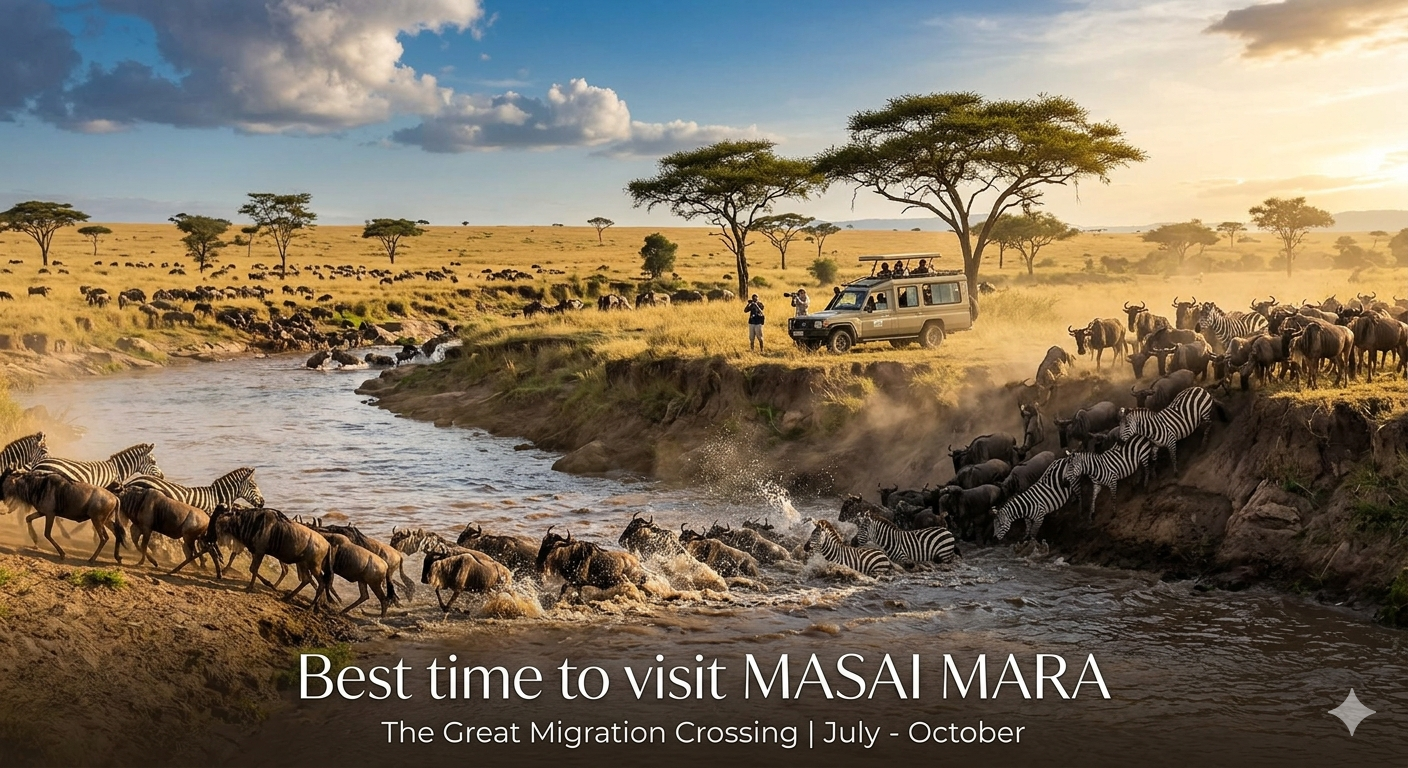
This is the most popular time to visit Masai Mara, and for good reason. The long rains have ended, vegetation has thinned, and wildlife gathers near rivers and waterholes — making animals easier to spot. The skies are largely clear, temperatures are warm during the day and cool at night, and the famous Mara River crossings of the Great Wildebeest Migration happen during this window.
From late July through September, approximately 1.5 million wildebeest, along with hundreds of thousands of zebra and gazelle, move from Tanzania’s Serengeti into the Masai Mara ecosystem in search of fresh grass and water. The Mara River crossings — where massive herds plunge into crocodile-infested water under pressure from the animals behind them — are among the most dramatic wildlife spectacles on earth.
The downside of this season is real: it is the most expensive time to visit, and the most crowded. The central reserve can feel congested during peak crossing weeks in August, with dozens of vehicles gathered at one sighting. Staying in a private conservancy surrounding the reserve significantly reduces this problem, but adds to the cost.
If you want the migration experience, book at least 6 months in advance. September and October are excellent alternatives to the July–August peak — the herds are often still present, the crowds are slightly thinner, and some lodge rates begin to ease.
The Calving Season: January to March (Shoulder Season)
January through March is the single most underrated time to visit Masai Mara. The long dry season from October has given way to slightly drier conditions, and the savannah hosts one of the most dramatic events in African wildlife: the calving season.
Every day in January and February, thousands of baby wildebeest, zebra, gazelle, and impala are born across the plains. This creates an extraordinary opportunity for predator sightings. Lions, cheetahs, and leopards are highly active — the prey is plentiful and the young animals are vulnerable. Cheetahs with cubs can be spotted hunting in broad daylight. Lion prides are large and active. Leopards move through acacia trees in search of targets.
For photographers, this is among the best times to visit Masai Mara. The grass is relatively short, visibility is excellent, and the action is constant.
Crowd levels are significantly lower than in July–October. Lodge rates are moderate — lower than peak season but higher than the deep green season. For Kenyan residents who want a high-quality safari experience without the peak-season price tag, January to March hits the ideal balance of value and wildlife intensity.
March brings the start of afternoon thundershowers and the transition into the long rains. Some lodges begin shutting for annual maintenance in late March.
The Green Season: April to June (Low Season)
April and May are the wettest months in the Masai Mara. Heavy afternoon rains transform the landscape into a rich, vivid green. Roads — particularly those on black cotton soil — can become challenging even for 4x4 vehicles. Some lodges close entirely during this period for maintenance, renovation, and staff leave.
So why visit now? Several very good reasons.
Lodge rates are at their absolute lowest. Some camps offer discounts of 30–50%. The landscape is stunning — the kind of deep green photography you cannot get in the dry season. Bird life is extraordinary, with over 500 species recorded in the Mara ecosystem and migratory birds from Europe and North Africa adding to the count. The reserve is largely empty of other tourists.
Most importantly, wildlife is still present and active. Lions, leopards, elephants, buffalo, and giraffes do not disappear when it rains. They are simply slightly harder to spot through dense vegetation.
June marks the transition toward dry season — the rains ease, the grass begins to thin, and the first hints of migration movement begin to appear near the Tanzania border. June is one of the quietest but most rewarding months to visit.
If you are on a tight budget and do not mind an occasional afternoon shower, the green season offers genuine safari experiences at prices that make the Mara accessible to a much wider group of Kenyan travellers.
The Short Rains: November to December
November brings the short rainy season — lighter and less disruptive than the April–May long rains. Afternoon showers are brief and often followed by clear skies. Road conditions remain generally passable. The landscape is fresh and green.
November is when the wildebeest begin their return journey south toward the Serengeti calving grounds in Tanzania. Predator activity remains excellent throughout the month. Lodge rates drop meaningfully compared to October peak, making this a smart time for value-focused travellers.
December starts quietly and gets busier toward the festive period. The week between Christmas and New Year brings a spike in visitor numbers — both from Kenyan residents on holiday and international travellers escaping winter in Europe and North America. If you want December and avoid crowds, aim for the first two weeks of the month.
Planning a Masai Mara safari? View our top safari packages in Kenya and Zanzibar — built for every season and every budget by Kenya’s most trusted tour company.
Month-by-Month Guide: Best Time to Visit Masai Mara
| Month | Wildlife | Weather | Crowds | Cost | Best For |
|---|---|---|---|---|---|
| January | Calving season, excellent predators | Warm, mostly dry | Low | Moderate | Predator action, value |
| February | Peak calving, big cats active | Hot, dry | Low to moderate | Moderate | Photography, families |
| March | Calving continues, transition rains begin | Warm, showers start | Moderate | Moderate | Last of the calving season |
| April | Resident wildlife, green scenery | Heavy rains, muddy roads | Very low | Lowest | Budget travellers |
| May | Good wildlife, lush landscapes | Heavy rains easing | Very low | Lowest | Photography, birding |
| June | Pre-migration calm, good Big Five | Dry, pleasant | Low to moderate | Low to moderate | Quiet safaris, value |
| July | Migration arrives, river crossings start | Dry, warm days, cold nights | High | High | Great Migration |
| August | Peak migration, constant crossings | Dry, coolest days | Very high | Highest | Bucket-list migration |
| September | Migration ongoing, fewer crowds | Warm, dry | High | High | Migration, better value than August |
| October | Late migration, herds begin south | Warm, dry to light showers | Moderate | Moderate | Good migration, thinning crowds |
| November | Short rains, good predator action | Brief afternoon showers | Low | Moderate | Value, birding |
| December | Festive peak, good resident wildlife | Light rains easing | Low to high (festive) | Moderate to high | Festive visits, couples |
How to Choose the Right Time for Your Masai Mara Visit
Choosing when to go is ultimately a personal decision based on four questions:
1. What do you most want to see? If the Great Wildebeest Migration is your primary goal, plan for July to October. If you want active predator sightings with fewer crowds, January to March gives you that. If you want the Big Five at the most affordable price possible, April to June is your window.
2. What is your budget? Peak season (July–October) commands the highest lodge rates and the highest competition for bookings. Low season (April–June) offers the steepest discounts. As a Kenyan resident, your park fees stay the same year-round — only your accommodation and vehicle costs fluctuate with the season.
3. How do you feel about crowds? If sharing a sighting with 20 other vehicles bothers you, avoid August in the central reserve. Stay in a private conservancy if you visit during peak migration, or shift your dates to September or early October. January, April, May, June, and November are all months with significantly fewer vehicles on game drives.
4. What are your travel dates based on? Kenyan school holidays — April, August, and December — align with both the peak international season and high local demand. Book earlier if you must travel during these windows.
Costs and Planning by Season
| Season | Park Fees (Non-Resident) | Typical Lodge Rate (Mid-Range, Per Night) | Booking Lead Time |
|---|---|---|---|
| Peak (Jul–Oct) | USD 200 per day | USD 300 – USD 600+ | 6–12 months ahead |
| Shoulder (Jan–Mar) | USD 100 per day | USD 150 – USD 350 | 2–4 months ahead |
| Green (Apr–Jun) | USD 100 per day | USD 100 – USD 250 | 1–2 months ahead |
| Short rains (Nov–Dec) | USD 100 per day | USD 150 – USD 300 | 2–3 months ahead |
Kenyan citizen park fees are Ksh 1,500 per day (low season) and Ksh 3,000 per day (high season). Always carry a valid national ID to claim resident rates at the gate.
Step-by-Step Guide: Planning Your Masai Mara Safari by Season
- Pick your goal. Write down your top priority — migration, predators, photography, budget, or family holiday. This determines your season.
- Check school holidays and work leave. Cross-reference your available dates with the seasonal calendar above.
- Set your budget. Factor in park fees (resident or non-resident), accommodation, transport (road or fly-in), and optional activities like hot air balloon rides.
- Decide between the main reserve and a private conservancy. The main reserve is more affordable. Private conservancies offer exclusivity, off-road driving, night game drives, and walking safaris — at higher cost.
- Book accommodation early. For peak season visits, start looking at lodge availability 6 months ahead. The best camps in private conservancies fill extremely fast.
- Use a registered, trusted operator. Cross-check operators on Magical Kenya to confirm they are licensed and registered. Ask for a full written cost breakdown before paying any deposit.
- Plan your transport. Driving from Nairobi saves money. Flying from Wilson Airport saves 10–12 hours of road time. For green season visits, flying is strongly recommended to avoid muddy road conditions.
- Pack for all weather. Even in dry season, evenings and early morning game drives are cold. Temperatures can drop to 10°C in July and August. Pack warm layers regardless of when you visit.
Common Mistakes When Choosing the Best Time to Visit Masai Mara
Booking August without booking accommodation first. Most travellers decide they want to see the Great Migration and then try to book accommodation. By the time many Kenyans start looking — say, June for an August trip — the best camps are already full. Solution: if you want August, book by January or February of the same year.
Assuming the rainy season means no wildlife. The long rains in April and May put some travellers off completely. The reality is that wildlife does not disappear. Lions, leopards, and elephants are present and active year-round. Roads may be muddy, but the experience — at half the price — is still genuine. Solution: consider a fly-in safari in April or May to avoid road issues.
Expecting exact dates for the river crossings. The Great Wildebeest Migration is a natural movement, not a scheduled event. River crossings happen when the herd is ready, not on a timetable. A 4‑day stay in the Mara during August increases your chances of witnessing a crossing. A 1‑day visit is a gamble. Solution: book at least 3–4 nights during your migration visit.
Visiting the main reserve only during peak season. The central Masai Mara National Reserve during August can have over 100 vehicles at a popular sighting. Private conservancies surrounding the reserve limit vehicles dramatically. Solution: if you visit during peak season and want a quieter experience, pay the extra conservancy fee and stay outside the main reserve.
Not carrying national ID as a Kenyan citizen. Gate officials require documentation to charge resident rates. Without a valid national ID, you pay the full non-resident fee. Solution: pack your ID with your travel documents every time.
Trends and Updates Affecting When to Visit Masai Mara in 2026
Climate variability is shifting rainfall patterns. Weather in the Mara is less predictable than it was 10 or 15 years ago. Long rains that used to peak reliably in April and May now sometimes extend into June or start earlier. Short rains in November can be heavier or lighter than expected. Flexible travel insurance and a trusted operator with on-the-ground knowledge are important buffers against this.
Private conservancies are gaining popularity. More travellers — including Kenyan residents — are discovering the conservancy experience. Limited vehicle numbers, night game drives, and walking safaris make them an exceptional alternative to the crowded main reserve. Demand is growing and available beds in top conservancies are limited, pushing the case for earlier booking.
Kenya’s tourism sector is growing fast. According to the World Travel & Tourism Council, Kenya’s tourism economy has been recovering strongly, with the Masai Mara remaining the top draw for international visitors. More visitors competing for the same peak-season lodges means that good rooms book faster every year.
Sustainable tourism is shaping conservation policy. The Kenya Wildlife Service continues to refine visitor management at the Mara to balance tourism income with conservation. Policies around vehicle limits at sightings and conservancy regulations are evolving.
Quick Poll Question: What is your main priority when choosing the best time to visit Masai Mara?
- a) Seeing the Great Wildebeest Migration
- b) Predator action and big cat sightings
- c) Lower cost and fewer crowds
- d) Photography and lush green landscapes
(Poll answers at the end of this article)
Let Charming Safariz plan your perfect Masai Mara safari. Kenya’s best tour and travel company for personalised safaris, wildlife experiences, and ticketing. View our top Kenya safari packages or request a free custom quote today.
Frequently Asked Questions About the Best Time to Visit Masai Mara
What is the best time to visit Masai Mara for the Great Migration? The best months to witness the Great Wildebeest Migration in the Masai Mara are late July through October. The most dramatic Mara River crossings typically happen in August and September, though the exact timing varies each year based on rainfall and grass availability on both the Kenyan and Tanzanian sides.
Can you visit Masai Mara during the rainy season? Yes. The Masai Mara has excellent resident wildlife year-round, including lions, leopards, elephants, buffalo, and giraffes. The long rains in April and May bring muddy roads and reduced visitor numbers, but also lower prices, stunning green scenery, and exceptional bird watching. Fly-in safaris are recommended during heavy rain months.
Is January a good month to visit Masai Mara? January is one of the best months for big cat sightings and predator action. It is calving season, meaning thousands of baby animals are born across the plains every day. This draws out lions, cheetahs, and leopards, creating outstanding wildlife viewing with fewer vehicles and moderate costs.
When is the cheapest time to visit Masai Mara? April and May offer the lowest lodge rates of the year — often 30–50% below peak season prices. Park fees for non-residents also drop to USD 100 per day in low season, down from USD 200 during peak months.
How far in advance should I book a Masai Mara safari? For peak season (July–October), book at least 6–12 months ahead. For shoulder season (January–March), 2–4 months is generally sufficient. For low season (April–June), 1–2 months ahead is usually fine, though popular budget camps can still fill up.
Is the Masai Mara good for families with children? Yes, especially during calving season (January–March) when babies are abundant and predator activity is high. The green season is also a good option for families on a budget. The Masai Mara is well set up for families — many lodges offer child-friendly activities and reduced rates for children under 12.
My Experience With Timing Masai Mara Safaris
Over the years, helping clients choose the right time to visit Masai Mara has taught me one consistent truth: the wrong timing is almost always the result of waiting too long to start planning, not the month itself.
I have seen families arrive in August without river crossing sightings because they booked a 2‑night stay and the herd crossed on day three. I have seen solo travellers arrive in April expecting nothing and leave absolutely stunned by the landscapes, the bird life, and the quiet predator sightings they had entirely to themselves.
My personal favourite time to go? January. The savannah is warm and mostly dry, there are very few other vehicles, and the predator action during calving season is the most sustained and intense wildlife experience I have seen outside of peak migration. I once watched a cheetah mother and three cubs take down a young wildebeest over the course of 45 minutes — no other vehicles in sight. That kind of experience is not possible in August at the same location.
If you are a Kenyan resident visiting the Mara for the first time, January to March gives you a world-class experience at a price point that makes sense. If you have been before and want the Great Migration, plan your August trip now — not in June.
Key Takeaways
- The best time to visit Masai Mara overall is July to October for the Great Migration, but January to March offers outstanding wildlife with fewer crowds and lower costs
- The Great Migration peak is late July to September; expect the largest number of wildebeest and zebra during August
- Calving season (January–February) delivers the best big cat predator action of the year
- The green season (April–May) is the cheapest time to visit — 30–50% lower lodge rates — with beautiful scenery and excellent bird watching
- Non-resident park fees nearly double in peak season (July–December): USD 100 vs USD 200 per day
- Kenyan citizens pay Ksh 1,500–3,000 per day year-round — always carry your national ID
- Book peak season safaris at least 6 months in advance; private conservancy beds fill even faster
- Temperatures are comfortable year-round (24°C–28°C days) but nights and early mornings can be cold — especially June through August
- There is no bad time to visit the Masai Mara — only different experiences for different priorities
- Charming Safariz is Kenya’s most trusted tour and travel company for Masai Mara safaris, with transparent pricing and expert local knowledge
Conclusion
The Masai Mara does not have an “off” switch. Every month has something extraordinary to offer — whether that is the thundering spectacle of 1.5 million wildebeest crossing the Mara River or a quiet January morning watching a cheetah and her cubs on an empty plain. The best time to visit Masai Mara is the time that matches your goals, your budget, and your calendar.
If you are ready to plan your trip, do not wait. The best lodges — especially in the private conservancies — fill months ahead of the dates you want. Starting your planning now gives you the widest choice and the best prices.
Request your free, no-obligation Masai Mara safari quote from Charming Safariz and receive a fully customised itinerary within 24 hours.
Have a question about when to visit, what to expect in a specific month, or how to plan your budget? Drop it in the comments. If you have visited the Mara before, we would love to hear which month you went and what you saw.
About Charming Safariz — Kenya’s Best Tour and Travel Company
Charming Safariz is Kenya’s leading tour and travel company for safaris, wildlife tours, and ticketing. Based in Nakuru, the team has helped hundreds of Kenyan families, residents, and international visitors plan Masai Mara safaris that match both their expectations and their budgets.
From budget group departures to exclusive private conservancy experiences, Charming Safariz handles every detail — accommodation, transport, park fees, guides, and optional activities — with complete transparency on costs.
View our Kenya and Zanzibar safari packages
Request your free custom quote today
Contact us:
- WhatsApp: +254 714 236 664
- Email: enquiry@charmingsafariz.com
- Office: Nakuru, Kenya
Sources and References
- Kenya Wildlife Service — Official park regulations, entry fees, and conservation mandate
- Magical Kenya — Official Kenya tourism portal for registered operators and safari information
- World Travel and Tourism Council — Kenya tourism growth data and economic impact reports
- UNESCO World Heritage Centre — Masai Mara ecosystem and global conservation status
- Kenya National Bureau of Statistics — Tourism arrivals, earnings, and travel statistics
- IATA — Domestic flight information and air travel data for East Africa
- eCitizen Kenya — Government services portal for park fee payments and permits
- TripAdvisor — Traveller reviews and rated safari operators for the Masai Mara
Poll Answers: All four options represent entirely valid reasons to visit the Masai Mara. (a) July–October is your season for the Great Migration. (b) January–March gives you the most intense predator action of the year during calving season. © April–June offers the lowest costs and fewest crowds. (d) April–May and January–February are both outstanding for photography — green landscapes in the first case, active big cats and clear light in the second.