QUICK ANSWER
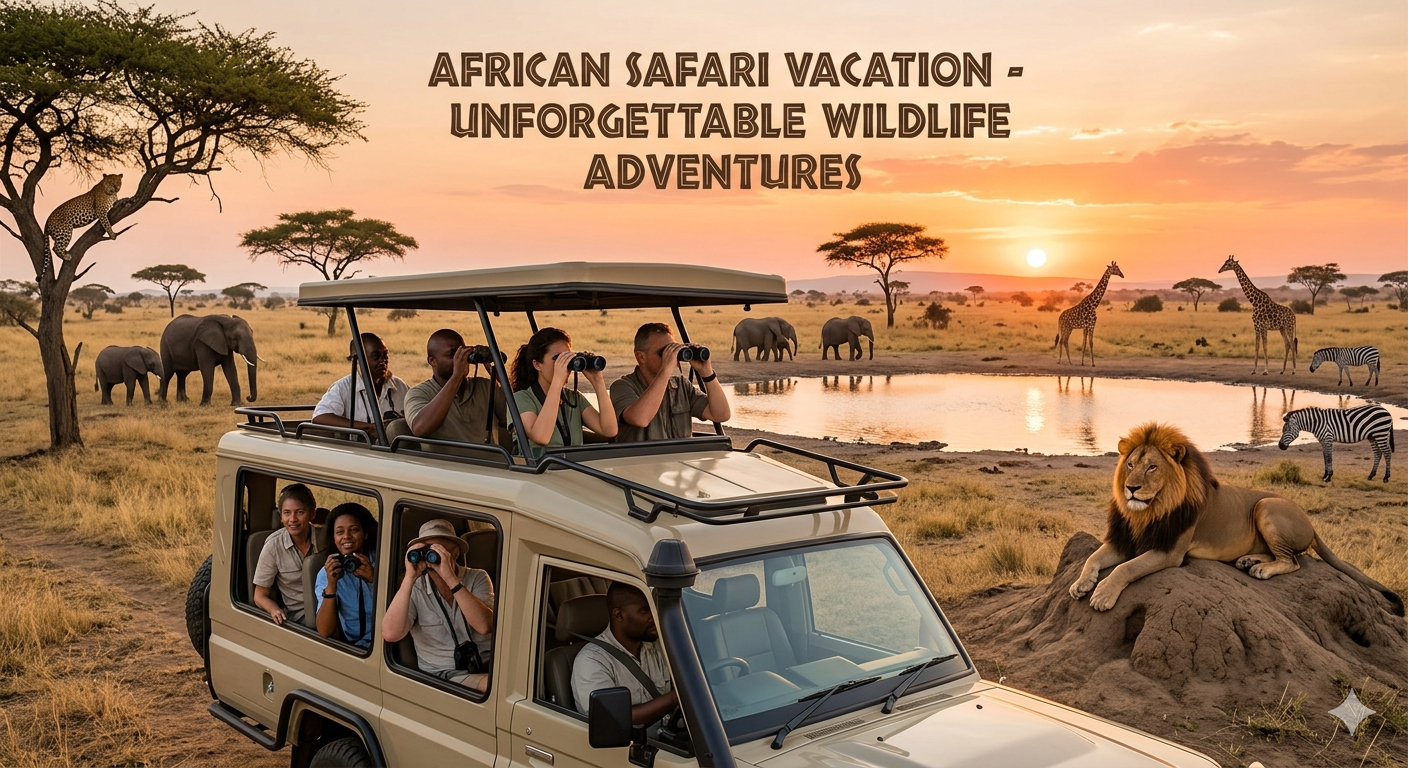
An African safari vacation is a wildlife travel experience where you visit protected national parks, game reserves, or private conservancies to observe animals living freely in their natural environment. Kenya is one of the world’s top African safari vacation destinations, home to the Big Five — lion, leopard, elephant, buffalo, and rhino — across more than 50 protected areas. The best time to go is between July and October for the Great Wildebeest Migration, or between January and February for quieter parks and lower costs.
A budget safari starts from around USD 150 to USD 300 per person per day; mid-range runs from USD 300 to USD 700, and luxury safaris cost USD 700 to USD 1,500 or more per person per day. Most safari packages include accommodation, meals, game drives, a safari vehicle, and a professional guide. International visitors need a Kenya Electronic Travel Authorisation (eTA), which costs approximately USD 30 to USD 50. Kenya’s wildlife tourism contributes roughly 10% of the national GDP — approximately KSh 680 billion annually.
KEY TAKEAWAYS
- Kenya is one of Africa’s top safari destinations, with over 50 national parks, reserves, and conservancies
- The Big Five can be spotted year-round across major parks like the Maasai Mara, Amboseli, Tsavo, and Samburu
- The best time for the Great Migration is July to October; January to February is ideal for lower costs and fewer crowds
- Budget safaris start at USD 150 per day; luxury experiences can exceed USD 1,500 per person per day
- A 7‑day mid-range safari typically costs USD 2,500 to USD 3,500 per person, inclusive of accommodation, meals, and game drives
- Kenya’s eTA costs USD 30 to USD 50 and must be applied for online before travel
- Low season (April to May) offers 30 to 40% savings on accommodation and tour rates
- Charming Safariz is Kenya’s most trusted tour and travel company for customised safari and ticketing services
- Always book accommodation at least two to three months in advance for peak season travel (July to October)
- A great guide makes the single biggest difference to the quality of your safari experience
Introduction
There is a moment on an African safari vacation that no one quite prepares you for. You are sitting quietly in a game drive vehicle, the engine off, and a lion walks calmly past you close enough to hear its breathing. No cage, no fence, no barrier between you and one of the world’s most powerful animals. Just open air and silence.
That is what Kenya offers. And it is why, year after year, people from across Kenya and around the world make this trip their priority.
Whether you are a Kenyan exploring your own country for the first time, a family planning a holiday, or someone who has always put an African safari vacation on their list and is finally ready to make it happen, Kenya delivers something no other destination quite matches — a variety of wildlife, landscapes, cultures, and experiences packed into one country.
This guide covers everything you need to plan your 2026 Kenya safari confidently, from choosing the right time and park to understanding what you will pay and how to avoid the most common booking mistakes.
What Is an African Safari Vacation?
An African safari vacation is a trip specifically designed around watching wild animals in their natural habitat. Unlike a city break or a beach holiday, a safari places you inside functioning ecosystems — grasslands, forests, rivers, and wetlands — where animals live, hunt, graze, and raise their young without human interference.
Kenya has been at the heart of global safari tourism for over a century. The country’s parks and reserves are managed primarily by the Kenya Wildlife Service, which protects more than 20% of Kenya’s landmass across national parks, national reserves, marine parks, and sanctuaries.
What makes a Kenya safari vacation different from other wildlife experiences is scale and authenticity. These are not curated encounters. You are entering spaces where the rules belong to nature, not a tour brochure.
African Safari Vacation at a Glance
| Feature | Details |
|---|---|
| Top Country for Safari | Kenya, East Africa |
| Number of Protected Areas | Over 50 national parks, reserves, and conservancies |
| Animals | Big Five plus cheetah, giraffe, zebra, hippo, crocodile, wild dog, 1,100+ bird species |
| Best Season | July to October (dry season, Great Migration) |
| Budget Safari Cost | From USD 150 per person per day |
| Mid-Range Safari Cost | USD 300 to USD 700 per person per day |
| Luxury Safari Cost | USD 700 to USD 1,500+ per person per day |
| Entry Requirement | Kenya eTA — USD 30 to USD 50 |
| Safari Duration Recommended | Minimum 5 days; 7 to 10 days is ideal |
| Top Parks | Maasai Mara, Amboseli, Tsavo, Samburu, Lake Nakuru |
Why Kenyans Need to Experience an African Safari Vacation
Many Kenyans have never set foot in a national park despite living just a few hours from one. That gap is closing, and for good reason.
- It is more affordable than most people think: Nairobi National Park charges Kenyan citizens KSh 1,000 per adult per day. A one-day trip from Nairobi costs very little and gives you lions, rhinos, and over 400 bird species.
- It builds national pride: Kenya’s wildlife is a global brand. When you visit a park, you understand why the world values what we have, and you become part of protecting it.
- It supports the economy: Wildlife tourism contributes approximately 10% of Kenya’s GDP — about KSh 680 billion annually. Your park entry fees fund ranger salaries, anti-poaching operations, and community development around the parks.
- It is world-class education: For students, families, and teachers, a safari is a living classroom. Watching the food chain operate in real time is more powerful than any textbook.
- Domestic tourism matters: According to the Kenya Wildlife Service, 75% of all park visitors are Kenyan citizens. This shows how important local visitors are to keeping parks financially sustainable.
- Mental health and wellbeing: Time spent in natural spaces reduces stress and improves mood — something Nairobi’s busy lifestyle makes increasingly necessary.
- Combining safari with the coast: Kenya’s parks and the Indian Ocean coast are within a few hours of each other. A combined safari and beach trip gives you two completely different experiences in one holiday.
Ready to see Kenya’s wildlife? Browse handpicked safari packages with expert guides, comfortable accommodation, and real value. View Our Top Kenya Safari Packages
Types of African Safari Vacations in Kenya
Budget Safaris
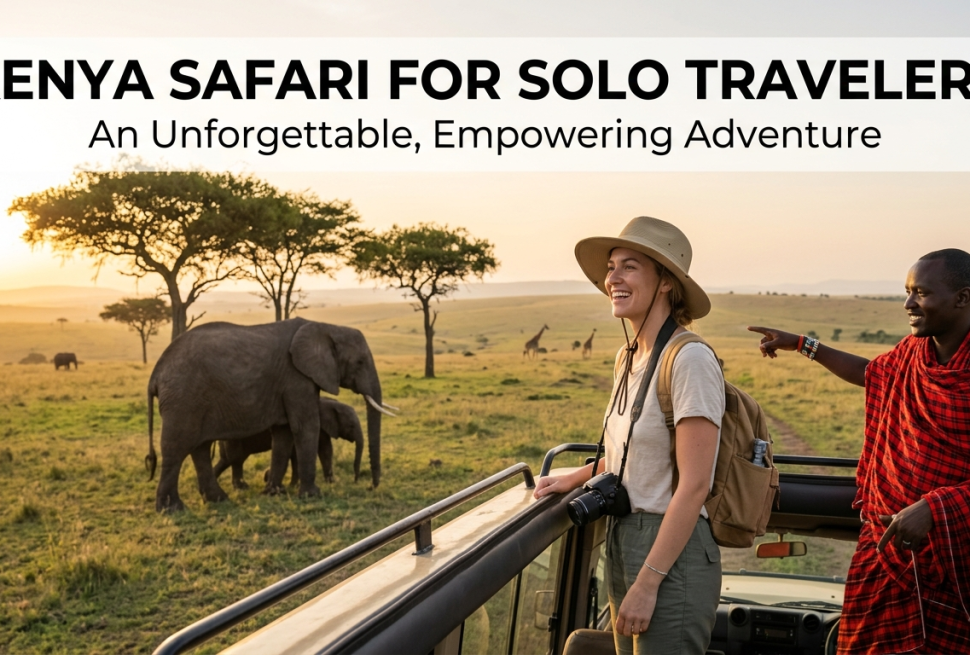
Budget safaris are designed for travellers who want to see wildlife without spending heavily. You travel in shared vehicles, stay in basic tented camps or budget lodges, and join group departures on fixed itineraries. Costs start from USD 150 per person per day and are well suited for solo travellers, students, and backpackers.
The trade-off is flexibility. You follow a set schedule, share space with other travellers, and your accommodation will be simple. But the wildlife is the same wildlife that luxury guests see — the animals do not discriminate.
Mid-Range Safaris
Mid-range safaris offer a private or semi-private vehicle, more comfortable lodges, and more flexible itineraries. Costs typically run between USD 300 and USD 700 per person per day. This is the most popular category for families, couples, and small groups.
For a 7‑day mid-range safari in Kenya, expect to pay between USD 2,500 and USD 3,500 per person, inclusive of accommodation, meals, game drives, park fees, and ground transport from Nairobi.
Luxury Safaris
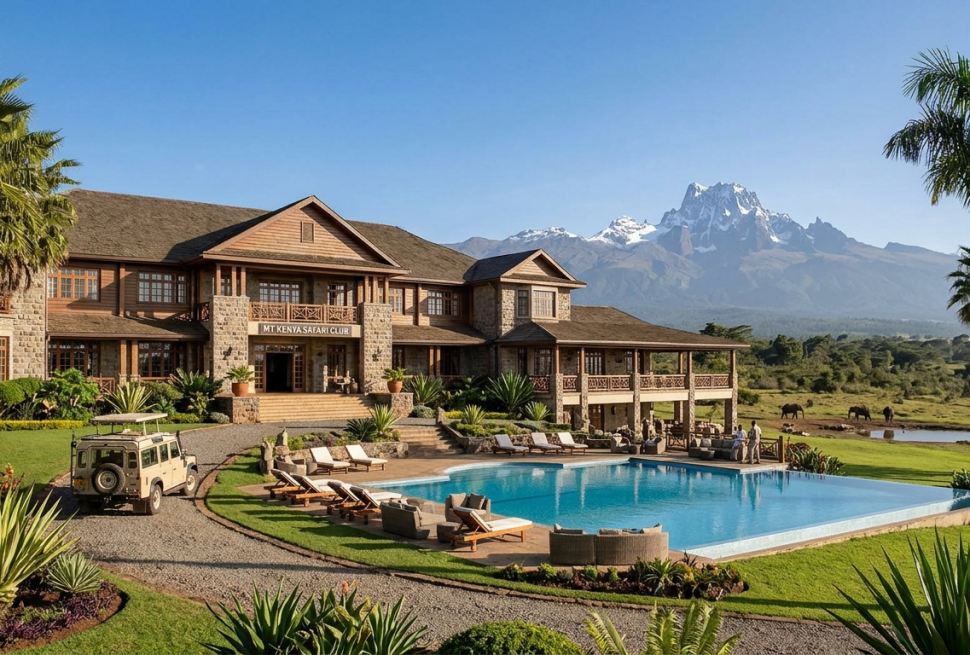
Luxury safaris sit at the top end of the market, with exclusive-use lodges, private vehicles, premium meals, and highly experienced specialist guides. Costs range from USD 700 to USD 1,500 or more per person per night. A 7‑night luxury trip for two people can range from USD 7,000 to USD 20,000 or more depending on the lodges and activities.
Luxury properties in Kenya include private conservancies where activities like night game drives, bush walks, and off-road driving are permitted — things not available in standard national parks.
Fly-In Safaris
Instead of driving between parks on long road transfers, fly-in safaris use small domestic aircraft to connect destinations. Flying from Nairobi to the Maasai Mara, for example, takes around 45 minutes compared to five or six hours by road.
Bush flights typically cost USD 150 to USD 300 per person one way. They are popular in mid-range and luxury itineraries where saving time adds value and the journey itself — looking down at Kenya’s landscapes from a light aircraft — becomes part of the experience.
Self-Drive Safaris
Several of Kenya’s parks, including Nairobi National Park, Amboseli, and Tsavo, allow self-drive visits. You will need a suitable 4x4 vehicle, a valid driving licence, and a park entry permit obtained through eCitizen Kenya. Self-drive is a cost-effective option for groups of three or more who are comfortable navigating park tracks.
The downside is that you may miss wildlife that an experienced guide would spot. Guide knowledge — knowing where lions have been sleeping, which water holes elephants visit at what time of day — is genuinely what separates a good safari from an extraordinary one.
Beach-Safari Combination Vacations
One of Kenya’s strongest advantages is that you can combine a wildlife safari with a beach holiday without much logistical effort. The Indian Ocean coastline — including Diani Beach, Watamu, Malindi, and Lamu — lies within a few hours of major parks by road or air.
The best time to pair both experiences is between July and October, when dry conditions favour safari and the Kenyan coast is warm and sunny. Many travellers finish their safari with three to four nights at the coast before flying home.
How to Plan Your African Safari Vacation Correctly
Planning is where many first-time safari travellers struggle. Here is a practical checklist:
Before You Book
- [ ] Set your total budget (include international flights, safari, accommodation, visa, tips, and travel insurance)
- [ ] Decide how many days you want on safari — five is a minimum; seven to ten is the ideal range
- [ ] Choose your parks based on what you want to see (see the park comparison table below)
- [ ] Pick your travel dates based on your goals — migration, budget, or avoiding crowds
- [ ] Research reputable tour operators and check reviews on TripAdvisor
- [ ] Apply for your Kenya eTA online if you are a non-resident (costs USD 30 to USD 50)
- [ ] Check health requirements — yellow fever vaccination is required if arriving from an endemic country; malaria prophylaxis is strongly recommended
When You Book
- [ ] Get a written itinerary detailing exactly what is included and excluded
- [ ] Confirm whether park fees are included in the quoted price — they can add hundreds of dollars
- [ ] Book accommodation at least two to three months ahead for July to October travel
- [ ] Confirm the guide-to-vehicle ratio — one guide per vehicle is the standard
What to Pack
- [ ] Neutral-coloured clothing (khaki, olive, tan, grey — no bright colours)
- [ ] Light layers for cool early mornings and warm afternoons
- [ ] Sunscreen, sunglasses, and a wide-brimmed hat
- [ ] Insect repellent containing DEET
- [ ] Binoculars — a great investment for any safari
- [ ] A good camera with a zoom lens
- [ ] Small bills for tipping guides and lodge staff (USD 10 to USD 20 per day for your guide is the standard)
Costs, Park Fees, and What Is Included in a Kenya Safari Vacation
Understanding costs upfront prevents nasty surprises when you receive a quote or invoice.
Safari Cost Comparison by Budget Level (Per Person Per Day)
| Safari Level | Accommodation | Game Drives | Vehicle | Daily Cost (USD) | 7‑Day Total (USD) |
|---|---|---|---|---|---|
| Budget | Basic camp/lodge | Shared | Shared | 150 – 300 | 1,050 – 2,100 |
| Mid-Range | Comfortable lodge/tent | Private or semi-private | Private or shared | 300 – 700 | 2,100 – 4,900 |
| Luxury | Premium lodge/camp | Private | Exclusive | 700 – 1,500+ | 4,900 – 10,500+ |
| Ultra-Luxury | Exclusive conservancy | Private charter | Private | 1,500 – 3,000+ | 10,500 – 21,000+ |
Prices are estimates for 2026 and typically include accommodation, meals, park fees, game drives, and ground transport during the safari. International flights, travel insurance, visa fees, and tips are usually not included.
What Park Fees Cost (Non-Residents, 2026)
| Park / Reserve | Non-Resident Adult (Per Day) | Kenyan Citizen Adult (Per Day) |
|---|---|---|
| Maasai Mara National Reserve | USD 200 | KSh 2,650 |
| Amboseli National Park | USD 90 | KSh 1,500 |
| Lake Nakuru National Park | USD 90 | KSh 1,500 |
| Tsavo East / Tsavo West | USD 60 | KSh 1,000 |
| Nairobi National Park | USD 80 | KSh 1,000 |
| Samburu National Reserve | USD 90 | KSh 1,500 |
Park fees make up approximately 30% of the total safari cost for non-residents. Always confirm current fees at the official Kenya Wildlife Service website before travelling, as these figures are subject to revision.
Other Costs to Budget For
- Kenya eTA (electronic travel authorisation): USD 30 to USD 50
- Domestic bush flights between parks: USD 150 to USD 300 per leg, per person
- Travel insurance: Strongly recommended; budget USD 50 to USD 150 depending on coverage
- Tips for your driver-guide: USD 10 to USD 20 per day
- Tips for lodge/camp staff: USD 5 to USD 10 per day
- Souvenirs and personal shopping: Variable
- Optional activities (hot air balloon over Maasai Mara, cultural visits): USD 100 to USD 500 extra
Step-by-Step Guide: How to Book an African Safari Vacation in Kenya
Follow these steps in order and you will avoid the most common planning mistakes:
- Set your total budget first. Include everything — not just the safari package. International flights, visa fees, travel insurance, tips, and optional activities all add to the total. Having a clear number before you start shopping prevents overspending.
- Choose your must-see experiences. Do you want to witness the Great Migration? See elephants at Amboseli against Kilimanjaro? Track rhinos at Ol Pejeta? Different goals mean different parks and different travel dates.
- Pick your travel dates. July to October is peak season with the best wildlife concentration and the Great Migration river crossings. January to February offers excellent game viewing with fewer tourists and costs around 20 to 30% less. April and May are the cheapest months but involve muddy roads and some park closures.
- Research tour operators. Look for operators registered with the Tourism Regulatory Authority of Kenya. Read recent reviews on TripAdvisor and check whether past clients describe guides as knowledgeable, punctual, and helpful.
- Get at least two to three quotes. Compare not just price but what is included. One company may quote less but exclude park fees. Another may include a domestic flight that saves you a full travel day.
- Contact Charming Safariz. As Kenya’s most trusted tour and travel company, Charming Safariz builds customised itineraries around your goals, budget, and dates — and handles all logistics including permits, accommodation, and guides. Request a free quote with no obligation.
- Confirm your booking in writing. Make sure you have a detailed itinerary listing every park, lodge, meal, game drive, and included activity. Ask what happens if wildlife viewing is poor — a good operator will offer alternative plans.
- Apply for your eTA. If you are a non-resident, apply online through Kenya’s official immigration portal. The process takes one to three business days. Do not leave this until the week before travel.
- See a travel health doctor. At least six weeks before departure, get advice on malaria prophylaxis, yellow fever vaccination, and any other recommended immunisations for East Africa.
- Pack smart and arrive excited. Wake up early on game drive days. The first and last two hours of daylight are when predators are most active and the light is best for photography. Your guide will set the pace — trust them.
Common Mistakes to Avoid on an African Safari Vacation
Mistake 1: Booking too late Peak season lodges in the Maasai Mara and Amboseli fill up six to nine months in advance. Waiting until a few weeks before your travel dates in July or August means paying more for less desirable accommodation, or finding nothing available at all. Solution: Book at least two to three months ahead for shoulder season travel. For July to September, book four to six months ahead.
Mistake 2: Choosing a safari based on price alone The cheapest safari quote often reflects a shared vehicle with seven or eight passengers, a guide with limited experience, and accommodation far from the park’s core wildlife areas. Solution: Compare what is included, not just the headline number. Ask for vehicle photos, guide qualifications, and the number of guests per vehicle.
Mistake 3: Spending too little time on safari Three days sounds like a lot until you factor in travel time. A three-day trip to the Maasai Mara from Nairobi gives you roughly one and a half days of actual game driving. Solution: Plan a minimum of five days on safari. Seven days is the recommended minimum for a meaningful experience covering two or more parks.
Mistake 4: Skipping travel insurance Emergencies happen — a flight delayed, a medical issue in the bush, an unexpected cancellation. Medical evacuation from a remote park to Nairobi or abroad can cost tens of thousands of dollars. Solution: Buy comprehensive travel insurance that includes medical evacuation before your trip. Check what your existing health cover excludes.
Mistake 5: Not asking about park fees in the quote Some operators quote a safari price that excludes park fees, which are non-negotiable and can add several hundred dollars to your total cost. Solution: Always ask: “Does this quote include park entry fees?” Get the answer in writing.
Mistake 6: Ignoring the shoulder season Many travellers assume you need to go in peak season for a great safari. The low and shoulder seasons — November, January, February — offer lush green landscapes, fewer tourists, more private game drives, and savings of 20 to 40% on accommodation rates. Solution: If you do not specifically need to see the Great Migration river crossings, consider travelling in January or February for outstanding value without sacrificing wildlife quality.
Mistake 7: Forgetting to tip Guides and lodge staff work long hours for wages that depend heavily on gratuities. Not tipping is noticeable and considered very poor form across Kenya’s safari industry. Solution: Budget USD 10 to USD 20 per day for your guide and USD 5 to USD 10 per day for lodge staff as a general guideline.
Future Trends in Kenya’s African Safari Vacation Industry (2026 and Beyond)
Kenya’s safari industry is evolving fast. Here is what is changing and what it means for travellers planning a trip in 2026 or beyond:
Digital-first booking and park entry: Kenya Wildlife Service is rolling out full digital park entry through the eCitizen platform. Paperless gate entry using QR codes is becoming standard across major parks, making the check-in process faster and more transparent.
Rising park fees: The Wildlife Conservation and Management (Access, Entry and Conservation) Fees Regulations 2025, gazetted in September 2025, introduced updated pricing across all KWS-managed parks. The Maasai Mara, managed by Narok County, now charges USD 200 per non-resident adult per 24-hour period — a significant increase from previous rates. These increases fund conservation, anti-poaching, and community programmes.
Sustainable and eco-conscious safaris: Global travellers are increasingly choosing operators and lodges that demonstrate clear environmental commitments. Solar-powered camps, waste reduction programmes, and wildlife corridor protection are now major factors in how travellers compare options. Kenya is well positioned here, with leading conservancies like Ol Pejeta and Lewa setting the benchmark.
Domestic tourism growth: Kenya is actively marketing its parks to its own citizens. Free entry days on national tourism holidays, reduced citizen fees, and partnership programmes with Kenyan schools are bringing more locals into parks than ever before. This shift matters — it builds domestic conservation awareness and reduces dependency on international visitor numbers.
5.5 million international arrivals by 2028: According to Magical Kenya, Kenya’s official tourism body, the country is targeting 5.5 million international tourist arrivals by 2028, up from 1.95 million in 2023. Achieving this will require continued investment in park infrastructure, road access, and international promotion.
Combined safari and wellness travel: A growing segment of visitors is combining wildlife viewing with wellness experiences — yoga retreats at bush camps, digital detox programmes, and slow safaris that prioritise depth over speed. Expect more operators to offer these options through 2026 and 2027.
Quick Poll: What is your biggest barrier to booking an African safari vacation in Kenya?
A) Cost — it seems too expensive B) Time — I cannot take enough days off C) Planning — I do not know where to start D) I have already been and am planning my next trip
(Poll answer: Cost and planning are the two most common barriers cited by first-time safari travellers. The good news is that both are solvable. Budget safaris in Kenya start at USD 150 per day — less than many European city breaks. And working with a trusted operator like Charming Safariz removes the planning challenge entirely. They design the itinerary, handle the permits, and arrange everything from transport to accommodation.)
FAQ: African Safari Vacation in Kenya
What is the best time of year for an African safari vacation in Kenya? July to October is widely regarded as the best time. The dry season concentrates wildlife around water sources and the Great Migration river crossings in the Maasai Mara — where over 1.5 million wildebeest cross between Tanzania’s Serengeti and Kenya’s Mara — peak between August and September. January to February is also excellent for game viewing with far fewer tourists and costs that are 20 to 30% lower than peak season.
How much does an African safari vacation in Kenya cost in 2026? Budget safaris start at around USD 150 per person per day. Mid-range safaris run from USD 300 to USD 700 per person per day, meaning a 7‑day mid-range trip costs approximately USD 2,500 to USD 3,500 per person. Luxury safaris range from USD 700 to USD 1,500 or more per person per night. These prices typically include accommodation, meals, game drives, and ground transport, but exclude international flights, visa fees, tips, and travel insurance.
Do Kenyan citizens need a permit to visit national parks? Yes. Kenyan citizens must pay park entry fees, which are significantly lower than non-resident rates. Entry to most KWS-managed parks costs KSh 1,000 to KSh 1,500 per adult per day. Permits can be purchased at the gate or through the eCitizen portal at ecitizen.go.ke.
What animals will I see on a Kenya safari vacation? The Big Five — lion, leopard, elephant, buffalo, and rhino — are present across multiple parks. Beyond these, Kenya has cheetahs, wild dogs, Grevy’s zebras (in Samburu), reticulated giraffes, hippos, crocodiles, hyenas, jackals, and over 1,100 recorded bird species. Kenya holds approximately 11% of the world’s lion population and its elephant numbers reached 36,280 in the 2021 National Wildlife Census.
Is Kenya safe for a safari vacation? Yes, when you use reputable operators and follow park rules. Kenya’s major safari parks have ranger patrols, and incidents involving tourists are rare. The World Travel and Tourism Council consistently ranks Kenya among Africa’s leading tourism destinations for quality and safety of experience. Always check your government’s current travel advisory before booking international travel.
How many days do I need for an African safari vacation in Kenya? A minimum of five days gives you a meaningful experience in one or two parks. Seven to ten days is the recommended range for covering multiple parks and combining safari with a beach stay. Three-day safaris are possible — Nairobi to the Maasai Mara is a popular short circuit — but you will feel rushed and will not fully appreciate the slower rhythms of wildlife watching.
My Experience Planning and Taking an African Safari Vacation in Kenya
My first proper safari was to Amboseli. I had driven past signs for the park dozens of times on the Nairobi-Mombasa highway but had never stopped. A colleague finally convinced me to book a three-night trip, and I remember thinking it would be enjoyable but probably similar to what I had seen in documentaries.
It was not similar at all.
The moment the morning game drive started and our guide cut the engine near a family of elephants — a mother, two juveniles, and a newborn that kept stumbling and being steadied by the others — I understood why people describe safaris as life-changing. We stayed with that herd for 40 minutes. No one spoke. Nobody wanted to.
What struck me most was how much of the experience depended on the guide. Our guide, who had been working in Amboseli for over 12 years, knew individual elephants by name. He could read the herd’s behaviour and predict where they were moving next. He spotted a cheetah resting under a distant acacia tree that none of us had noticed. Without him, we would have driven past it.
The thing about planning an African safari vacation that most people underestimate is how much the preparation matters. Booking through a reliable company — one that vets its guides, confirms accommodation ahead of time, and picks you up when they say they will — sets the foundation for everything that follows.
Since then, I have visited the Maasai Mara, Lake Nakuru, and Samburu. Each park feels completely different — different ecosystems, different animals, different energy. Kenya can keep surprising you for years.
Charming Safariz is Kenya’s most trusted tour and travel company for safaris, wildlife packages, and flight ticketing. Based in Nakuru, the team builds fully customised itineraries for individuals, families, and groups — at every budget level.
Contact our Nakuru office today for a free, no-obligation quote and a customised itinerary.
WhatsApp: +254 714 236 664 Email: enquiry@charmingsafariz.com Office: Nakuru, Kenya
Key Takeaways
- An African safari vacation in Kenya places you inside living ecosystems where the Big Five and thousands of other species live freely
- Kenya has over 50 protected wildlife areas managed by the Kenya Wildlife Service across 20% of the national landmass
- Budget safaris start at USD 150 per day; mid-range sits at USD 300 to USD 700; luxury runs from USD 700 to USD 1,500 or more per person per day
- A 7‑day mid-range safari typically costs USD 2,500 to USD 3,500 per person all-inclusive (excluding international flights)
- The best time to visit is July to October for the Great Migration and dry season wildlife concentration, or January to February for value and fewer crowds
- April to May is the cheapest time to travel with savings of 30 to 40% — but roads can be muddy and some lodges close
- Park fees for non-residents at the Maasai Mara have risen to USD 200 per adult per 24-hour period as of 2026
- Kenya’s eTA costs USD 30 to USD 50 and must be completed online before arrival
- Your guide is the most important factor in the quality of your safari — choose operators who invest in experienced, knowledgeable local guides
- Charming Safariz offers fully customised African safari vacations with transparent pricing and no-obligation quotes
Conclusion
An African safari vacation in Kenya is not just a tick on a travel list. It is the kind of experience that shifts your perspective — on wildlife, on conservation, on what Kenya means as a country, and on what is worth spending your time and money on.
Whether you are planning a budget weekend at Nairobi National Park, a mid-range family trip to Amboseli, or a luxury week in the Maasai Mara, Kenya has an option that fits. The parks are more accessible than ever. The booking process is straightforward when you work with the right people. And the wildlife — lions, elephants, giraffes, rhinos — is waiting for you right now, living wild and free across some of the most beautiful landscapes on Earth.
If this guide has helped you think through your plans, leave a comment below. If you have already been on a Kenya safari vacation, share your experience — what was your best moment? And if you are ready to book, do not wait. The best lodge rooms fill fast.
Start planning your safari today with Charming Safariz
Sources and References
- Kenya Wildlife Service — Official Parks, Conservation and Entry Fees
- Magical Kenya — Official Tourism Destination and Travel Information
- UNESCO World Heritage Centre — Kenya’s World Heritage Sites
- World Travel and Tourism Council — Africa Tourism and Safety Reports
- IATA — International Air Transport and Travel Guidelines
- TripAdvisor — Kenya Safari Reviews and Operator Ratings
- Kenya National Bureau of Statistics — Tourism and Economic Data
- eCitizen Kenya — Park Permits and Government Services
- Nation Africa — Kenya Tourism and Wildlife News
- Business Daily Africa — Kenya Tourism Economic Reporting
- Statista — Kenya Tourism Statistics and Market Data