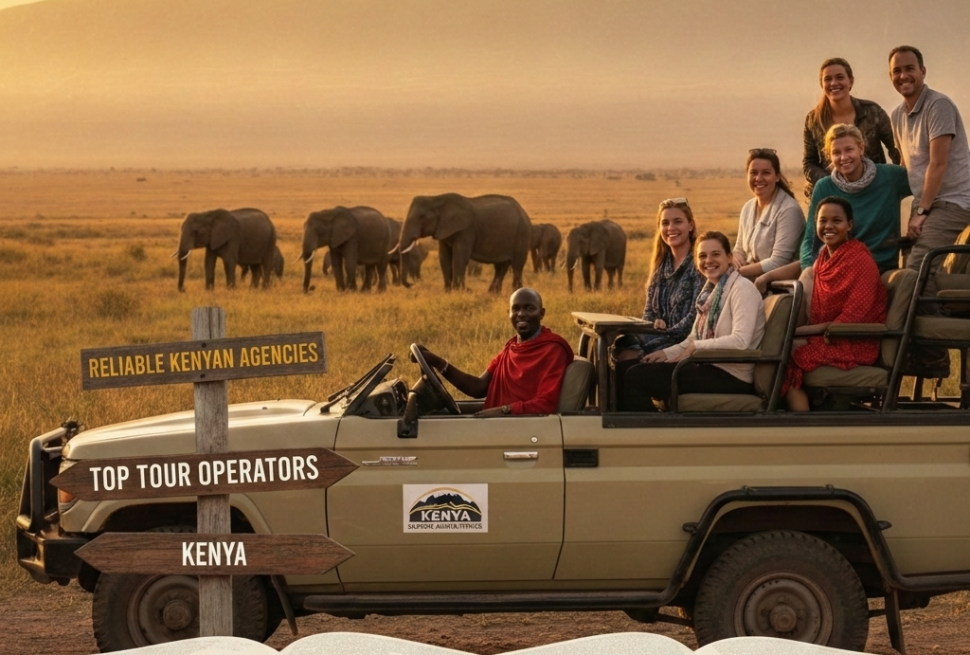
QUICK VIEW: Kenya Travel Guide for First-Time Visitors
- Best Time to Visit: July to October (dry season, peak wildlife)
- Visa Requirement: eVisa required for most nationalities — apply online via eCitizen
- Currency: Kenyan Shilling (KES). 1 USD = approx. KES 130 (2026)
- Language: English and Swahili are both official languages
- Top Destinations: Maasai Mara, Amboseli, Nairobi, Diani Beach, Samburu
- Recommended Operator: Charming Safariz — Kenya’s top safari and ticketing company
- Average Safari Budget: $150 to $800 per person per day depending on style
- Health Requirement: Yellow fever certificate required from some countries
Kenya Travel Guide for First-Time Visitors in 2026: Everything You Need to Know Before You Go
You have been thinking about Kenya for a while. Maybe you saw a clip of the wildebeest crossing, or a friend came back raving about Amboseli and the elephants. Whatever brought you here, the question is the same: where do you actually start?
Kenya is one of the most rewarding travel destinations in the world, but it is also one that requires some preparation. The country spans coastal beaches, high-altitude forests, semi-arid plains, and world-famous game reserves — all within a few hours of each other. That kind of variety is extraordinary, but it also means you need a clear plan before you land.
This Kenya travel guide for first-time visitors covers everything in plain language: visas, costs, safety, what to pack, which parks to visit, and how to avoid the mistakes that catch most newcomers off guard. Kenya’s tourism sector welcomed over 2 million international visitors in 2023, according to the Kenya National Bureau of Statistics, and the numbers keep climbing. There is a reason for that.
What Is a Kenya Travel Guide for First-Time Visitors and Why Does It Matter?
A Kenya travel guide for first-time visitors is exactly what it sounds like — a practical, honest resource that walks you through everything you need before and during your trip. Not a vague “Kenya is beautiful” piece, but actual details: entry requirements, average costs, which areas to prioritise, and what to watch out for.
Kenya is not a one-size-fits-all destination. A business traveller staying in Nairobi has a completely different experience from someone doing a ten-day safari circuit through the Mara and Amboseli. Knowing which type of trip you are planning shapes every decision that follows.
| Key Detail | Information |
|---|---|
| Capital City | Nairobi |
| Official Languages | English and Kiswahili |
| Currency | Kenyan Shilling (KES) |
| Time Zone | East Africa Time (EAT) — UTC+3 |
| Visa Requirement | eVisa for most nationalities |
| Driving Side | Left |
| Plug Type | Type G (British standard) |
| Emergency Number | 999 or 112 |
Kenya sits on the equator, which means the weather patterns are driven by rainfall rather than traditional four seasons. Understanding this is the foundation of good trip planning.
Why First-Time Visitors Need a Proper Kenya Travel Guide
Most people who have a disappointing experience in Kenya made avoidable mistakes. They visited during the wrong season. They booked through an unlicensed operator. They did not budget for park fees. They packed entirely the wrong clothes. A proper Kenya travel guide for first-time visitors saves you from all of that.
Here is what you gain by planning properly:
- Better wildlife sightings: Going at the right time of year means seeing animals in the open, not hidden in tall wet-season grass.
- Significant cost savings: Off-peak and shoulder seasons offer 20 to 40 percent lower accommodation rates with very similar experiences.
- Safety and peace of mind: Knowing which areas to avoid, how to move around, and what the local customs are removes a lot of unnecessary stress.
- Cultural respect: Kenya has over 40 ethnic groups. Understanding local customs before you arrive makes interactions warmer and more genuine.
- Smoother logistics: Flights, park bookings, accommodation, and transfers all need to connect. Getting advice from experienced operators prevents expensive gaps.
- Value for money: A well-planned Kenya safari gives you far more for your budget than a last-minute, poorly organised trip.
Charming Safariz — Kenya’s most trusted tour and travel company — works with first-time visitors daily. Their team in Nakuru helps clients plan everything from single-day excursions to full two-week circuits, handling ticketing, transfers, and customised itineraries so nothing falls through the cracks.
Ready to see Kenya for yourself? View our top safaris in Kenya and Zanzibar
Types of Kenya Trips: Which One Is Right for You?
Kenya is not just safaris, though safaris are undeniably the highlight for most visitors. Here is a breakdown of the main trip types so you can decide what fits your interests and budget.
The Classic Wildlife Safari
This is what most people picture when they think of Kenya. Game drives through national parks and private conservancies, guided by experienced local rangers. The Maasai Mara, Amboseli, Tsavo East, Tsavo West, and Samburu are the most popular parks. A classic safari lasts between three and ten days and can be done on a shared group basis or privately.
The Kenya Wildlife Service manages most national parks and reserves, setting the entry fees and conservation standards that keep these ecosystems functioning. Their parks are well-maintained and professionally staffed.
The Beach and Safari Combination
Kenya’s coastline is spectacular. Diani Beach, Malindi, Watamu, and Lamu offer white sand, warm Indian Ocean water, and a slower pace of life. Many visitors combine five to seven days on safari with three to four days at the coast. This combination gives you the full Kenyan experience — wilderness and relaxation in one trip.
Cultural and Community Tourism
Kenya’s communities are as fascinating as its wildlife. Visits to Maasai villages, Samburu homesteads, and Swahili coastal towns offer genuine cultural exchanges. Several community conservancies — particularly in Laikipia and the northern Rift — offer accommodation that directly funds local livelihoods.
Business and Conference Tourism
Nairobi is East Africa’s commercial hub. It hosts major international conferences, has world-class hotels, and is increasingly well-connected by direct flights. Many business visitors take a few days before or after meetings to do a short safari. The city itself — the Nairobi National Park, the Karen Blixen Museum, the Giraffe Centre — has plenty to offer within city limits.
Adventure and Hiking Tourism
Mount Kenya is the second-highest peak in Africa and offers several trekking routes for different fitness levels. The Aberdare Range, Hell’s Gate National Park (where you can cycle among wildlife), and Kakamega Forest in western Kenya are excellent for active travellers who want something beyond the vehicle-based game drive.
Talk to our team and plan the perfect Kenya trip — Explore Kenya Safari Packages
How to Plan and Access Kenya Correctly: A Practical Checklist
Here is a straightforward checklist for first-time visitors planning a Kenya trip:
- Passport validity: Your passport must be valid for at least six months beyond your planned departure date from Kenya.
- eVisa application: Apply through the official eCitizen Kenya portal before you travel. Most nationalities are eligible. Processing usually takes two to five working days.
- Yellow fever certificate: Required if you are arriving from a yellow fever endemic country. Carry the physical card — it is checked at some borders and airports.
- Travel insurance: Get comprehensive cover that includes medical evacuation. Emergency air evacuation in remote safari areas can cost $10,000 to $50,000 without insurance.
- Currency: Carry US dollars for larger transactions (park fees, lodges). Exchange to KES for local markets, matatus, and small purchases. Use reputable forex bureaus — avoid street changers.
- SIM card: Buy a local SIM at the airport or a registered Safaricom outlet. Data is affordable and connectivity is good in most urban and tourist areas.
- Book accommodation early: For peak season (July to October), book at least four months in advance. Good lodges fill up fast.
- Vaccinations: Beyond yellow fever, check with your doctor about hepatitis A, hepatitis B, typhoid, and tetanus. Malaria prophylaxis is recommended for most regions.
- Pack smart: Neutral-coloured safari clothing, comfortable walking shoes, sunscreen, insect repellent, binoculars, and a camera with extra batteries.
Costs, Visa Fees, and Budgeting for Kenya in 2026
Kenya can be done on a range of budgets, but there are costs that are non-negotiable — particularly park fees. Here is a realistic breakdown:
| Expense Category | Budget Traveller | Mid-Range Traveller | Luxury Traveller |
|---|---|---|---|
| Accommodation per night | $30 – $80 (hostel/guesthouse) | $150 – $400 (mid-lodge) | $500 – $1,500+ (luxury camp) |
| Safari park fees per day | $30 – $80 (non-resident) | $80 – $200 | $80 – $200 |
| Meals per day | $10 – $20 | $30 – $60 | $80 – $150 (included in lodge) |
| Internal flights | $80 – $200 per leg | $100 – $250 per leg | $200 – $400 per leg |
| eVisa fee | $51 (single entry) | $51 (single entry) | $51 (single entry) |
| Travel insurance | $50 – $150 for two weeks | $100 – $200 | $150 – $300 |
Park fees for non-residents vary by park. The Maasai Mara conservancy fees are set separately by the local county and can range from $80 to $150 per person per day on top of the standard gate fee. Confirm current fees on the Kenya Wildlife Service official website before you travel.
Check current flight connection options and schedules through the IATA travel portal when planning your international routing.
Get a free, personalised Kenya itinerary — Request Your Quote Here
Step-by-Step Guide: How to Plan Your First Kenya Trip
- Set your budget and trip style. Decide whether you want budget camping, mid-range lodges, or luxury tented camps. Your budget shapes every other decision.
- Choose your travel dates. July to October is peak season for wildlife. January to February is the best shoulder season. Avoid April to June if you want dry-weather game drives.
- Pick your must-see destinations. Maasai Mara for the Migration. Amboseli for Kilimanjaro views and elephants. Samburu for rare northern species. Diani for the coast.
- Contact a reputable local operator. Charming Safariz offers customised packages, handles park bookings, accommodation, and airport transfers. Reach them on WhatsApp at +254 714 236 664 or by email at enquiry@charmingsafariz.com.
- Apply for your eVisa through the eCitizen Kenya portal. Do this at least two weeks before travel.
- Book your international flights. Jomo Kenyatta International Airport in Nairobi is the main gateway. Wilson Airport handles domestic and bush flights to parks.
- Get vaccinated and consult a travel doctor. Do this at least six weeks before departure to allow time for vaccines to take effect.
- Sort your travel insurance. Make sure it explicitly covers safari activities and emergency evacuation.
- Confirm all bookings in writing. Get receipts and confirmation for accommodation, transfers, and park bookings.
- Pack, prepare, and go. Read a quick overview of local customs, download offline maps, and carry physical copies of your documents.
Common Mistakes First-Time Kenya Visitors Make
- Mistake 1 — Underestimating park fees. Solution: Research the current fee structure for every park you plan to visit before finalising your budget. Fees are in US dollars for non-residents.
- Mistake 2 — Booking with unlicensed operators. Solution: Always use a licensed, verified tour operator. Charming Safariz is fully licensed and has a strong track record with first-time visitors.
- Mistake 3 — Visiting during the long rains. Solution: If you travel between April and June, choose parks with all-weather roads and confirm with your operator which areas remain accessible.
- Mistake 4 — Ignoring Nairobi. Solution: Nairobi is a real city with great food, culture, and its own wildlife experiences. Budget at least one or two days there rather than treating it as a transit stop.
- Mistake 5 — Carrying only one currency. Solution: Have both US dollars and Kenyan shillings. Some parks and lodges only accept USD, while local restaurants and transport work in KES.
- Mistake 6 — Forgetting malaria prevention. Solution: Consult a doctor before you leave. Start your malaria prophylaxis on time and carry repellent with DEET for evening use.
- Mistake 7 — Over-packing. Solution: Bush flights have strict luggage limits — often 15 kg in a soft bag. Pack light, neutral, and practical.
Kenya Travel Trends and What Is Changing in 2026
Kenya’s tourism landscape is shifting quickly. Here is what first-time visitors need to know for 2026:
- Eco-lodges and community conservancies are growing fast. More travellers are choosing accommodation that puts money directly into local conservation. According to the World Travel and Tourism Council, sustainable tourism grew by 18 percent globally in 2024 and Kenya is leading the way in Africa.
- Digital entry and park booking systems are expanding. Kenya Wildlife Service has made online booking available for several parks, reducing gate queues and making access smoother.
- Domestic tourism is booming. The Kenya Tourism Board is actively encouraging local travel, and more Kenyan residents are exploring their own country’s parks and coastline.
- Lamu and northern Kenya are opening up. Improved infrastructure and security have made destinations like Lamu Old Town, Marsabit, and the Mathews Range increasingly accessible for adventurous visitors. UNESCO recognises Lamu Old Town as a World Heritage Site — one of the best-preserved Swahili settlements on the East African coast.
- Flight connectivity is improving. More direct routes into Nairobi from Europe, the Middle East, and within Africa are reducing travel times and costs for international visitors.
Quick Poll: Which Kenya experience are you most interested in?
- Wildlife safari (Maasai Mara, Amboseli, Samburu)
- Beach holiday (Diani, Lamu, Watamu)
- Cultural tourism (Maasai villages, Swahili coast)
- Adventure (Mount Kenya, Hell’s Gate, hiking)
Poll Answer: Most first-time visitors choose a wildlife safari as their primary interest, with many combining it with a beach stay at Diani or Watamu for the final few days of their trip.
Frequently Asked Questions: Kenya Travel Guide for First-Time Visitors
Do I need a visa to visit Kenya?
Yes, most nationalities require a visa. Kenya uses an eVisa system, which means you apply online before you travel through the official eCitizen Kenya portal. The standard single-entry eVisa costs $51 and is usually processed within two to five working days. East African Community member country passport holders are generally exempt.
Is Kenya safe for first-time visitors?
Kenya is safe for tourists when you follow standard travel precautions. Stick to established tourist areas, use reputable transport, avoid displaying expensive items, and follow the advice of your guide or lodge. Nairobi’s CBD requires the same awareness you would apply in any major city. Safari parks and most beach resorts are considered very safe environments.
What is the best park for a first safari in Kenya?
The Maasai Mara is the most recommended park for first-time visitors because of the sheer variety and density of wildlife. If you visit between July and September, you also get the Great Migration. Amboseli is excellent if you want the Kilimanjaro backdrop and large elephant herds with fewer vehicles than the Mara.
How many days do I need for a Kenya trip?
A minimum of seven days is recommended for a meaningful first trip. This gives you four to five days on safari and two days to explore Nairobi or the coast. Ten to fourteen days allows for a fuller circuit combining multiple parks and the beach.
What currency should I carry to Kenya?
US dollars are the most useful currency for safaris, lodge payments, and park fees. Kenyan shillings are needed for local transport, markets, and smaller purchases. Carry a mix of both. ATMs are widely available in Nairobi and major towns. Many lodges also accept major credit cards, but confirm this in advance.
Can I visit Kenya on a budget?
Yes, but budget travel in Kenya requires careful planning. Public transport (matatus and buses) is affordable and widely used by locals. Budget guesthouses are available in most towns. The main cost that is hard to reduce is park entry fees, which are set by the government and charged in US dollars. Joining a shared group safari significantly reduces the per-person cost compared to a private vehicle.
My Experience Helping First-Time Visitors Plan Their Kenya Trip
I have worked with dozens of first-time Kenya visitors over the years, and the pattern is almost always the same. They arrive with wide eyes and a rough idea of wanting to see lions. They leave with a completely different understanding of what Africa means — its complexity, its beauty, and its contradictions.
The ones who have the best experiences share one thing: they planned properly. They chose the right season for their target parks. They worked with a knowledgeable local team. They asked questions before they landed, not after.
I remember one couple from the UK who came in November — technically the short rainy season. Most people warn against it. But because they worked with Charming Safariz to choose the right parks and time their drives around the afternoon showers, they had four days in Amboseli with almost no other vehicles in sight. They photographed elephants with Kilimanjaro clear above the waterhole, completely alone. They said it was the best travel experience of their lives.
That is what good planning gives you. Not perfection — Kenya is wild and unpredictable by nature — but the best possible version of your trip.
If you are a first-time visitor wondering where to start, the answer is simple: talk to a team who knows Kenya inside and out. Charming Safariz handles everything from your first enquiry to your last transfer home. Request a customised quote here and tell them exactly what you are looking for.
Key Takeaways
- A Kenya travel guide for first-time visitors should cover visas, costs, safety, timing, and logistics — not just the highlights.
- Most nationalities need an eVisa, which costs $51 and is applied for online through the eCitizen portal.
- The best time for wildlife is July to October. January to February is an excellent and less crowded alternative.
- Kenya offers much more than safaris — beaches, culture, adventure hiking, and city experiences are all part of the picture.
- Park fees are a significant and non-negotiable cost. Budget them into your planning from the start.
- Work with a licensed, reputable local operator. Charming Safariz is Kenya’s leading safari and ticketing company, with a team based in Nakuru ready to plan your trip.
- Pack light, neutral, and practical. Bush flights have strict luggage limits.
- Travel insurance that covers medical evacuation is not optional — it is essential.
- Nairobi deserves more than a transit day. The city has real wildlife, culture, and food worth your time.
Conclusion
Kenya rewards those who show up prepared. The wildlife, the landscapes, the warmth of the people, and the raw energy of the bush — all of it is real, and all of it is waiting. But the difference between a good trip and an unforgettable one almost always comes down to preparation.
Use this Kenya travel guide for first-time visitors as your starting point. Research your parks, plan your dates, sort your visa early, and get proper travel insurance. Most importantly, work with people who know this country.
Charming Safariz has helped hundreds of first-time visitors have the Kenya trip they always imagined. The team is based in Nakuru, knows the parks personally, and handles everything from park bookings to airport pickups. Do not plan your first Kenya trip alone.
Have questions? Have you already visited Kenya and want to share what surprised you most? Leave a comment below — real experiences from real travellers help everyone plan better.
Plan Your Kenya Trip with Charming Safariz
Charming Safariz is Kenya’s top tour and travel company, specialising in customised safari packages, beach holidays, and ticketing for both local and international visitors. Their Nakuru-based team brings genuine local expertise and personal service to every trip they plan.
| Contact Method | Details |
|---|---|
| WhatsApp | +254 714 236 664 |
| enquiry@charmingsafariz.com | |
| Office | Nakuru, Kenya |
View Our Top Kenya and Zanzibar Safari Packages
Request a Free, No-Obligation Quote
Contact our Nakuru office today. Tell us your dates, your interests, and your budget — and we will build the perfect Kenya itinerary for you.
Sources and References
- Kenya Wildlife Service — Official National Parks and Fees
- Magical Kenya — Kenya Tourism Board Official Guide
- UNESCO World Heritage Centre — Lamu Old Town
- World Travel and Tourism Council — Sustainable Tourism Data
- IATA — International Flight and Travel Information
- TripAdvisor — Kenya Destination Reviews
- Kenya National Bureau of Statistics — Tourism Arrivals Data
- eCitizen Kenya — eVisa Application Portal
- Nation Africa — Kenya Travel and Tourism News