Quick View
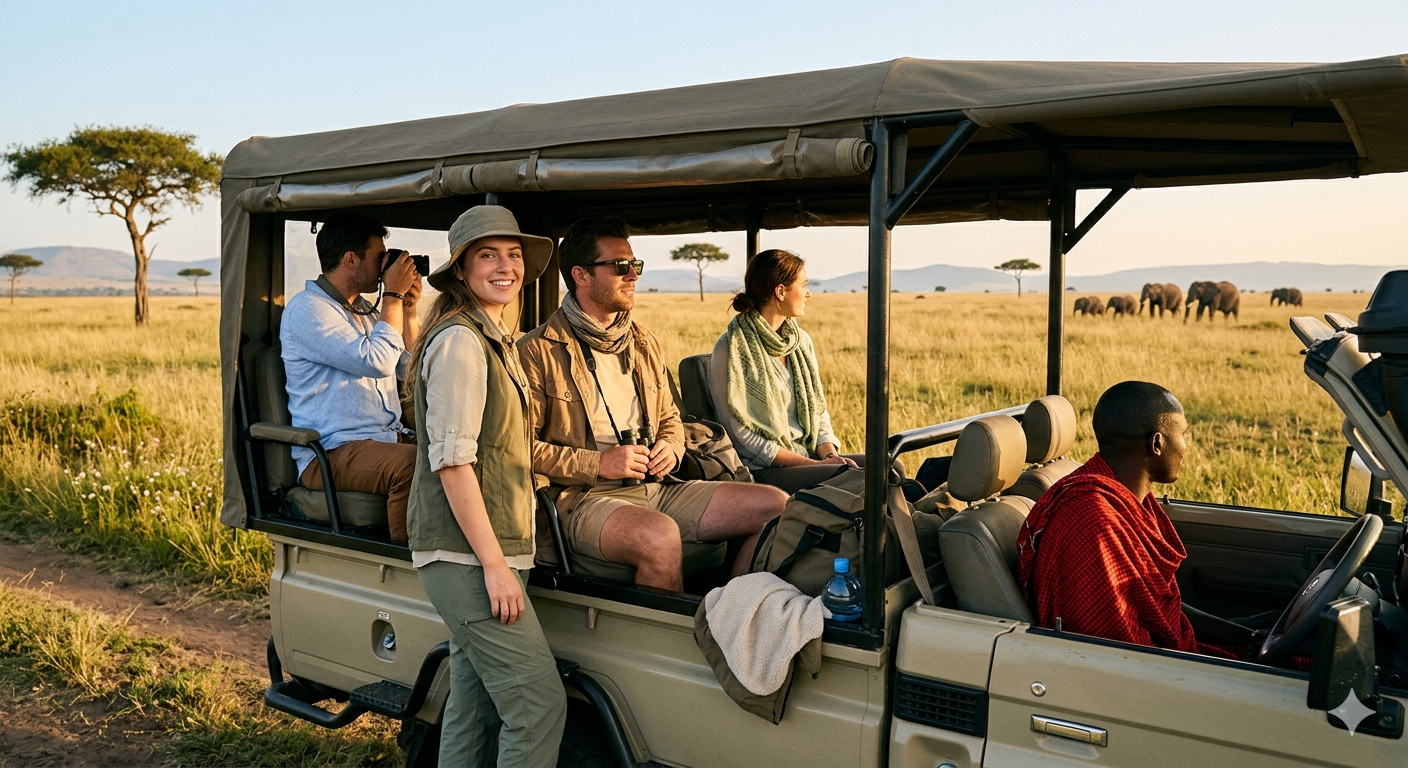
What to wear on safari in Kenya: Choose neutral-colored, lightweight clothing in khaki, olive, tan, or beige. Avoid white, black, and bright colors. Pack long-sleeved shirts and long trousers for sun and insect protection. Bring a warm fleece or jacket for cool mornings and evenings. Wear closed-toe walking shoes or sturdy boots. A wide-brim hat and sunscreen are must-haves. Packing light in a soft-sided bag works best for bush flights and vehicle transfers.
Introduction
You have booked your dream Kenya safari. The flights are sorted, the lodges are confirmed, and the excitement is real. Then comes the question that trips up almost every first-time visitor: what do I actually pack?
Getting your safari clothing right is not about fashion. It is about comfort, wildlife safety, and making the most of every early morning game drive. Kenya’s wilderness areas — from the Maasai Mara to Amboseli, Tsavo to Samburu — each have their own terrain, temperatures, and wildlife rules that affect how you dress.
This guide gives you a straightforward, practical answer to what to wear on safari in Kenya, whether you are going in July during the peak Great Migration or in the drier months of January and February. Knowing what colors to wear, what fabrics work in the African heat, and what footwear holds up on rough trails makes a real difference to how much you enjoy the experience.
What Does “Safari Clothing” Actually Mean?
Safari clothing is practical, lightweight attire designed to keep you comfortable in the bush while avoiding disturbing the wildlife around you. The term comes from the Swahili word for “journey,” and in Kenya, it covers everything from what you wear on a game drive to what you pack for an evening sundowner.
The core principle is simple: blend in, stay cool during the day, and stay warm when temperatures drop. Kenya’s game parks sit at various altitudes, and temperatures can shift dramatically between dawn, midday, and dusk.
The table below shows average temperature ranges across key Kenya safari destinations so you can plan your layers accordingly.
| Safari Destination | Morning Temp (°C) | Afternoon Temp (°C) | Best Season |
|---|---|---|---|
| Maasai Mara | 12–17°C | 25–30°C | July–October |
| Amboseli | 15–18°C | 28–33°C | Jan–Feb, Jun–Oct |
| Tsavo East/West | 18–22°C | 30–35°C | Jun–Oct |
| Samburu | 20–24°C | 33–38°C | Jan–Feb, Jun–Sep |
| Lake Nakuru | 12–16°C | 22–26°C | Year-round |
| Laikipia Plateau | 10–14°C | 24–28°C | Jun–Oct |
Why What You Wear on Safari Matters More Than You Think
Many travelers underestimate how much their clothing choices affect the safari experience. Wildlife in Kenya’s national parks and conservancies is wild and sensitive to unusual stimuli. According to the Kenya Wildlife Service, visitors are required to follow specific guidelines inside protected areas, including behavioral rules that extend to how you present yourself visually and physically.
Here is why clothing matters:
- Bright colors like red, yellow, and orange can agitate certain animals, particularly buffaloes and elephants
- White clothing reflects sunlight and makes you more visible to wildlife at close range
- Dark colors like black attract tsetse flies, which can bite painfully and in rare cases carry disease
- Loose, flowing fabric that catches wind creates noise that can disturb animals during a quiet game drive
- Thin fabrics offer no protection against thorns, brush, or insects during bush walks
Magical Kenya, the official tourism body, consistently recommends earth-tone clothing as part of responsible wildlife tourism. This is not just an aesthetic preference — it is part of being a respectful guest in a natural environment.
Explore Kenya’s wilderness with expert guidance. View our top safaris in Kenya and Zanzibar — curated itineraries from the team at Charming Safariz, Kenya’s trusted name in travel and ticketing.
The Best Colors to Wear on Safari in Kenya
Earth Tones and Neutral Colors
The golden rule of safari dressing is: go neutral. The best colors to wear on safari in Kenya are:
- Khaki (the most traditional and practical choice)
- Olive green
- Tan and beige
- Stone, sand, and light brown
- Muted gray
These colors mirror the savannah landscape, which means you blend naturally into your surroundings during game drives and bush walks. They also show less dust and dirt, which matters when you are out in the Mara or Tsavo where red laterite soil coats everything.
Colors to Avoid
| Color | Reason to Avoid |
|---|---|
| White | High visibility, reflects heat poorly, gets dirty fast |
| Bright red | Can agitate large animals |
| Yellow and orange | Too visible, disrupts camouflage in yellow grassland |
| Black | Attracts biting insects including tsetse flies |
| Dark navy | Similar issue to black in fly-prone areas |
| Camouflage patterns | Illegal in Kenya — reserved for military and wildlife rangers |
The ban on camouflage clothing is one that surprises many visitors. In Kenya, wearing military-style camouflage print as a civilian is actually illegal and can lead to arrest at border crossings or park gates.
Safari Clothing by Type: What to Pack and Why
Shirts and Tops
Long-sleeved shirts are your best friend on safari. They protect against sunburn during the long hours spent in open-roof game drive vehicles, and they act as a first layer of defense against insects during dusk drives and bush walks.
Go for lightweight, breathable fabrics like cotton or moisture-wicking synthetics. Linen is also a good choice for afternoon wear, though it wrinkles easily. Avoid very tight-fitting shirts that restrict movement when you are reaching for your camera or binoculars.
Pack at least four to five shirts per week. You will wash them, but dust, sweat, and occasional rain mean you go through clothing faster than you might at home.
Trousers and Bottoms
Long trousers are strongly recommended for game drives and bush walks. They protect against insects, thorny vegetation, and the sun. Many experienced safari-goers prefer zip-off trousers that convert to shorts, giving you flexibility as the day heats up.
Avoid denim jeans. They are heavy, take forever to dry, and are uncomfortable in heat. Also avoid shorts for bush walks — guides at most Kenya conservancies will ask you to cover your legs.
Lightweight cargo trousers or travel pants with multiple pockets are practical for keeping your essentials — sunscreen, lip balm, small notebook — accessible without carrying a bag inside the vehicle.
Fleece and Warm Layers
This is where many first-time visitors get caught out. A Kenya safari sounds like a hot experience, and midday in Tsavo certainly is. But mornings in the Maasai Mara in July can drop to 12°C, and open-sided game drive vehicles moving at speed feel even colder.
Pack a mid-weight fleece or a light down jacket. You want something that compresses small in your bag but provides real warmth when layered over a shirt. Avoid heavy wool sweaters — they take up too much luggage space.
Footwear
Closed-toe shoes or boots are the standard recommendation. You need:
- Good grip for uneven terrain on bush walks
- Protection from thorns, rocks, and insects
- Comfort for long periods of sitting and occasional walking
Lightweight hiking shoes or trail runners work well for most Kenya safari itineraries. If your itinerary includes specific walking safaris — particularly in Laikipia or around Mount Kenya — invest in proper ankle-supporting hiking boots.
Sandals are acceptable for use at the lodge during downtime, but wear closed shoes any time you are in the bush.
Hats and Sun Protection
A wide-brim hat is essential. The equatorial sun in Kenya is intense, and even in the shade of a game drive vehicle, reflection off the grasslands can cause significant sun exposure. Choose a hat with at least a 4‑inch brim that stays on in wind.
Buff neck gaiters or lightweight scarves serve double duty — they protect your neck and face from dust on dirt roads, and provide warmth on cold morning drives.
Ready to plan your Kenya adventure? View our curated Kenya safari packages — from the Maasai Mara to Samburu, Charming Safariz handles everything so you focus on the experience.
Safari Packing Checklist: What to Wear on Safari in Kenya
Use this checklist when packing:
Clothing Essentials
- 4–5 long-sleeved shirts in neutral colors
- 2–3 pairs of lightweight long trousers or zip-off pants
- 1 pair of shorts (for lodge use)
- 1 mid-weight fleece or light down jacket
- 1 light rain jacket or packable windbreaker
- 5–7 sets of underwear (quick-dry fabric recommended)
- 3–4 pairs of lightweight socks
- 1 pair of closed-toe walking shoes or trail runners
- 1 pair of light sandals for lodge use
Accessories
- Wide-brim sun hat
- Buff or lightweight scarf
- Sunglasses with UV protection
- SPF 50+ sunscreen
- Insect repellent (DEET-based)
Bag Considerations
- Soft-sided duffel bag (required for bush flights — no hard-sided suitcases)
- Small daypack for in-vehicle use
- Camera bag with dust protection
Costs and Packing Logistics for a Kenya Safari
Understanding what the typical safari packing investment looks like helps you budget properly.
| Item | Budget Option (KES) | Mid-Range Option (KES) | Premium Option (KES) |
|---|---|---|---|
| Safari shirts (x4) | 3,200–6,400 | 6,400–12,800 | 12,800–25,600 |
| Long trousers (x2) | 2,500–5,000 | 5,000–10,000 | 10,000–22,000 |
| Fleece/light jacket | 3,000–6,000 | 6,000–15,000 | 15,000–35,000 |
| Hiking shoes | 5,000–8,000 | 8,000–18,000 | 18,000–50,000 |
| Wide-brim hat | 800–1,500 | 1,500–4,000 | 4,000–10,000 |
| Soft duffel bag | 2,000–4,000 | 4,000–9,000 | 9,000–25,000 |
Exchange rates fluctuate, so always confirm current values through reliable sources. The Kenya National Bureau of Statistics regularly publishes consumer price indices that can help budget travelers understand current retail pricing.
Step-by-Step Guide: How to Prepare Your Safari Wardrobe
- Check your itinerary destinations and dates first. A July safari in the Maasai Mara needs more warm layers than a January trip to Amboseli. Review the temperature table above and plan layers accordingly.
- Audit what you already own. Many travelers already have neutral-colored outdoor gear that works perfectly. Check your existing wardrobe before buying anything new.
- Shop in Kenya if possible. Nairobi has several excellent outdoor and safari clothing stores in areas like Westgate, Village Market, and Karen. Prices are often lower than buying branded safari gear abroad.
- Test your footwear before you travel. New shoes need breaking in. Wear your walking shoes for two to three weeks before your trip to avoid blisters on game drive mornings.
- Pack in a soft duffel bag, not a hard-sided suitcase. Most bush flights in Kenya — operated by airlines serving the Mara, Amboseli, Lewa, and Samburu airstrips — have strict luggage weight limits of 15kg and require soft bags that can be folded into small cargo holds.
- Layer for the morning drive, then remove layers as the day warms. Start with a base layer, add your fleece, and throw on a windbreaker if needed. By 10am in the Mara, you will likely be down to your shirt.
- Wash and dry clothing at your lodge. Most Kenya safari lodges and camps offer same-day or next-day laundry service. This means you can pack less and re-wear core pieces.
Common Mistakes to Avoid When Dressing for Safari in Kenya
Packing too much. Most travelers pack twice what they need. You are going on a safari, not a fashion week. Five neutral shirts, two trousers, and one warm layer cover a week comfortably. Overloading your duffel puts you over the 15kg bush flight limit.
Solution: Lay everything out, then put half back. Use a packing list and stick to it.
Bringing white or bright clothing. Some travelers want to look fresh and polished in travel photos. The problem is that white clothing disturbs wildlife and gets visibly dirty within hours of your first game drive.
Solution: Embrace khaki. It photographs beautifully against the African landscape anyway.
Forgetting warm layers. The “it’s Africa, it must be hot” assumption catches many visitors off guard. Dawn drives in the Mara, Laikipia, and Lake Nakuru in cool months are genuinely cold.
Solution: Always pack at least one fleece or light down jacket regardless of the month you travel.
Wearing camouflage. As noted above, this is illegal in Kenya for civilians.
Solution: Stick to plain earth tones. They work better for wildlife photography anyway.
Choosing noisy synthetic fabrics. Certain nylon fabrics rustle with every movement, which is disruptive during quiet wildlife encounters.
Solution: Choose brushed cotton, softshell, or moisture-wicking fabrics with a quiet weave.
Trends and Updates for 2026 Safari Fashion
The safari travel sector is evolving, and so are the clothing options available to travelers. According to the World Travel and Tourism Council, sustainable and ethical travel is the dominant trend in global tourism, and this extends to the clothing travelers buy for their trips.
In 2026, several trends are shaping what people wear on safari in Kenya:
Sustainable safari wear is growing fast. Several brands now produce safari clothing from recycled materials, organic cotton, or responsibly sourced linen. Kenyan designers and fashion entrepreneurs in Nairobi and Mombasa are creating locally made safari collections that are both practical and culturally informed.
UV-protective fabrics with built-in SPF ratings are now widely available in the mid-range price bracket, reducing reliance on topical sunscreen.
Thermoregulating fabrics that keep you cool in heat and warm when temperatures drop are becoming more accessible. These are particularly useful for Kenya safaris where temperature swings in a single day are significant.
Minimalist packing culture continues to grow among experienced safari travelers. The 15kg bush flight limit has pushed many repeat visitors toward capsule safari wardrobes of six to eight pieces that mix and match across seven to ten days.
Quick poll question: When you pack for a safari, which item do you most often forget to bring? (a) A warm layer for morning drives, (b) A wide-brim hat, © Insect repellent, (d) Comfortable closed-toe shoes.
Poll answer: Most experienced safari guides in Kenya report that the warm layer for morning drives is the item guests most consistently underpack or forget.
FAQ: What to Wear on Safari in Kenya
What is the best color to wear on safari in Kenya? Khaki is the most practical and widely recommended color. It blends with the savannah landscape, shows less dust, and is easy to combine with other neutral tones. Olive green, beige, tan, and stone are all equally good options.
Can I wear shorts on a Kenya safari? Shorts are acceptable during afternoon game drives and at the lodge, but long trousers are strongly recommended for bush walks, early morning drives, and evenings. Many lodges and conservancies require long trousers on walking safaris for safety and insect protection.
Do I need special safari clothing or can I use regular outdoor gear? You do not need to buy specialized safari brands. Regular outdoor and hiking gear in neutral colors works well. The key requirements are neutral colors, lightweight breathable fabrics, and a warm layer for cool mornings.
Is there a dress code at Kenya safari lodges? Most lodges do not enforce strict dress codes, but smart casual is generally expected at dinner. Some luxury camps ask guests to avoid very casual wear like flip-flops in the main dining and lounge areas. Daytime clothing — safari attire — is always appropriate.
What should I wear on a beach addition to my Kenya safari? If you are combining a Maasai Mara or Amboseli safari with a beach stop in Mombasa, Watamu, or Diani, pack separately for the coast. Lightweight cotton dresses, linen shirts, swimwear, and sandals are all you need for the coastal section of your trip.
What should children wear on safari in Kenya? The same rules apply for children: neutral colors, long sleeves, long trousers for bush time, and warm layers for mornings. Children’s hiking shoes with good grip are recommended for any lodge with outdoor walking paths. Apply insect repellent generously and use child-safe SPF.
My Experience: Dressing for Kenya’s Wildest Mornings
I have accompanied clients on game drives in the Maasai Mara, Amboseli, and Samburu over many years. The most common comment I hear after a first morning drive is: “Nobody told me it would be this cold.” That one fleece they left at home because it felt unnecessary suddenly becomes the most wanted item in the vehicle.
On one particular July morning in the Mara, the temperature was sitting at around 11°C as we pulled out at 6:30am. Three of the six guests were in short sleeves — and they were genuinely miserable for the first hour while we tracked a leopard through the tall grass near the Mara River. The other three were wrapped in their fleeces, warm enough to focus fully on the wildlife.
The lesson I always share before a safari: dress as if the morning will be cold, because it probably will be. You can always strip off layers by 9am. You cannot add warmth you did not pack.
The other piece of advice I give consistently is to leave bright colors at home entirely — not just for game drives, but for the whole trip. Kenya’s bush is a place where you observe rather than announce yourself. Neutral clothing is part of that mindset.
Key Takeaways
- Wear neutral earth tones: khaki, olive, tan, beige, and stone
- Avoid white, black, bright colors, and especially camouflage patterns
- Pack long-sleeved shirts and long trousers for sun and insect protection
- Always pack a warm fleece or light jacket — mornings are cold year-round at high-altitude parks
- Use closed-toe shoes or hiking boots for game drives and walks
- Bring a wide-brim hat, UV-rated sunglasses, and SPF 50+ sunscreen
- Pack in a soft duffel bag of 15kg or under for bush flight access
- Sustainable and UV-protective safari clothing is widely available in 2026
- Children follow the same clothing rules as adults
- Layers are the single most important concept in safari dressing
Conclusion
Knowing what to wear on safari in Kenya takes away one layer of travel stress and adds to your confidence before you even land at Jomo Kenyatta International Airport. The right clothing keeps you comfortable across the full arc of a safari day — from cold pre-dawn game drives to hot midday waits at a waterhole to cool, starlit evenings at camp.
Neutral colors, breathable fabrics, warm layers, and closed-toe shoes are all it takes. You do not need to spend a fortune on specialized gear. You just need to think practically about what Kenya’s diverse landscapes and temperatures require.
If you are still in the planning stage and want expert help putting together the perfect Kenya safari itinerary — including advice on what each destination requires and what to expect on arrival — the team at Charming Safariz is ready to help. We build customized experiences that match your timeline, budget, and travel style.
Leave a comment below if you have a specific question about what to pack, or share what you wish you had brought on your first safari. Your experience helps other travelers make better choices.
Plan Your Kenya Safari with Charming Safariz
Charming Safariz is the best tour and travel company in Kenya for wildlife safaris, cultural experiences, beach extensions, and full ticketing services. Whether you need a single-park itinerary or a multi-destination journey combining the Maasai Mara, Amboseli, and the Kenyan coast, we handle every detail from arrival to departure.
Our Nakuru-based team works with travelers from across Kenya and around the world. We offer competitive, transparent pricing, no hidden fees, and personalized service from first contact to final farewell.
Request a free quote and custom itinerary here
Contact us today:
WhatsApp: +254 714 236 664
Email: enquiry@charmingsafariz.com
Office: Nakuru, Kenya
Sources and References
- Kenya Wildlife Service — Park Visitor Guidelines
- Magical Kenya — Official Kenya Tourism Board
- World Travel and Tourism Council — Sustainable Travel Trends 2026
- Kenya National Bureau of Statistics — Consumer Price Data
- UNESCO World Heritage Centre — Kenya’s Listed Sites
- TripAdvisor — Kenya Safari Traveler Reviews
- IATA — East Africa Regional Air Travel Updates