Quick View
Maasai Mara tickets (park entry fees) for 2026 are charged per person per 12-hour period. Non-resident adult fees are $100 per day from January to June (low season) and $200 per day from July to December (high season). Children aged 9 to 17 pay $50 per day year-round. Children under 8 years enter free. Kenyan citizens pay KSh 1,500 to KSh 3,000 per day depending on season. East African Community residents pay KSh 2,500 to KSh 5,000 per day. Tickets cover a 12-hour window, typically 6:00 AM to 6:00 PM. Overstaying this window triggers an additional day’s fee.
Payment is accepted at all main gates (Sekenani, Talek, Oloololo, Musiara) by cash in USD, Visa, Mastercard, or M‑Pesa. The Mara Triangle section only accepts cashless payment. Most safari packages include park fees — always confirm with your operator. The Masai Mara is managed by the Narok County Government, while other Kenya national parks are managed by the Kenya Wildlife Service.
The Most Important Cost Most Safari Travelers Underestimate
You have booked your lodge. You have sorted your flights. You have your camera packed and your binoculars ready. Then someone tells you that on top of everything else, you need to pay $200 per person per day just to enter the Maasai Mara.
For many first-time visitors — and even experienced safari travelers — Maasai Mara tickets are the one cost that catches them off guard. They are significant, they have changed substantially in recent years, and the rules around the 12-hour validity window can affect your entire itinerary if you do not plan around them.
This guide covers everything clearly: what the 2026 fees are for every visitor category, how the 12-hour rule works in practice, where and how to pay, which vehicle fees apply, and what mistakes to avoid. Whether you are a Kenyan resident planning a domestic safari, a student on a school trip, or an international visitor flying in from abroad, this is the information you need before you arrive at the gate.
What Are Maasai Mara Tickets?
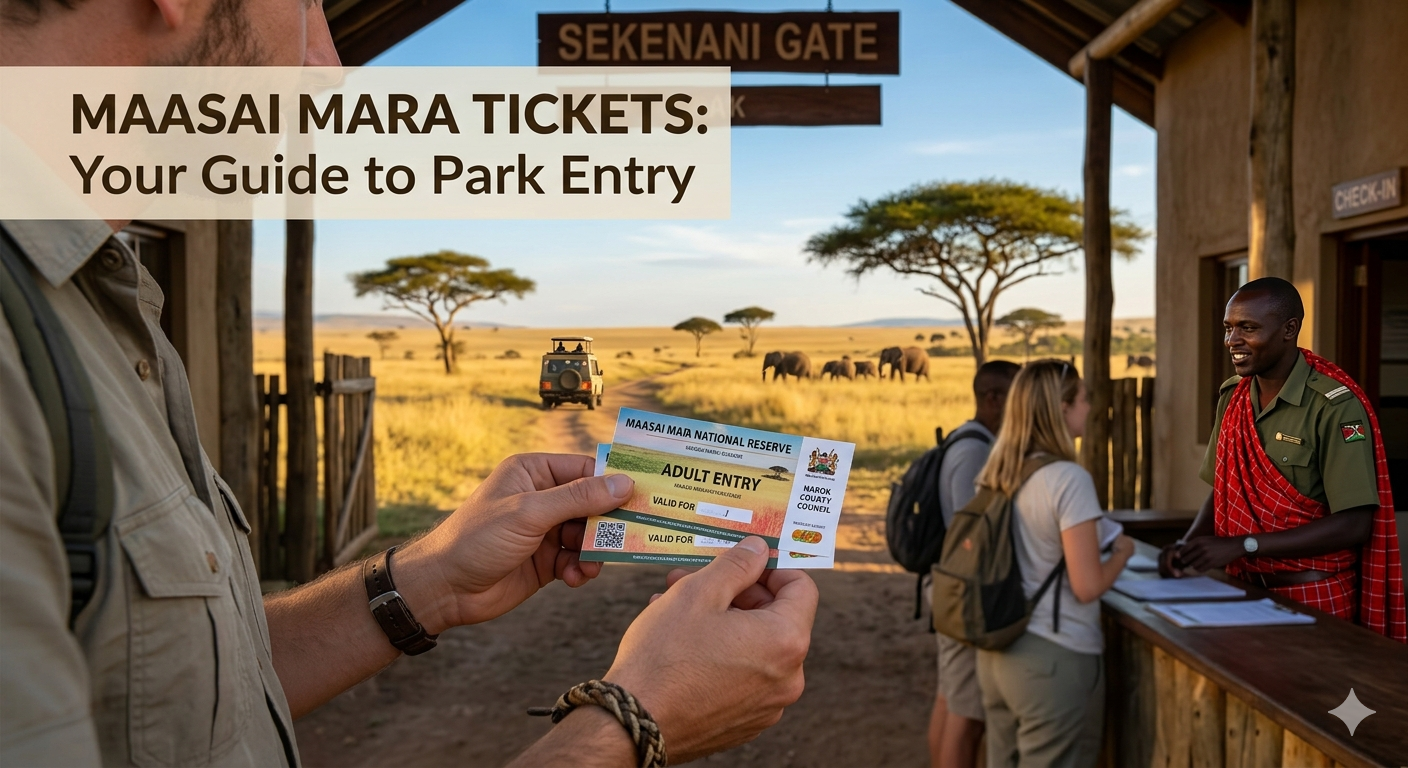
Maasai Mara tickets are the official entry passes required for every person who enters the Maasai Mara National Reserve. They are not tourist souvenirs — they are mandatory, legally required passes that must be purchased before or upon entering through any of the reserve’s main gates.
Unlike most of Kenya’s national parks, which are managed by the Kenya Wildlife Service, the Maasai Mara National Reserve is managed by the Narok County Government. This means the fee structure, payment systems, and rules are set independently by the county — not by KWS — which is why fees here are different from parks like Amboseli, Lake Nakuru, and Tsavo.
The revenue from Maasai Mara tickets funds anti-poaching operations, ranger salaries, park infrastructure maintenance, conservation programs, and community development projects in surrounding Maasai villages.
| Visitor Category | Low Season (Jan–June) | High Season (July–Dec) |
|---|---|---|
| Non-resident adult (foreign tourist) | $100 per day | $200 per day |
| Non-resident child (age 9–17) | $50 per day | $50 per day |
| Child under 8 years | FREE | FREE |
| Kenyan citizen adult | KSh 1,500 per day | KSh 3,000 per day |
| Kenyan citizen child | KSh 500 per day | KSh 500 per day |
| EAC resident adult (Uganda, Tanzania, Rwanda, Burundi, South Sudan) | KSh 2,500 per day | KSh 5,000 per day |
| Student (with valid ID and pre-approval) | $50 per day | $50 per day |
All tickets are valid for 12 hours (6:00 AM to 6:00 PM). These rates were confirmed by Narok County Government for 2026. Always verify current rates at the official gate or with your tour operator before travel, as fees may be updated.
Why These Tickets Matter — Especially for Kenyan Residents
Many Kenyans grow up hearing about the Maasai Mara but never visit, often assuming it is only for foreign tourists with large budgets. The truth is more nuanced than that.
- Kenyan citizens pay significantly lower rates than non-residents — KSh 1,500 in low season is very accessible for a day trip from Nairobi or Nakuru
- Students from recognized institutions can access the reserve at $50 per day with advance approval — a meaningful opportunity for school trips and conservation education
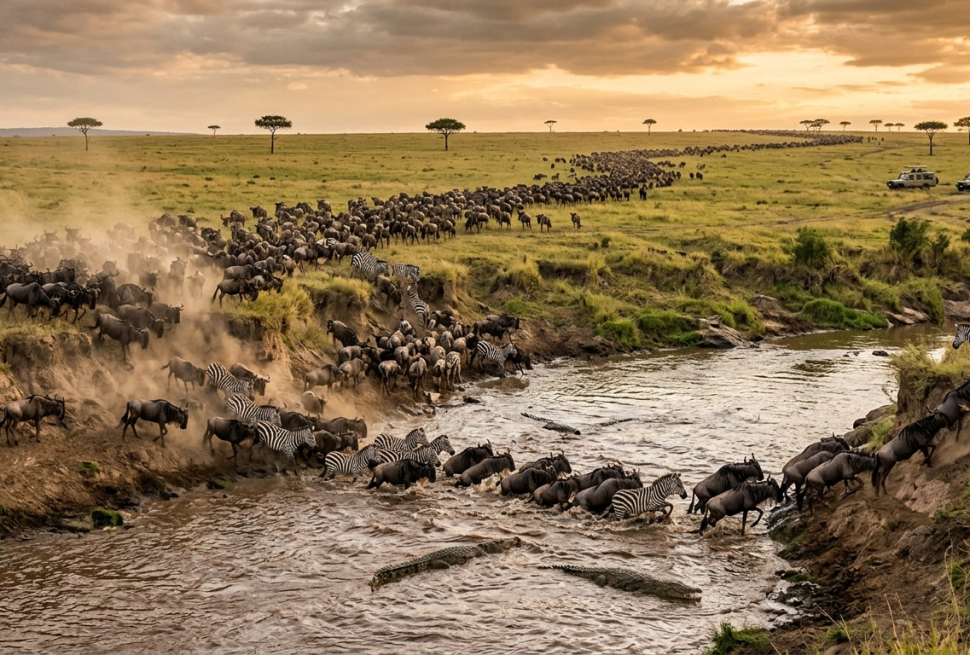
- The Maasai Mara is the only place in Kenya where you can witness the Great Wildebeest Migration — over 1.5 million animals crossing between Kenya and Tanzania — which is recognized by Magical Kenya as one of the world’s greatest natural spectacles
- Understanding the ticket rules prevents expensive surprises — overstaying the 12-hour window triggers a full additional day’s fee
- Most safari packages include park fees, but knowing the actual figures lets you verify your package is genuinely all-inclusive before you pay a deposit
- Domestic tourism in Kenya is growing, and knowing how to access the Mara correctly — including the right gates and payment methods — makes planning easier for local travelers
- The reserve covers 1,510 square kilometers, and your ticket is your legal permission to be inside it — rangers do check tickets during game drives
The World Travel and Tourism Council consistently highlights Kenya’s wildlife parks as a critical economic and conservation asset. The Maasai Mara generates significant revenue for Narok County’s development budget directly through ticket sales.
View Our Top Safari Packages in Kenya Charming Safariz includes Maasai Mara entry tickets in all safari packages — no hidden costs, no gate surprises. Explore Kenya Safari Packages
Types of Maasai Mara Tickets and Entry Categories
Standard Day Entry Ticket (Non-Residents)
The most common ticket type. Issued to foreign tourists who are not Kenyan citizens or EAC residents. Costs $100 per adult per day in low season (January to June) and $200 per adult per day in high season (July to December). Valid for one 12-hour period per day — typically 6:00 AM to 6:00 PM.
Kenyan Citizen Ticket
Issued to holders of valid Kenyan National IDs or Kenyan passports. Costs KSh 1,500 per adult in low season and KSh 3,000 in high season. Proof of citizenship — your national ID or Kenyan passport — must be presented at the gate. If you cannot show valid proof, you will be charged non-resident rates.
EAC Resident Ticket
For citizens of Uganda, Tanzania, Rwanda, Burundi, and South Sudan presenting valid passports. Costs KSh 2,500 in low season and KSh 5,000 in high season. Citizens of these countries who are residing in Kenya with valid documentation may also qualify for resident rates — verify this at the gate with your documentation.
Child Ticket (Age 9–17)
All visitors aged 9 to 17 years at the time of entry, regardless of nationality, pay $50 per day or the equivalent in Kenya shillings. Children under 8 years of age enter free. A passport, birth certificate, or valid ID confirming the child’s age may be required.
Student Ticket
Students aged up to 23 years from recognized educational institutions can access the reserve at $50 per person per day. This rate requires advance authorization from the Masai Mara Reserve ticketing office in Narok — applications must be submitted at least two weeks before the visit. A valid student ID and a letter from the sponsoring institution are required. The trip must be pre-arranged as a school-organized visit or research project.
Vehicle Entry Fees
Beyond the per-person ticket, every vehicle entering the reserve pays a separate vehicle fee based on seating capacity. These fees are additional to the personal entry fees and are charged per day per vehicle. Safari tour operators factor this into their overall package cost — confirm with your operator that vehicle fees are included in your quote.
The 12-Hour Rule: What It Means for Your Safari
This is the detail most visitors and even some tour operators do not explain clearly enough.
Effective from July 2023, Maasai Mara entry tickets are valid for 12 hours only, from 6:00 AM to 6:00 PM. Before this change, tickets covered 24 hours.
Here is what this means in practical terms:
If you are staying inside the reserve (at a lodge or camp within the park boundaries), you effectively need to pay for a new 12-hour ticket for each day of your stay. A 3‑night stay inside the reserve means paying 4 days of entry fees (arrival day, 3 full days, and departure day if you drive out in the morning).
If you are staying outside the reserve (at a lodge just outside the park gates), you must enter each morning, complete your game drives, and exit by 6:00 PM. Re-entry the next day requires a new ticket.
If you overstay past 6:00 PM without authorization, rangers may charge you for an additional 12-hour period — effectively another full day’s fee.
Transit tickets are available for guests arriving from facilities outside the reserve who need to reach an airstrip inside the park. A 2‑hour transit pass is issued at the entry gate for this purpose.
Understanding this rule is essential because it directly affects your total Maasai Mara ticket budget, particularly for multi-day stays. A 3‑night stay for two non-resident adults in high season can generate $1,600 or more in park fees alone.
2026 Maasai Mara Ticket Costs: Full Comparison Table
| Scenario | Visitor Type | Cost Per Person Per Day | Cost for 3 Days |
|---|---|---|---|
| Low season (Jan–June) | Non-resident adult | $100 | $300 |
| High season (July–Dec) | Non-resident adult | $200 | $600 |
| Low season | Non-resident child (9–17) | $50 | $150 |
| High season | Non-resident child (9–17) | $50 | $150 |
| Any season | Child under 8 | FREE | FREE |
| Low season | Kenyan citizen adult | KSh 1,500 | KSh 4,500 |
| High season | Kenyan citizen adult | KSh 3,000 | KSh 9,000 |
| Low season | EAC resident adult | KSh 2,500 | KSh 7,500 |
| High season | EAC resident adult | KSh 5,000 | KSh 15,000 |
These are per-person entry fees only. Vehicle fees are separate and additional. Always verify rates with the Narok County Government or your safari operator at time of booking.
How to Pay Maasai Mara Tickets: Step-by-Step
- Determine your visitor category — are you a non-resident tourist, Kenyan citizen, EAC resident, or student?
- Prepare your payment method — USD cash, Kenya shillings, Visa card, Mastercard, or M‑Pesa
- Carry your valid ID — passport for non-residents, national ID or Kenyan passport for citizens, passport with relevant visa or work permit for residents
- If your safari package includes park fees, confirm in writing with your operator that this is the case before entering the park
- Arrive at your entry gate — Sekenani, Talek, Oloololo, or Musiara depending on your lodge’s location
- If entering the Mara Triangle section, note that only cashless payment (Visa, Mastercard, or M‑Pesa) is accepted — no cash
- Present your ID and pay your fees at the gate. Receive your ticket and keep it with you throughout the day — rangers may check it during game drives
- Note your entry time. Plan to exit the reserve before 6:00 PM to avoid additional day charges
- If you are a student group, ensure your pre-authorization letter from the Narok County ticketing office is confirmed at least two weeks before travel
- Advance payment is also available through the KAPS firm at the KATO office in Nairobi (Longonot Road, Upper Hill) for those who prefer to pre-pay before arrival
For most visitors traveling with a licensed safari operator, the operator handles the ticket payment process on your behalf. Confirm this is the case and that fees are included in your package before departure.
View Our Top Safaris in Kenya and Zanzibar Charming Safariz handles all Maasai Mara ticket payments on your behalf — no gate queues, no currency stress. Browse Charming Safariz Kenya Safari Packages
Maasai Mara Entry Checklist: What to Bring to the Gate
| Item | Required for |
|---|---|
| Valid passport | All non-residents and EAC residents |
| Kenyan National ID | Kenyan citizens |
| Work permit or valid visa | Residents claiming resident rates |
| Student ID and authorization letter | Students using student rates |
| USD cash or Kenya shillings | All cash-paying visitors |
| Visa or Mastercard | Cashless payment option (required in Mara Triangle) |
| M‑Pesa registered phone | Cashless mobile money payment |
| Confirmed package letter from operator | If fees are pre-included in your safari package |
| Vehicle registration or operator’s vehicle details | Vehicle fee processing |
Common Mistakes to Avoid When Buying Maasai Mara Tickets
Not confirming whether your safari package includes park fees. Many packages advertise “all-inclusive” pricing but exclude park fees as a separate item. The solution: ask your operator for a fully itemized quote explicitly listing park fees and vehicle fees as included or excluded.
Arriving at the Mara Triangle gate with only cash. The Mara Triangle section of the reserve — which includes camps like Mara Serena Safari Lodge and Little Governors Camp — only accepts cashless payment (card or M‑Pesa). The solution: always carry a working Visa or Mastercard and have M‑Pesa active on your phone.
Paying in Kenya shillings at the gate when quoted in USD. Gates apply their own exchange rate when converting shillings to USD, which is often less favorable than the official rate. The solution: pay in USD cash or by card to get the accurate rate.
Underestimating total ticket costs for multi-day stays. With 12-hour validity, a 3‑night stay at a lodge inside the reserve requires paying for 4 days of entry. Many travelers budget only for 3 days. The solution: count the number of 12-hour periods you will spend inside the reserve — not just the number of nights.
Forgetting student authorization paperwork. Students who arrive without the pre-approved letter from the Narok County ticketing office will be charged full non-resident or citizen rates. The solution: apply for student authorization at least two weeks before your trip and carry the original letter to the gate.
Overstaying past 6:00 PM. Game drives that run late can result in exiting after the 6:00 PM cutoff, triggering an additional day’s fee. The solution: plan your afternoon game drive schedule to return to the gate or your lodge before 6:00 PM. Discuss timing with your guide in advance.
Assuming Kenyan citizen rates apply without ID. If a Kenyan citizen arrives at the gate without a valid national ID or Kenyan passport, they will be charged non-resident rates — there are no exceptions. The solution: always carry your national ID for any domestic park visit.
2026 Trends: What Is Changing in the Maasai Mara Ticketing System
The Maasai Mara’s entry fee structure has undergone its most significant changes in decades since 2023. Here is what is continuing to evolve in 2026:
Digital and cashless payments are expanding. The Mara Triangle already operates fully cashless. Other gates are increasingly accepting and encouraging digital payments. According to Business Daily Africa, Kenya’s push toward a cashless tourism economy is accelerating across national parks and reserves, reducing handling costs and improving revenue tracking.
Seasonal pricing is driving visitor behavior. The $100 versus $200 seasonal split is achieving its intended goal — distributing visitors more evenly across the year. January through June is seeing growing interest from budget-conscious travelers and wildlife photographers who prefer quieter conditions, while July through October remains the most competitive booking period for the Great Migration.
Private conservancy fees remain a popular alternative. Several private conservancies surrounding the main reserve — including Nashulai Maasai Conservancy and others — charge lower daily fees ($60 to $80 for non-residents) while offering exclusive game drives and walking safaris not permitted inside the national reserve. Many safari packages combine conservancy access with reserve entry days to manage costs.
The Narok County digital booking system is improving. Advance online payment through official channels is becoming more reliable, though some visitors still experience technical issues. The eCitizen Kenya digital services platform continues to expand government service access, and integration with the Mara’s ticketing systems is a longer-term goal.
Vehicle fees are increasingly scrutinized. With the significant jump in per-person fees, operators are being more careful to include vehicle fees in their published packages. Visitors should specifically ask whether vehicle entry fees are included in any quote they receive.
Poll Question: When planning your Maasai Mara visit, which factor matters most to you regarding tickets and entry? A) The total daily cost per person B) The 12-hour entry rule and exit timing C) Whether your safari package includes fees automatically D) The difference between low season and high season pricing
(Share your answer in the comments below — and tell us if you have had any gate fee surprises on a past visit!)
Poll Answer Guide: All four factors are important and should be understood before arriving at the gate. Cost per person (A) is the most searched topic by first-time visitors. The 12-hour rule (B) causes the most planning complications for multi-day stays. Package inclusion © is the single biggest area of confusion in safari planning. Season pricing (D) can make a meaningful difference in total trip cost — visiting in low season saves $100 per non-resident adult per day.
FAQ: Maasai Mara Tickets
How much is the Maasai Mara entry fee in 2026? Non-resident adults pay $100 per day from January to June (low season) and $200 per day from July to December (high season). Children aged 9 to 17 pay $50 per day year-round. Children under 8 enter free. Kenyan citizens pay KSh 1,500 (low season) or KSh 3,000 (high season). EAC residents pay KSh 2,500 or KSh 5,000 depending on season. All tickets are valid for 12 hours (6:00 AM to 6:00 PM).
How long is a Maasai Mara ticket valid? As of July 2023, all Maasai Mara entry tickets are valid for 12 hours only — typically 6:00 AM to 6:00 PM. This replaced the previous 24-hour validity. Guests staying inside the reserve for multiple nights pay a new entry fee for each 12-hour period. Overstaying past 6:00 PM without authorization results in being charged for an additional day.
Can I pay Maasai Mara entry fees online in advance? Advance payment is available through the KAPS firm at the KATO office in Nairobi (Longonot Road, Upper Hill). Most safari operators handle pre-payment on behalf of their clients as part of the package. At the gates, payment is accepted by Visa, Mastercard, M‑Pesa, or USD cash. The Mara Triangle section only accepts cashless payment — no cash is accepted there.
Are Maasai Mara park fees included in safari packages? Most reputable safari packages include Maasai Mara entry fees in the all-inclusive rate. However, this is not universal — some packages list fees as extra. Always request an itemized quote that specifically confirms whether park entry fees and vehicle fees are included. Charming Safariz includes all park fees transparently in every safari package quote.
What is the difference between the Maasai Mara National Reserve and the Mara Triangle? Both are part of the greater Maasai Mara ecosystem. The National Reserve (Narok side) is the larger section accessible through Sekenani and Talek gates. The Mara Triangle is managed by the Mara Conservancy and accessed through Oloololo and Musiara gates. Camps like Mara Serena and Little Governors are in the Mara Triangle. Both sections charge similar fees, but the Mara Triangle is cashless-only for payments.
Do Kenyan citizens pay less for Maasai Mara entry? Yes, significantly. Kenyan citizens pay KSh 1,500 per adult per day in low season and KSh 3,000 in high season — compared to $100 to $200 for non-residents. A valid Kenyan National ID or Kenyan passport must be presented at the gate. Without valid ID, you will be charged non-resident rates.
My Experience Helping Clients Navigate Maasai Mara Ticket Costs
One of the most common conversations we have at Charming Safariz is about park fees — specifically, clients who received a quote from another operator that seemed very affordable, then arrived at the Mara gate and discovered park fees were not included.
A non-resident couple staying 3 nights in the Mara in August, for example, faces $200 per person per day in entry fees. Over 4 ticketed days (arrival day counted separately due to the 12-hour rule), that is $1,600 in park fees alone — before accommodation, meals, or game drives. If that was not clearly stated in their package quote, the shock at the gate is real.
This is why transparency in quoting matters so much. When we at Charming Safariz provide a quote for any Kenya safari that includes the Maasai Mara, we itemize every cost — accommodation, game drives, meals, transport, and park fees — so clients know exactly what they are paying for and why. No surprises at the gate.
For Kenyan residents, the domestic rates make the Mara genuinely accessible. A Kenyan couple visiting during low season pays KSh 3,000 total in park fees per day — which, when combined with the right mid-range or budget lodge package, makes a Mara weekend trip very achievable.
We handle the ticket payment process on behalf of all our clients. We know the gates, the payment systems, the timing rules, and the paperwork required for student groups. If you are planning a Mara visit — whether domestic or international — we can take all of this off your plate.
Key Takeaways
- Maasai Mara tickets are mandatory for every visitor and are valid for 12 hours (6:00 AM to 6:00 PM) — not 24 hours
- Non-resident adults pay $100 per day (January to June) and $200 per day (July to December)
- Children aged 9 to 17 pay $50 per day year-round; children under 8 enter free
- Kenyan citizens pay KSh 1,500 to KSh 3,000 per day — significantly lower than non-resident rates
- EAC residents (Uganda, Tanzania, Rwanda, Burundi, South Sudan) pay KSh 2,500 to KSh 5,000 per day
- Vehicle fees are charged separately per vehicle per day, in addition to per-person fees
- Payment is accepted by USD cash, Visa, Mastercard, or M‑Pesa at most gates; the Mara Triangle is cashless-only
- Multi-night stays inside the reserve require paying a ticket for each 12-hour period — budget accordingly
- Student rates ($50 per day) require advance authorization from the Narok County ticketing office, submitted at least two weeks before the visit
- Most safari packages include park fees — always confirm this in writing with your operator before paying a deposit
- Charming Safariz is one of Kenya’s most trusted tour and travel companies for Maasai Mara safaris and handles all ticket payments transparently
Conclusion
Maasai Mara tickets are a significant part of your safari budget — especially in peak season. But understanding exactly how the fee structure works, what the 12-hour rule means for your schedule, and what your citizen or resident status entitles you to pays off in real money saved and zero gate surprises.
Kenya’s Maasai Mara is extraordinary. The wildlife, the landscape, the cultural connections with the Maasai people — it is one of the world’s genuinely great experiences. Planning the ticket and fee side correctly means you spend less time worrying about logistics and more time watching a cheetah sprint across the plains.
If you have questions about Maasai Mara park fees, want us to check the current rates for your travel dates, or want a full safari package with all fees included and explained, get in touch. Drop your question in the comments, or reach out to us directly.
Plan Your Maasai Mara Safari with Charming Safariz
Charming Safariz is one of Kenya’s most trusted tour and travel companies for safaris, tours, and ticketing. We serve Kenyan residents and international visitors with fully transparent, itemized safari packages — including all Maasai Mara entry tickets, vehicle fees, accommodation, and game drives handled on your behalf.
Our team is based in Nakuru, Kenya — with direct experience at every Mara gate and a strong working relationship with lodges across the reserve.
Request Your Free, No-Obligation Quote and Custom Itinerary
Contact us today:
WhatsApp: +254 714 236 664
Email: enquiry@charmingsafariz.com
Office: Nakuru, Kenya
We make the Mara simple.
Sources and References
- Kenya Wildlife Service — National Park Management and Conservation
- Magical Kenya — Official Kenya Tourism and Wildlife Platform
- UNESCO World Heritage Centre — Mara-Serengeti Ecosystem
- World Travel and Tourism Council — Kenya Tourism Economics
- IATA — East Africa Aviation and Travel
- TripAdvisor — Maasai Mara Visitor Reviews and Experiences
- Business Daily Africa — Kenya Cashless Tourism and Park Revenue
- eCitizen Kenya — Government Digital Services Portal
- Kenya National Bureau of Statistics — Tourism Revenue Data
- Nation Africa — Kenya Parks and Conservation News